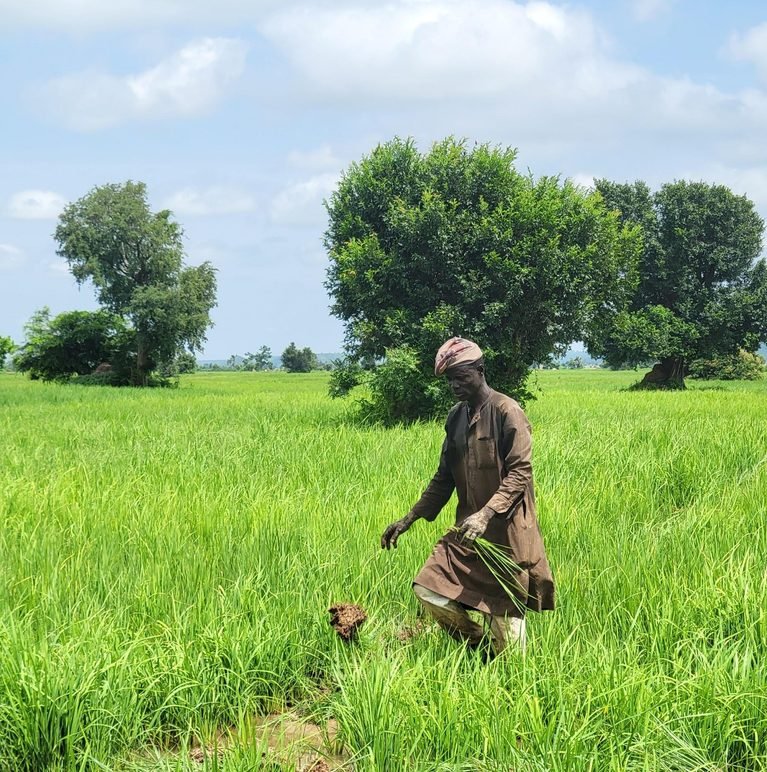

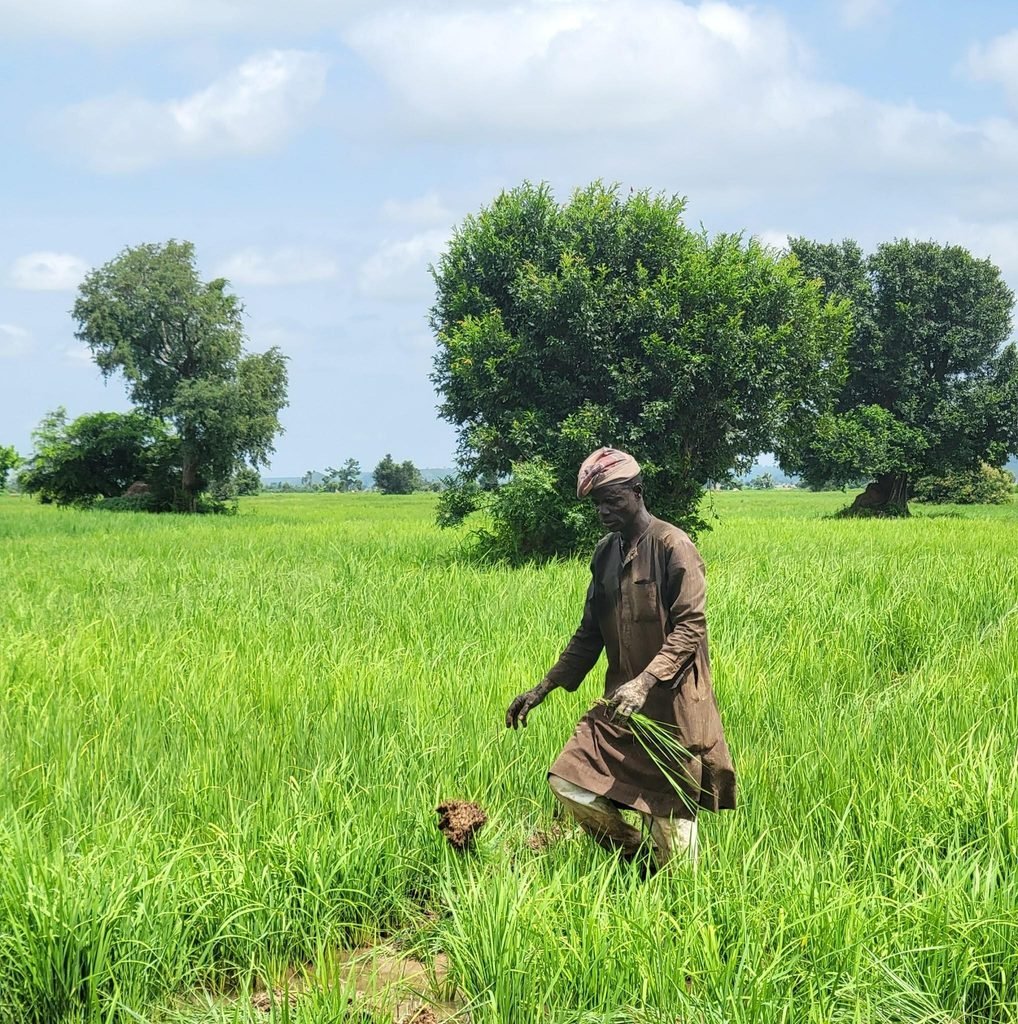
Alu Maigeloba never imagined that the 2025 rice harvest season would land him in the hospital.
When the first rain touched the ground in April at Maikuturi village, Alu, like many other rice farmers in Suru local government area, began preparing for the planting season.
At first, the 55-year-old farmer sold his bags of millet from the previous season and invested about ₦500,000 in his rice fields, buying fertiliser, insecticide and paying labourers. Each day, as he watched the rice sprout, a glimmer of hope flickered in his mind. The previous season had not been bad for him. He harvested about 30 bags of rice, and this year, he prepared well, hoping to beat that target.
A month after planting, however, the rain stopped, and the rice began to dry up. Insects and pests started feasting on the growing crops. But Alu had already invested heavily in the farm and could not afford to let the erratic rainfall wipe out his fortune for the year.
He decided to pour all the money he had been saving from his provision shop to buy an irrigation pump, hoping to ensure a steady supply of water to the fields.
“I wanted to liaise with one of my neighbours to buy the pump, but he said he didn’t have money. So, I had to break my bank to purchase it,” Alu told The Liberalist. “After consistently watering the rice, I was happy the rice came back to life. I was happy, and I continued that way until I even started borrowing money from friends and others.”
But a few months later, Alu’s efforts proved insufficient. Another tragedy struck, one that not only affected his farm but nearly cost him his life.
Despite buying several insecticides, grain-sucking bugs locally known as “Koloma” continued to feast on the rice, leaving Alu to harvest just six bags from the hectares of farmland where he had previously harvested 30 bags a year earlier.
“After the harvest, I instantly fainted when I remembered the effort and money I invested in the farm. I was admitted to the hospital. I was unconscious for days, and I spent about ₦58,000 there too. After I came back home, I started visiting the doctor every month for my medications. The medicine I use monthly costs about ₦10,000. Since that time, I haven’t been healthy again; I am just managing myself, as you can see.”
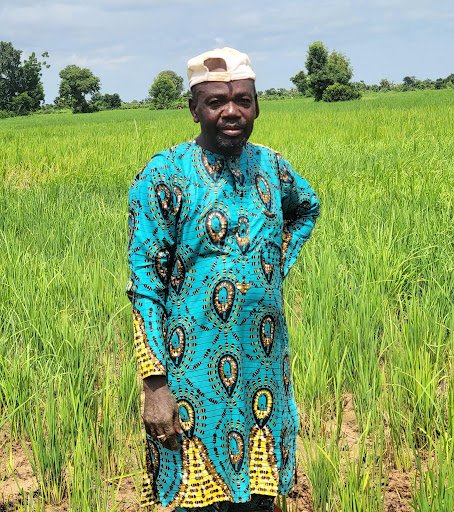
Alu’s experience reflects the reality many rice farmers across Kebbi state faced in 2025 as erratic rainfall and pest infestations threatened their harvests and livelihoods.
The Mysterious Disease
Last year, the Kebbi state government reported an unusual pest infestation damaging rice farmlands across the state. In response, Nasir Idris, the state governor, directed the Ministry of Agriculture to procure and deploy chemicals to combat what the government described as a mysterious disease affecting rice farmlands in Shanga Local Government Area (LGA).
“We have received reports of a strange disease or pests attacking rice farms. Consequently, I instructed the Commissioner for Agriculture to assess the situation,” the governor said. “I have since approved the immediate procurement of chemicals to fumigate the affected farms.”
However, while the state government mapped a specific area for fumigation, The Liberalist found that the damage extended beyond Shanga to places such as Dakingari and Suru LGAs.
Interviews with local farmers reveal a troubling shift in environmental patterns. While soil moisture was once reliable and rainfall predictable, the last two planting seasons have brought erratic, short-lived rains followed by intense dry spells. These harsher conditions and rising temperatures have created conditions that can allow pests such as armyworms and termites, as well as diseases such as rice blast, to thrive and damage growing rice crops.
“Changes in climate can significantly alter the conditions under which rice pests and diseases survive, reproduce and spread,” said Dr. Aliyu Abubakar, a lecturer in the Department of Soil Science and Land Resources Management at Usmanu Danfodiyo University, Sokoto. “Higher temperatures can accelerate the development and reproduction of many insect pests, while changes in rainfall and humidity can affect both insect populations and disease-causing organisms.”
Dr. Aliyu explained that erratic rainfall can create alternating periods of waterlogging and moisture stress. Healthy rice plants are generally better able to tolerate pest and disease pressure, he said, and that plants weakened by drought, excessive heat or poor water management can become more susceptible.
“For diseases such as rice blast, temperature, leaf wetness, relative humidity and rainfall are particularly important. Prolonged periods of leaf wetness and favourable humidity can increase infection, while drought and heat stress can weaken plants and make them more vulnerable to other pests such as ‘Koloma’.”
Kebbi state, in northwestern Nigeria, is characterised by a single rainy season typical of the semi-arid tropical savanna climate of northern Nigeria. Studies say the rainy season lasts about five months and can begin as early as April.
Early this year, the National Emergency Management Agency (NEMA), Sokoto Operations Office, warned that Kebbi might experience a severe dry spell lasting about 21 days between June and August 2026, posing serious threats to agricultural activities and crop productivity. The agency advised farmers to adopt climate-smart agricultural practices, including cultivating drought-tolerant and early-maturing crop varieties.
NEMA listed Arewa, Dandi, Aleiro, Kalgo, Bunza, Birnin Kebbi, Argungu, Augie, Jega and Maiyama as the LGAs likely to experience the dry spell. Though Suru LGA, where Alu farms, is not explicitly identified in the NEMA’s warning, experts say it is evidence of the severity of the climate change that goes beyond the agency’s early detection and warning system.
Dr. Aliyu explained that scientific evidence confirmed climate change and climate variability can alter the distribution, abundance and severity of agricultural pests and diseases. However, he cautioned against directly attributing every pest outbreak in Kebbi to climate change.
“We should be careful about saying that every particular outbreak in Kebbi is caused by climate change,” he said.
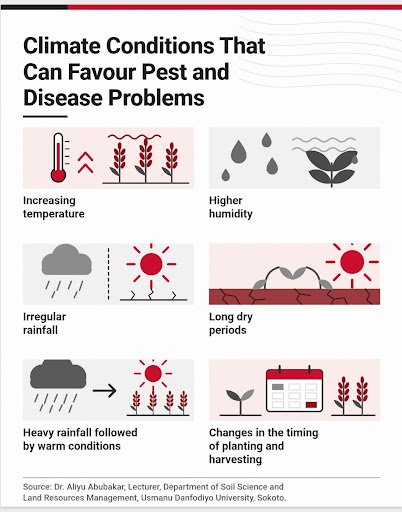
According to him, the major climate conditions that can favour pest and disease problems include increasing temperatures, higher humidity, irregular rainfall, prolonged dry spells and changes in the timing of planting and harvesting.
“For Kebbi, therefore, it is more scientifically accurate to describe climate change as a risk multiplier rather than claim that it is the sole cause of pest outbreaks.”
The expert explained that when rainfall is concentrated into a short period, farmers may initially have sufficient water. But a prolonged dry spell that follows can deplete soil moisture and expose crops to drought stress. High temperatures can worsen the situation by increasing evapotranspiration, causing crops to lose water faster.
For instance, he said pests such as armyworms can become problematic when environmental conditions and available vegetation favour their survival and movement. Termites are particularly associated with dry conditions and can attack stressed crops, especially where soil moisture is low.
Rice blast, however, has a more complicated relationship with climate conditions. Dr Aliyu said the disease is strongly influenced by temperature, humidity, and leaf wetness. A prolonged dry period may not itself favour blast, he said, but intermittent rainfall followed by warm, humid conditions can create periods favourable for infection. At the same time, drought stress can weaken the crop and make it more vulnerable to other pests.
“So, the important issue is not simply ‘more rain’ or ‘less rain’; it is the changing pattern and timing of rainfall combined with increasing temperature.”
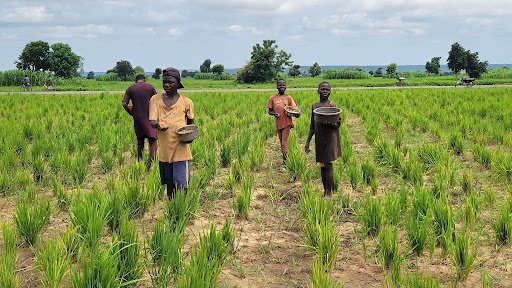
For farmers such as Habibu Umar, a 38-year-old rice farmer in Bendu village, these changing conditions have become part of their experience on the farm. He told The Liberalist that farmers deal with different insects and pests, some of which become more noticeable when the rice does not receive enough water.
“We have some red insects that feed on our rice when there is not enough water. If care is not taken, they can turn the rice grey, as if you poured chemicals on it. But if you spray chemicals, you can save the rice,” he said.
He also identified another pest locally known as “Tana”, which he said affects the rice at an early stage of growth.
“No matter how much fertiliser you put on your rice farm, the seeds will not germinate properly because of this Tana. It stops the rice from growing,” says Habibu.
But he described Koloma as a different kind of threat, one that attacks the rice after it has germinated and begun producing grains.
He said, “When the rice has already germinated and started producing grains, that is when Koloma starts attacking it. It has a sharp, tiny mouth that it uses to suck the rice, leaving only empty husks on the surface. If you do not notice it early, it can eat all your rice and leave you with nothing but empty husks.”
Habibu explained that farmers can detect the damage only by checking the weight of the rice panicles.
A survey of rice insect pests in Nigeria identified 70 pest species, 14 parasitoids and two predators. The incidence and severity of pests varied considerably across different climatic zones and rice agro-ecosystems. The study classified 13 insect species as major pests, including grain-sucking bugs.
The Federal Ministry of Agriculture and Food Security indicates that Nigeria routinely loses between 30 and 50 percent of its major staple crops, including rice, maize and cassava, to pests and plant diseases.
In June this year, the Kebbi state government also raised alarm about the invasion of quelea birds threatening rice farms and food production across several local government areas of the state.
The state’s commissioner of agriculture described the infestation as a serious threat to the state’s dry-season rice production, noting that the birds move in massive flocks and are capable of destroying an entire hectare of grain within a few hours.
More Farmers Count Losses
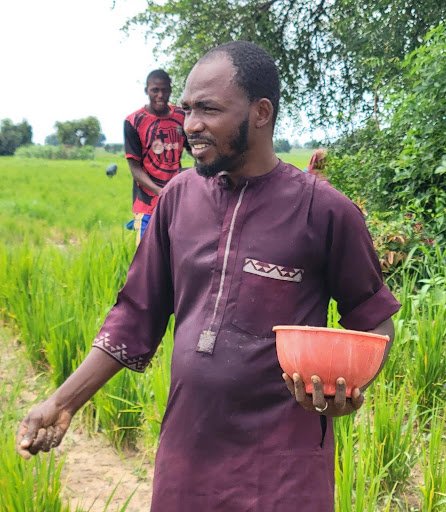
Faruq Ibrahim, a 40-year-old farmer in Maitambari in Suru LGA, had his own fair share of the 2025 catastrophe. The father of six told The Liberalist that he used to harvest more than 25 bags of rice each year. But last year, “I was able to get only five bags.”
“As a poor man, what I usually do when preparing to cultivate my rice farm is borrow money, seeds, and fertiliser from people. After I harvest my farm produce, I settle everyone with their money and store some food for my family,” he said.
However, last year, Faruq was left with debt.
“Most people who lent me money excused me and allowed me to recover from my loss. They understood that it was not my fault,” says Ibrahim. “But some did not bother. They requested their money at all costs. In that case, I borrowed from friends again to pay such people and settle the rest later.”
The poor harvest also significantly affected his family’s feeding. Faruq said his family had to reduce the number of meals they ate each day.
“We used to cook twice a day, but now we cook only once. Sometimes, my children have to endure without eating. They understand the situation too. They eat the little I provide for them and fill up with water.”
Faruq’s experience forms part of a broader challenge facing Nigeria’s rice industry. Rice is a critical staple for Nigeria’s population of over 200 million, yet local production is failing to keep pace with rising demand. In 2024, national consumption reached 7.6 million metric tonnes, while production slowed to just 5.23 million metric tonnes, down from 5.61 million metric tonnes in 2023 and 5.41 million metric tonnes in 2022. This widening gap forced a significant surge in imports, which rose to 2.4 million metric tonnes in 2024 from 1.89 million tonnes in 2023.
Kebbi remains a cornerstone of Nigeria’s rice industry, producing roughly 3.15 million metric tonnes in 2024, rising from 3.05 million tonnes in 2023. While projections for 2025 remained high, persistent infestations from pests such as Koloma and quelea birds threatened these targets. Agricultural production data show that Kebbi contributes roughly four percent of Nigeria’s total rice production, placing it among the leading rice-producing states in the country.
For farmers like Faruq Ibrahim and Alu Maigeloba, however, the loss of their crops represents the destruction of their primary source of income and, in some cases, their ability to feed their families.
Last October, the Food and Agriculture Organisation of the United Nations (FAO) projected that 34.7 million Nigerians could face severe food insecurity by mid-2026 because of climate pressures, economic challenges and conflict that reduce access to food.
Beyond Fumigation
Beyond procuring chemicals for fumigation, experts say the Kebbi state government needs to move away from a mainly reactive approach, where it waits for an outbreak before spraying, and adopt Integrated Pest Management (IPM) combined with climate-smart agriculture.
Dr. Aliyu recommends that the state invest in training farmers and adopt digital advisory services. Mobile phone-based weather forecasts, pest alerts and extension advice can help farmers make better decisions about planting, irrigation and pest management.
He stated that combining weather information with pest surveillance can also help farmers anticipate periods of high pest and disease risk.
“Farmers should also plant varieties with resistance or tolerance to important local diseases and pests where suitable varieties are available. They should adjust planting dates according to reliable seasonal rainfall and local water availability so that the most vulnerable growth stages do not coincide with severe climatic stress or peak pest periods,” he said.
As part of its efforts to enhance food security this year, the Kebbi state government said it has 100 metric tonnes of drought-tolerant and early-maturing millet and rice seeds under the third phase of the Climate Change Adaptation Seed Support Programme. The governor explained that agricultural experts carefully selected the seed varieties for their ability to withstand erratic rainfall and deliver higher yields.
The state also said it has so far distributed more than 15,000 solar-powered irrigation pumps, 20,000 petrol-powered pumps and 10,000 LPG-powered pumps. It is also participating in the Sustainable Power and Irrigation for Nigeria (SPIN) project to strengthen irrigation and reduce farmers’ dependence on rainfall.
All efforts to speak with Alhaji Shehu Mu’azu, the Kebbi state Commissioner for Agriculture and Natural Resources, to seek his comment proved abortive. When The Liberalist contacted him, he answered the call and asked the reporter to send him a message instead. However, neither the subsequent messages nor calls had received a response at the time of filing this report.