
In this second part of the investigation, The Liberalist exposes how charcoal merchants poison the air with thick plumes of smoke, polluting communities, fueling respiratory illnesses, and aggravating the suffering of asthmatic patients. Drawing on scientific research, hospital records, air quality tests, and interviews with medical experts, researchers, and affected residents; the investigation reveals the devastating public health toll of charcoal smoke and air pollution across Nasarawa state.
Read the first part here.
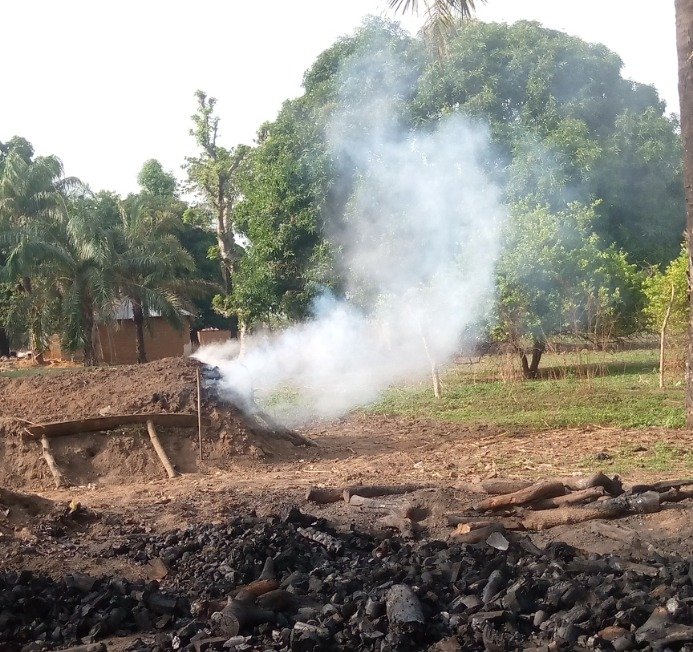
In the late afternoon of October 2025, Musa Shuaibu had already set his second charcoal mound ablaze. As the mound smouldered in an open field, a thick cloud of smoke drifted lazily into the air, carrying the distinct smell of burning wood before settling above the roofs of neighbouring houses. The toxic fumes polluted the air and caused discomfort among residents of Wamban Kurmi, a remote village in the Wamba Local Government Area of Nasarawa state.
Musa bent repeatedly to arrange the sand covering the smouldering mound. As he worked, he coughed. His eyes turned red and watery. He frequently squeezed his face to escape the smoke, but to no avail. Inhaling the thick fumes triggered repeated coughing, and the prolonged exposure visibly left him uncomfortable.
Musa is one of many charcoal burners who gamble with their health by turning wood into charcoal. He acknowledges the health challenges that come with his work. According to him, the intense heat from the fire burned his body, and consistent inhaling of smoke made him noticeably slimmer. Yet, he claims, eating and drinking nourishments help protect him from the smoke.
“Burning charcoal requires a person to drink milk to protect himself from the steam of the fire and smoke. You will also need Maltina. You know, one must do some work in the absence of a better one,” Musa said. “But before you finish, you will be out of your stable consciousness.”
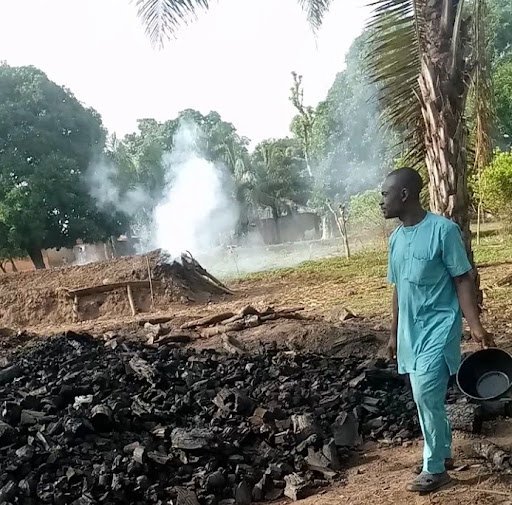
Musa burns charcoal in his community, exposing not only himself but also nearby residents to the smoke. Children often play around the smoking mounds, enduring the intense heat, pungent smell and fumes rising from the burning wood. They watch the smoke billow into the sky as it spreads across the community, forcing passersby to cough, just like the workers. Without protective gear like protective clothing, safety goggles and heat-resistant gloves, both the charcoal burners and nearby residents remain exposed to the hazardous smoke.
“We don’t care to put on a facemask whenever we are burning the charcoal. We are just facing the smoke head-on, with our nose and mouth wide open,” Musa told The Liberalist.
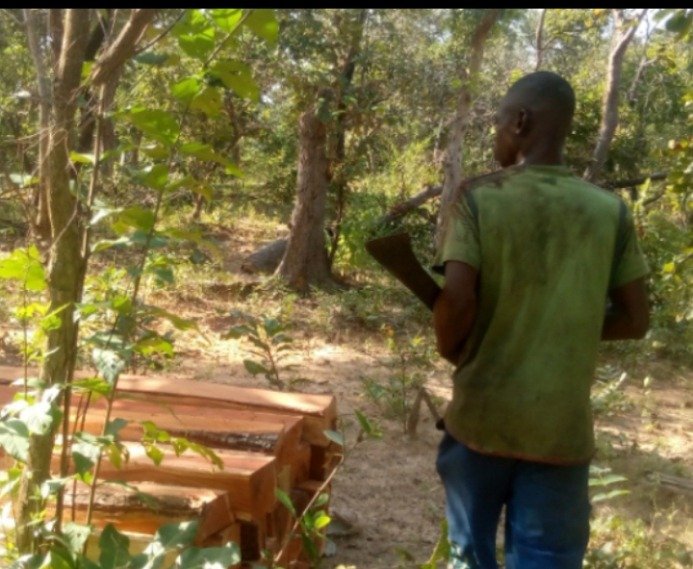
Across Nigeria, the struggle for economic survival and limited access to affordable, cleaner energy sources have pushed many people into charcoal production, exposing both producers and surrounding communities to harmful smoke while accelerating environmental degradation through forest leasing and tree felling.
Interviews with dozens of charcoal merchants and residents show that many have turned to charcoal production as a means of survival, exposing communities to growing public health risks.
Despite regulations restricting charcoal production in states such as Nasarawa, Kwara and Kogi, enforcement remains weak. In 2025, the federal government announced an immediate ban on the export of wood, charcoal and allied products, revoking all existing export licences and permits. Yet, poor enforcement has allowed charcoal burning to continue largely unchecked, polluting the environment and exposing nearby residents to hazardous smoke.
As the practice expands, charcoal burners continue to gather and burn forest wood with little regard for its impact on public health.
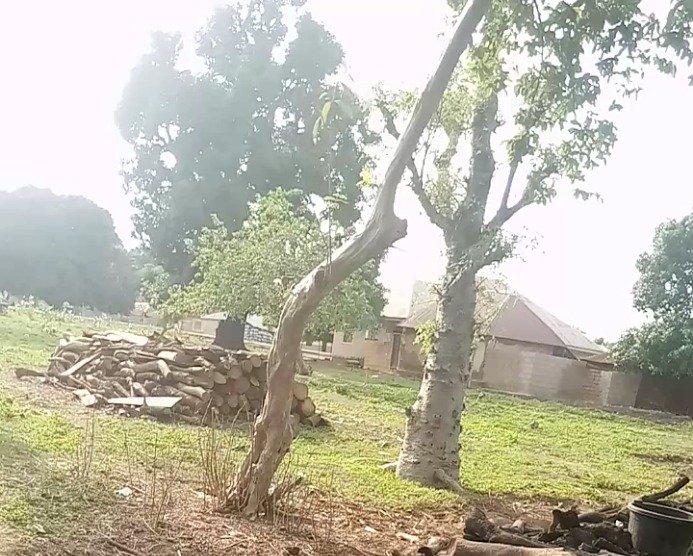
When Ibrahim Yahuza burns trees for charcoal in Wujji community of Nasarawa, residents bear the same burden of the smoke. Like them, he inhales the fumes rising from the smouldering mounds. He said the smoke has, on several occasions, almost taken his breath away. Whenever he begins to feel overwhelmed, he returns home to sleep and rest before resuming work the next day.
Ibrahim believes prolonged exposure to the smoke from burning green trees affects his health.
“I won’t be able to breathe. But I used to stand with cleverness so that it would not affect me too much,” he said.
Interviews with dozens of charcoal burners and residents revealed a common belief in local remedies rather than medical treatment. Many of those who burn wood and inhale the smoke rely on milk, Maltina and other home remedies whenever they notice changes in their breathing or overall health. Instead of seeking medical care, they consume whatever they believe will ease symptoms such as dizziness, headaches, breathing difficulties and persistent cough. Dozens of charcoal burners interviewed complain of the same symptoms and how it affects their health.
Dr Musa Isah Wasagu, a Respiratory Physician and specialist in diseases of the lungs and respiratory system at Usmanu Danfodiyo University Teaching Hospital, Sokoto, has refuted the use of milk and Maltina as remedies for charcoal smoke inhalation. He warned that taking too much of it as a remedy can even harm the body.
“Milk and Maltina can’t protect them from charcoal smoke. There is no scientific basis for this belief. That’s not true. Although milk is a good food, it adds some nutrients to the body, but it protects them from nothing. It’s just the normal way of eating food like yoghurt and others.
“And if people who are lactose intolerant drink too much milk, it can cause diarrhoea because their bodies do not produce enough lactase — the enzyme needed to digest milk. Similarly, if they consume these products regularly, they can increase cardiovascular risk because of the level of sugar in the milk and maltina,” he said.
Dr Musa further dismissed the claim that the food products relieve dizziness and coughing after exposure to charcoal smoke inhalation. He explained that the two products consumed by charcoal burners can not protect them from chronic obstructive pulmonary disease (COPD) and lung cancer, which can result from exposure to charcoal smoke.
The Deadly Smoke
The experiences of Musa and Ibrahim mirror scientific findings on the health effects of charcoal smoke. Scientific research has consistently shown that charcoal smoke is harmful to human health. It is a complex mixture of gases and fine particles released during burning and charcoal production.
Studies show that the smoke emits particulate matter, nitrogen oxides and carbon monoxide (CO), pollutants that contribute to air pollution, smog and global warming. Exposure to these pollutants has been linked to respiratory illnesses, asthma, bronchitis and Chronic Obstructive Pulmonary Disease (COPD), a long-term lung disease.
A 2011 study further found that the particulate matter in charcoal smoke consists largely of soot and ash, which can penetrate deep into the lungs and, in some cases, enter the bloodstream. The smoke also contains hazardous organic substances, including polycyclic aromatic hydrocarbons (PAHs), many of which pose serious health risks.
When charcoal burns with insufficient oxygen inside the mound, as in the method used by Musa and Ibrahim, incomplete combustion produces harmful pollutants such as carbon monoxide and dioxins. Other dangerous emissions include sulphur dioxide (SO₂) and volatile organic compounds (VOCs), which expose nearby residents to additional health risks.
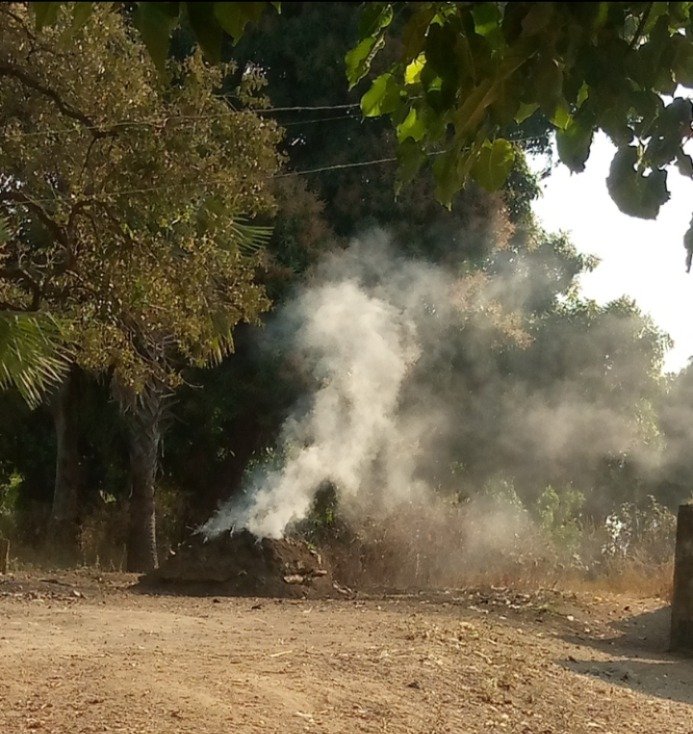
According to the World Health Organisation’s 2021 Global Air Quality Guidelines, the annual average concentration of fine particulate matter (PM2.5) should not exceed 5 µg/m³, while 24-hour exposure should remain below 15 µg/m³. Concentrations above these limits can trigger serious health problems.
However, a 2016 study published by the National Library of Medicine found that charcoal smoke in Nigeria often releases pollutants above the recommended limits. During an air quality assessment in Oyo and Ogun states, researchers recorded elevated concentrations of carbon monoxide (CO) and PM2.5, which were associated with reduced respiratory function among people exposed to the smoke.
The findings also showed that charcoal workers had poorer lung function and higher levels of carbon monoxide in their bodies than people who did not work around burning mounds.
Air Quality Test Results
To assess the concentration of harmful pollutants released during charcoal production, The Liberalist conducted an air quality test across communities in Wamba, where residents are exposed to charcoal smoke. The exercise was led by Abdulkareem Kasim, a quality specialist and Principal Science Officer at Federal Medical Centre Keffi. The harmful air pollutants measured for this investigation include carbon monoxide (CO), particulate matter (PM10 and PM2.5), Sulfur dioxide (SO2), Nitrogen dioxide (NO2) and Volatile Organic Compounds (VOC). These pollutants pose potential health risks to residents, and affect air quality.
To identify variations in pollutant concentrations, measurements were taken at three distances from charcoal production site: near-source areas close to the charcoal mound (10-50 meters), intermediate locations, which are at a middle distance (100-200 meters), and residential areas farther from the production site (500 meters). The record concentrations were compared with the relevant WHO air quality guidelines.
Air quality monitoring assessment was conducted using a Dust Track11 monitor to measure particulate matter (PM2.5 and PM10), MultiRAElite monitor to measure gaseous pollutants including sulphur dioxide (SO2), carbon monoxide (CO), nitrogen dioxide (NO2) as well as photoionisation detector (PID), and sorbent tubes to assess volatile organic compounds (VOC).
During the field study in Wamba Kurmi, a village where Musa had regularly burnt his charcoal, air pollution was highest near the production sites and generally decreased with distance. PM2.5 concentrations in the village ranged from 274 to 410 µg/m³ compared with 83-143 µg/m³ at intermediate locations and 24-43 µg/m³ in residential areas. Even at the residential locations, the recorded concentration exceeded the WHO 24-hours average exposure of 15 µg/m³, highlighting the potential health risks posed by charcoal smoke to nearby residents.
The pollutant, PM2.5, a particulate matter, consists of particles with diameters of 2.5 micrometres or less, which can penetrate deep into the lungs. PM10 consists of particles with aerodynamic diameters of 10 micrometres or less, can also enter the respiratory system, while long-term exposure to particulate matter is associated with an increased risk of lung cancer.
PM10 concentrations ranged from 348 to 516 µg/m³ near the charcoal production site and 115-193 µg/m³ at intermediate locations. Both ranges exceed the WHO guideline of 45 µg/m³. In residential areas, concentrations ranged from 43 to 68 µg/m³, while the lowest residential readings were 2µg/m³ below the guideline, and the highest exceeded it by 23 µg/m³.
Further analysis indicates that Carbon monoxide (CO) concentrations are higher near the production site, ranging from 8.2 to 13.9 mg/m³, compared with 3.0-5.3 at intermediate locations. In residential areas, concentrations ranged from 0.9 to 2.2 mg/m³ Some intermediate readings exceeded the WHO guidelines of 4mg/m³.
Carbon monoxide (CO) is a colourless, odourless and tasteless gas that is produced during charcoal burning. Severe exposure to carbon monoxide can cause brain injury, pregnancy loss, headache, weakness and dizziness. Similar symptoms affecting charcoal burners had been reported by Musa and Ibrahim in the Wamba community.
These health concerns were echoed by Dr Musa, who said exposure to carbon monoxide from charcoal smoke can slowly damage human health. “For charcoal smoke, carbon monoxide would gradually go into your system, causing havoc. You can not see it. It can even cause the risk of hypertension,” he said.
Sulphur dioxide (SO2) concentrations were also higher near the production sites, ranging from 55–93 µg/m³. These readings also exceeded WHO guidelines. Additionally, nitrogen dioxide (NO2) concentrations near the mounds from 45 to 78 µg/m³ were recorded close to the mounds, surpassing the 25 µg/m³ limit set by WHO.
According to research, Sulphur dioxide is a gaseous pollutant that adversely affects the respiratory system. Studies also associated exposure to the pollutant with nervous system effect, type 2 diabetes and non-accidental mortality. Nitrogen dioxide (NO2) is another gaseous air pollutant produced during combustion. Scientific findings shows that exposure can trigger asthma attacks in children and reduce lung function.
Beyond these gaseous pollutants, the findings revealed elevated concentrations of volatile organic compounds (VOC) ppm, ranging from 28-42 ppm near the charcoal burning site, 10-20 ppm at intermediate locations, and 4-9 ppm at residential areas. VOCs are a broad group of carbon-containing chemicals released into the atmosphere through the heating and combustion of wood or industrial processes. Some VOCs can cause eye irritation, breathing difficulties and dizziness. Ibrahim and other charcoal burners in Wujji reported similar health concerns, highlighting the potential impact of pollutants exposure in the area.
Taken together, these findings highlight the potential health risk associated with prolonged exposure to high concentrations of these pollutants, which can be fatal. In a 2013 report, an estimated 95,300 people in Nigeria died from smoke-related causes, including stroke, heart disease and lung disease linked to air pollution. According to the World Health Organisation (WHO), children, women and low-income populations, particularly those with limited access to healthcare, bear the greatest burden of toxic smoke exposure.
WHO also notes that women and children are disproportionately affected because they are more likely to experience prolonged exposure to smoke. In its 2025 report, the organisation estimated that about 2.9 million people die prematurely each year worldwide from diseases attributed to household air pollution caused by inhaling soot.
For residents of Wamban Kurmi, those global findings are not abstract. They describe a daily reality. Wada Dabo, a resident of the Wamba community, has repeatedly suffered from exposure to charcoal smoke. Whenever he inhales the fumes, he develops headaches. Within days, he begins to experience severe coughing and a runny nose. Each exposure leaves his health noticeably worse.
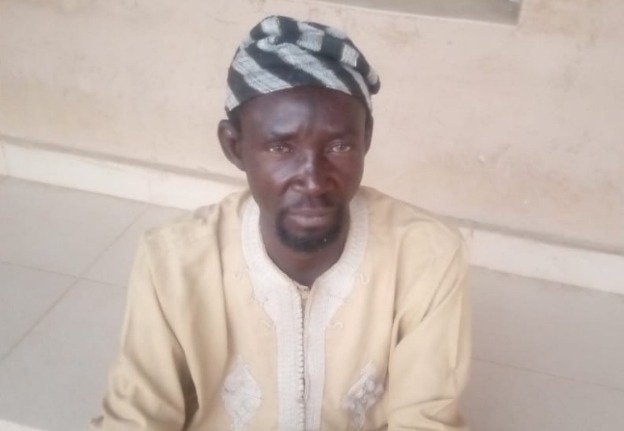
Wada’s experience is consistent with scientific evidence. Research shows that chronic exposure to carbon monoxide (CO) can cause headaches, exhaustion, dizziness and nausea. Inhaling carbon monoxide together with fine airborne particles can also lead to a sore throat and respiratory irritation. Exposure to sulphur dioxide (SO₂), another major pollutant found in charcoal smoke, has been linked to breathlessness, wheezing, impaired lung function and asthma attacks, while also irritating the eyes and respiratory tract.
According to Europe PMC, an international scientific research repository, prolonged exposure to charcoal smoke has also been associated with DNA damage, neurological disorders, increased blood pressure, sick building syndrome, tuberculosis, unintentional weight loss and overall body mass reduction.
Asthma Patients Bear the Brunt
While charcoal smoke poses a significant threat to human health, asthmatic patients bear an even heavier burden in communities across Nasarawa State. One of them is Hafsat Tanimu.
Hafsat was healthy in her youth. But at 57, she began to suffer persistent coughing and shortness of breath. Every time she tried to speak, her breath would seize. One morning, her children rushed her to Wamba General Hospital, where doctors diagnosed her with asthma. The diagnosis shocked the family. Doctors prescribed medication and advised her on precautions.
One afternoon, Hafsat’s struggle with asthma intensified when she went to visit relatives. Along the way, she encountered a burning charcoal mound. Before she could pass the area, she became dizzy, and her asthma worsened. Moments later, she found herself at Akwanga General Hospital, far from her hometown.
That incident changed the course of her life. Doctors advised her to avoid moving freely around the community. As her condition worsened, Hafsat became increasingly confined to her home, living with silence and loneliness. She now fears travelling long distances, especially through areas where charcoal is frequently burned.
“If I go close to charcoal smoke, I will not rest that day. I will face complications and health challenges. Anytime I inhale it, troubles will start, and it will disturb me a lot,” she told The Liberalist.
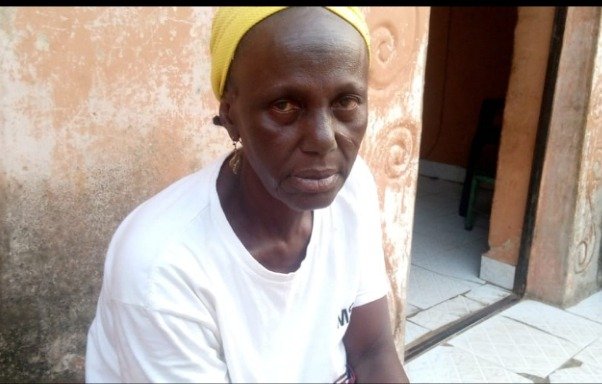
Hafsat developed asthma in a community where charcoal production has become widespread. For years, Wamba has served as a transit hub for charcoal production. The burning of trees not only affects residents but also deprives asthmatic patients of the freedom to move around their communities, confining many of them to their homes.
“I spent seven years with this illness. I don’t have any rest and comfort when living with people. The charcoal smoke is very dangerous. I don’t go close to it,” she said.
Like Hafsat, 28-year-old Yasir Shauibu fears charcoal smoke. Even brief exposure can trigger an asthma attack. Whenever he inhales the fumes, he feels pain in his chest and struggles to breathe before rushing away from the smoke. These days, he never leaves home without a facemask tucked into his pocket.
Several times, Yasir said, inhaling charcoal smoke in Wamba left him in severe distress. What often began with coughing and catarrh quickly escalated until he felt as though he was dying. His parents would immediately give him honey and hot water to stabilise him before taking him to the hospital. The frightening episodes remain vivid in his memory.
“I don’t like charcoal smoke at all, even if it’s small. I can’t survive where people are burning it. It is dangerous to me,” he said.

The experiences of Hafsat and Yasir are consistent with medical evidence. Dr Onawabula Somto, a senior medical officer at Wamba General Hospital, said charcoal smoke worsens asthma and can trigger severe attacks.
“Asthmatic patients are vulnerable to charcoal smoke because it’s one of the things that can trigger asthma. It can also make their symptoms worse and lead to severe asthmatic attacks which require hospital admission,” he said.
Dr Somto warned that charcoal smoke is particularly dangerous in poorly ventilated areas because it contains carbon monoxide and other harmful compounds that can damage the respiratory system.
“In places that are not ventilated properly, charcoal smoke causes serious health risks because of the composition and contents such as carbon monoxide and some other compounds which can lead to respiratory problems. In fact, some of these compounds can be carcinogenic, which means they can even lead to lung cancer,” he said.
The medical expert also corroborated The Liberalist’s findings, saying charcoal smoke contributes to air pollution and causes coughing, eye irritation, shortness of breath and breathing difficulties, the same symptoms reported by asthmatic patients such as Hafsat and Yasir.
To manage asthma attacks, Dr Somto said patients are treated with bronchodilators, which relax and widen the airways to make breathing easier.
“Asthmatic patients respond to drugs such as bronchodilators, a drug that dilates and relaxes the airways, making breathing easier for the patients. They also respond to salbutamol inhalers, which can be sprayed into the oral cavity and inhaled. That’s the first line of medication.
“We also intervene by using things like oxygen, more oxygen especially if their saturation is low. Then salbutamol; we nebulise it,” he explained.
Dr Somto also expressed concern over the rising cost of asthma medication, saying many rural patients cannot afford the drugs despite facing repeated exposure to charcoal smoke.
“Most of the asthmatic patients presented in the hospital don’t have the drugs,” he said.
Nigeria’s asthma burden continues to rise. According to recent estimates, about 13 million people in the country were living with asthma as of 2026, affecting adults and children alike, with women and children among the most vulnerable.
Rising Hospital Cases
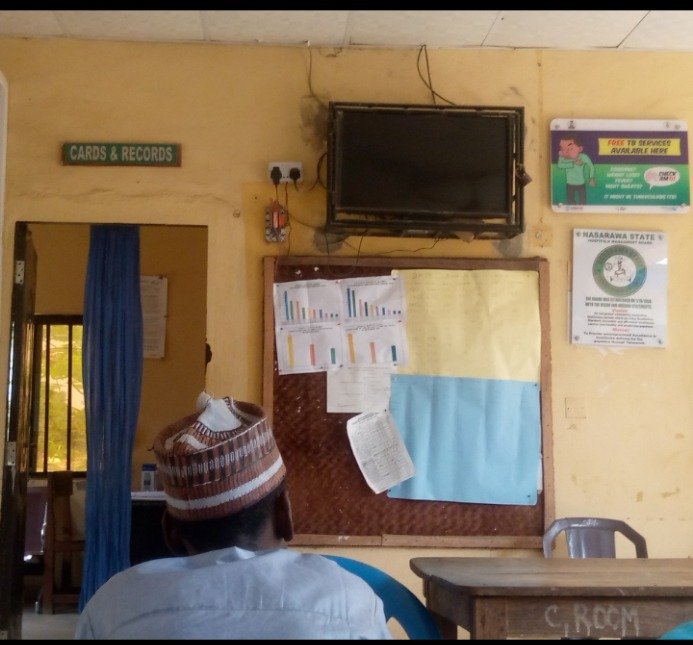
During a visit to Wamba General Hospital, records obtained by The Liberalist revealed a steady stream of respiratory-related illnesses reported by residents over the past two years. Between January and December 2024, the hospital recorded 283 respiratory-related cases from communities across Wamba. In 2025, the figure rose about 10 percent, to 312, bringing the total to 595 reported cases within two years.
While the hospital records show an increase in respiratory illnesses, they cannot show how many were caused by smoke, and they come from a single hospital without patient-volume figures. Health experts such as Dr Onawabula Somto, who treats many of the patients, say prolonged exposure to charcoal smoke is a significant risk factor for some of these conditions.
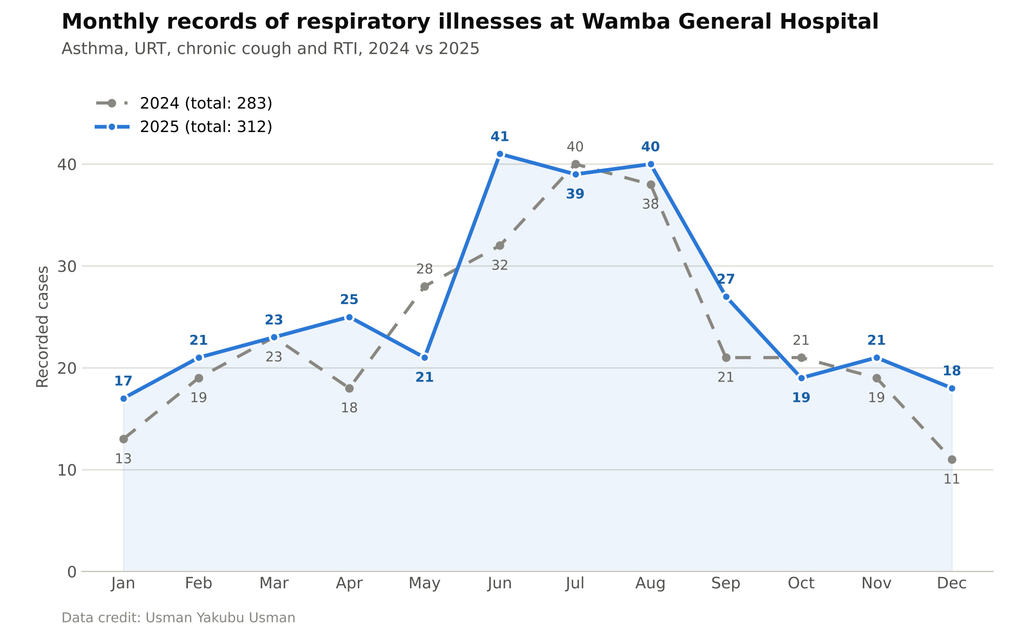
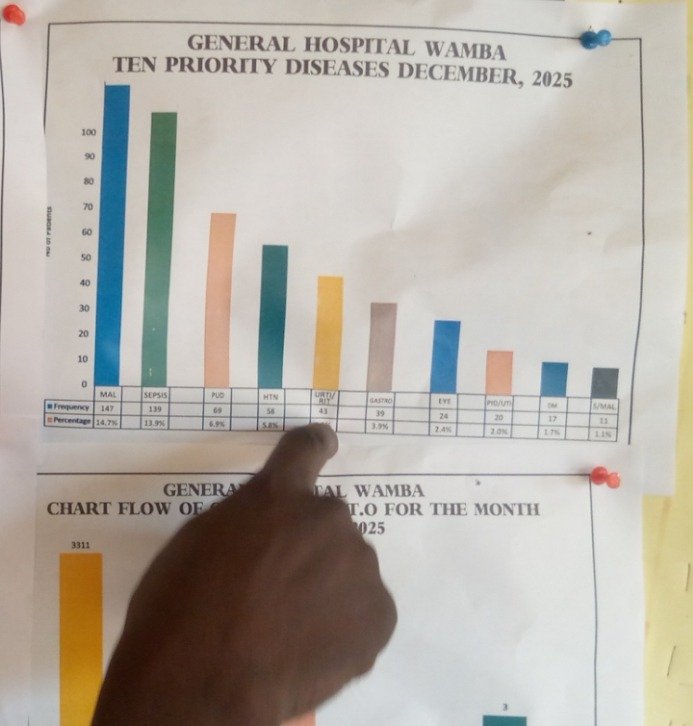
Saidu Umar, a Senior Health Records Officer at the hospital, said many of the patients were diagnosed with Upper Respiratory Tract (URT) infections, Respiratory Tract Infections (RTIs), chronic cough and asthma.
“Respiratory-related cases are common in this hospital. We often paste it on the hospital board here,” he said, pointing to the hospital’s waiting area where patients collect their medical cards.
“There is no month in the past few years that we have not recorded such cases,” he added.
Apart from the poorly equipped Primary Healthcare Centres (PHCs) in surrounding villages, Wamba General Hospital remains the only recognised general hospital serving the area. Khadija Usman, a nurse at the hospital, said many patients with respiratory illnesses come from villages where charcoal burning is widespread.
“Most of the patients who come here are from the villages. These are people who are affected by charcoal smoke. Even when we go out for outreach, we used to encounter those patients,” she said.
The Liberalist found that communities battling persistent charcoal smoke include Konvah, Wamban Kurmi, Wayo, Wujji, Langi, Ukuso and several others across Nasarawa State. Many of these communities serve as centres for charcoal production and wood burning. In a June 2026 report, the Nasarawa state government acknowledged that Wamba is a major hub for charcoal production, supplying markets across the state and northern Nigeria.
A study by researchers from the Department of Basic Science at Nasarawa state University, Keffi, also found that 40 percent of residents surveyed in Nasarawa reported health problems linked to inhaling charcoal smoke. The study identified eye irritation among residents of Angwan Mangoro, another community heavily affected by charcoal production.
For Khadija, treating patients with respiratory illnesses is challenging. Some patients cough directly in front of health workers during consultations, while others spit blood as their conditions worsen. She said the situation is aggravated by the practice of burning charcoal in open spaces within communities.
“In the entire environment, whenever charcoal smoke rises in the middle of the town, it affects many people. Some, after inhaling too much of it and noticing changes in their health, used to come to the hospital, but those who don’t know about it, it’s only God that is saving them,” she said.
Poisonous Trees
For many charcoal burners, hardwood is as valuable as gold. When burned, it produces more charcoal and generates higher income. During on-the-ground reporting, The Liberalist found that charcoal merchants in Nasarawa commonly prefer trees such as Kirya (Prosopis africana), Gwaska (Erythrophleum guineense), Marke (Anogeissus leiocarpus), Kade (Vitellaria paradoxa), Baushe (Terminalia spp.) and Dorawa (Parkia biglobosa). Experts, however, warn that burning these trees releases hazardous substances that pose serious risks to human health and the environment.
Professor Sanusi Bello Shamaki, a forest inventory and biometrics expert at Usmanu Danfodiyo University, Sokoto, said burning these trees releases several harmful chemicals into the atmosphere.
“There are several hazardous chemicals like benzene, formaldehyde, carbon monoxide and other toxic compounds that can be released into the air when these trees are burnt,” he said.
He added that the ash left behind after charcoal production can contaminate water sources and threaten both human and animal health.
“It contaminates even the water because the ashes that are produced during the charcoal production are later washed into the rivers, and humans utilise such water bodies. It’s putting the animals and humans at risk of health challenges,” he said.
Scientific studies revealed that prolonged exposure to benzene can cause blood disorders, including reduced red blood cell counts and aplastic anaemia. Environmental health researchers also found that trees such as Gwaska (Erythrophleum guineense) release toxic compounds, including volatile organic compounds (VOCs) and formaldehyde, when burned.
Prof. Shamaki added that butanol produced during charcoal-making can also pose health risks.
“There is butanol. It goes into the air, and it can be a harmful chemical which is produced during the process of burning the woods,” he said.
To reduce the impact of charcoal smoke on communities, Prof. Shamaki urged governments to enforce existing environmental laws, strengthen regulation of charcoal production and implement relevant commitments reached at the COP29 climate conference.
“It was concluded that there must be a specific period considered safer for charcoal production, when there will not be too much of a burning effect on the environment and the atmosphere. Relevant authorities are supposed to issue licenses to regulate this production.
“The government must discharge its responsibility of imposing such laws and regulations. The state where such regulations are not adopted but there is a national policy that is supposed to be scaled down to the administrative level to formulate such laws because each state is supposed to have its own policies,” he said.
Government Response
Responding to The Liberalist’s findings, Nasarawa State Commissioner for Environment Margaret Elayo said the government recognises the environmental and public health risks associated with charcoal production and is taking steps to address them.
“We are deeply concerned about the harmful effects of indiscriminate tree burning for charcoal, which causes air pollution, respiratory illnesses, and loss of biodiversity. In response, the government is taking concrete measures.”
According to the commissioner, one of the measures is environmental health surveillance.
“The Ministry is collaborating with the Nasarawa State Ministry of Health to identify and monitor communities where air quality and public health indicators have been compromised, issuing advisories and health support where necessary,” she said.
Speaking further with The Liberalist, Elayo said the government is promoting cleaner energy alternatives to reduce dependence on charcoal and mitigate indoor and outdoor air pollution.
“The Government is actively promoting cleaner energy alternatives, such as improved cookstoves, briquette production, and solar-based technologies, in partnership with donor agencies and development partners,” she said.
She also urged residents to report environmental violations.
“Members of the public are encouraged to report illegal charcoal production or environmental hazards to the Ministry. This enables rapid response teams to act promptly,” she told The Liberalist.
___________
This report was facilitated by the Wole Soyinka Centre for Investigative Journalism (WSCIJ) under the Story Support component of its Collaborative Media Engagement for Development, Inclusivity and Accountability (CMEDIA) Project.