
This is the first of a two-part investigation titled “Forest for Sale”, where The Liberalist’s reporter, Usman Yakubu Usman, spent two months combing forest communities across Nasarawa state, exposing a dangerous underground forest-leasing trade accelerating environmental degradation in the area. To penetrate a business whose operators were unlikely to speak openly to journalists, the reporter assumed the identity of a charcoal merchant, and with just a ₦5,000 deposit, he gained direct access to the illicit network, revealing how merchants, local guards, community members and government officials continue to profit from forest depletion despite the state’s ban on charcoal production.
Across remote communities in Nasarawa state, a dangerous trade is thriving between residents and charcoal merchants. When these merchants arrive in rural communities with bundles of cash tied around their waists, forestlands rarely stand a chance of surviving.
Agile, vibrant, and versatile, Ibrahim Yahuza has become one of the go‑to figures for novices eager to break into this trade. In less than four years, the 30-year-old resident of Nasarawa state in north-central Nigeria transformed himself into a charcoal dealer and middleman in the forest-leasing business. He brokers deals between community members and charcoal merchants and sometimes poses as a merchant himself, leasing forestlands from residents before processing charcoal for profit.
The business proved lucrative. With the proceeds, Yahuza built a three-bedroom house in Wujji village, Wamba Local Government Area (LGA). As his network expanded beyond the surrounding communities, wealthy buyers began entrusting him with money to secure forestlands on their behalf.
The success of Yahuza’s business marks a significant shift in his livelihood. Through this enterprise, he now provides for his family of four children, while enjoying the benefits of his new trade. Yahuza developed an interest in forest leasing when charcoal merchants approached him and sought his help in identifying good forest in his community of Wujji, where this reporter met him. Since he began operating in the forest, he said, no government officials have approached him or attempted to stop him from processing wood for the merchants.
“In this business, I have a manager in the town; her name is Tabawa Haruna,” Yahuza told The Liberalist. “She used to give me money to enter the bush and look for forestlands to lease from residents. I will call workers that will cut the trees, process charcoal and bring it out.”
Before charcoal production begins, merchants temporarily lease forestlands from residents. Like any other commercial transaction, prospective buyers first inspect the forest before negotiating a price. Once both parties agree, the merchant gains access to the land and is free to fell as many trees as possible within the leased area. Additionally, merchants who pay larger sums secure a larger portion of the forestland. The size of the leased area and number of trees that can be felled depend on the amount paid.
The Liberalist found that this leasing system has flourished for years, fueling indiscriminate logging and widespread deforestation across rural communities. On-the-ground reporting showed dozens of trucks loaded with charcoal and timber leaving villages for urban markets. Weak regulation and poor enforcement have allowed the trade to thrive, accelerating environmental degradation. Following the leasing of forestlands, woodland areas are converted into commodities, and previous green landscapes are stripped of their vegetation. The resulting decline of forest cover threatens the ecological balance of the affected communities.
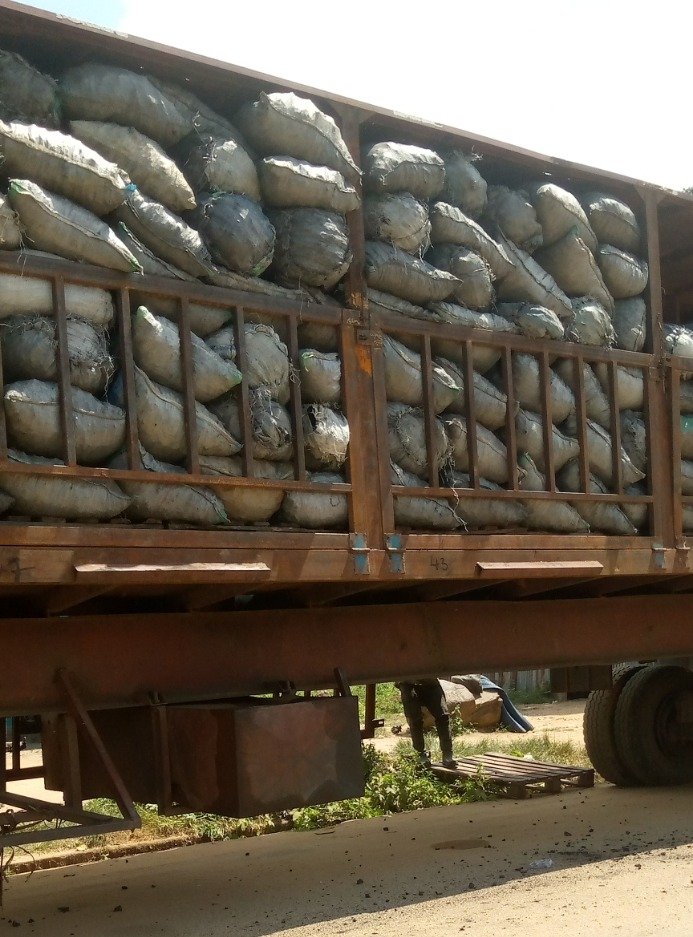
Despite the environmental damage caused by the practice, the investigation found that the forest leasing and charcoal production have continued even after the Nasarawa state government introduced a ban in February 2022 to protect the environment and preserve the ecosystem.
The ban was officially announced by Yakubu Kwanta, the then Nasarawa state Commissioner of Environment and Natural Resources, during a stakeholders’ meeting, attended by forest officers, the state’s Climate Change Desk Officer and officials from the Local Government Areas.
“There is the need to protect the state from further deforestation and environmental degradation for the purpose of creating a clean environment and healthy living as directed by Abdullahi Sule, the executive governor of Nasarawa State.
“The following resolutions were agreed upon: thereby declaring a total ban on the production and use of charcoal in commercial quantities”, Kwanta said.
To enforce the ban, the government established a task force comprising security agencies across the state’s 13 local government areas. The government also declared that anyone caught violating the directive would face prosecution under forest and environmental laws.
“Failing to comply with this order will attract charging the offender to court under the forest and environmental-related laws,” Kwanta said.
However, The Liberalist found that weak enforcement and poor implementation have rendered the ban largely ineffective. Yahuza and many other merchants continue to transport truckloads of charcoal and timber through security checkpoints and the state’s toll gate in Garaku along the Keffi-Abuja-Akwanga highway without interference. Meanwhile, police personnel were seen standing at the Garaku tollgate, as a heavily loaded pickup truck carrying charcoal passed through.
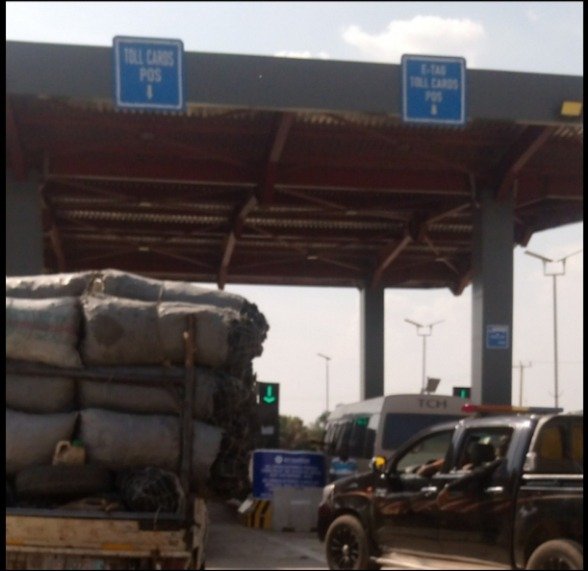
As forests increasingly become commodities, dozens of sources told The Liberalist that the government’s effort to end charcoal production will remain a futile exercise unless it dismantles the forest leasing system that sustains the trade.
The environmental consequences of this practice are well documented by researchers. A study indicates that conversion of forest to charcoal in tropical regions across the world has a devastating impact on the environment.
The study noted that forest clearing, charcoal-related activities and commercialisation of woodland areas increase deforestation and environmental degradation. Similarly, research shows that rainforests provide high-yield food to both men and animals, thereby maintaining ecological balance through genetic diversity. The study revealed that deforestation affects people’s livelihoods and threatens their existence.
The growing demand for leased forestlands has left many communities, including Wayo, Wujji, Langi, Ukuso, Konvah and Ungo, with barren landscapes. Residents willingly collect money from merchants and allow them to cut down trees on their land. In return, merchants such as Yahuza gain easy access to forests at relatively low prices, particularly when residents are in desperate need of money, creating a mutually beneficial relationship that continues to drive deforestation.
Yahuza said he had leased so many forestlands that he could no longer keep count. “I leased forestlands from at least Konvah and Kungra communities in Wamba LGA. The price ranges between ₦35,000 and ₦45,000.”
Inside the Deep Forest
To obtain first-hand evidence, this reporter travelled to Konvah village to learn more about the forest-leasing business that fuels charcoal production. After a 40-minute ride, the journey from Wujji village ended in the heart of the Konvah community, where Mohammad Adamu, one of Ibrahim Yahuza’s customers, lives.
Adamu told The Liberalist he had leased several forestlands to Yahuza at affordable prices.
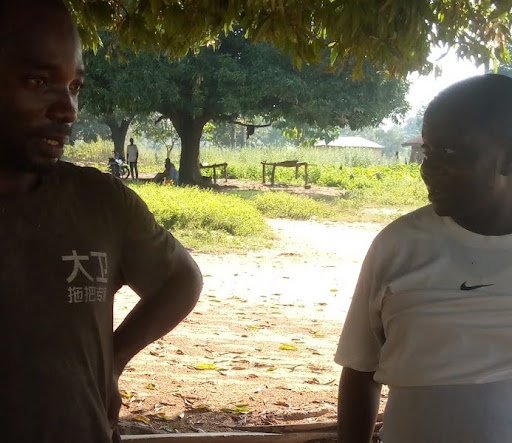
“I sold five different large portions of land to him. I just tell him to pay me any amount that’s good enough. There’s not much negotiation between us because he is now my friend,” the farmer said with a smile.
Yahuza later led this reporter deep into the forest to show one of the lands he had leased from Adamu. The once-forested area now lies stripped bare, littered with charcoal debris. Only tree stumps remain rooted in the scorched earth, while dry winds sweep across a landscape that now resembles a football pitch.
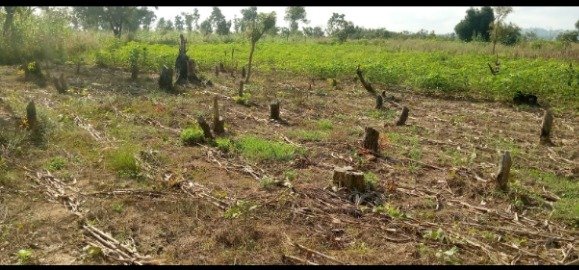
Yahuza openly acknowledged the environmental damage caused by his trade. Before venturing into forest leasing, he worked as a farmer and understood the consequences of burning trees. He said the intense heat from charcoal production damages the soil, making it difficult for crops to thrive.
“After we cut the trees, it’s that spot where we do charcoal that used to be affected. Fire used to burn the sand there. So even if you plant a seed there, it will not grow stronger. Before the place regains its natural fertility, it will take some years,” he said.
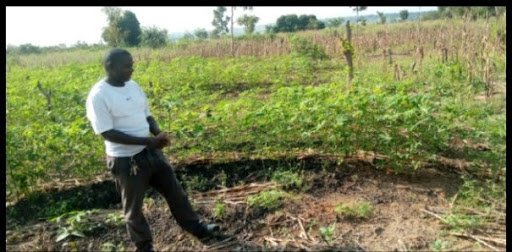
Despite knowing the environmental consequences, Yahuza said he had processed charcoal from several forestlands, producing more than 2,000 bags that filled six truckloads.
Forest Leasing, an Open Trade for Merchants
For many charcoal merchants like Yahuza, a dense forest represents a business opportunity. Once they identify an area with mature trees, they lease the forestland from residents before hiring skilled charcoal burners from Bauchi State and neighbouring communities to process the wood.
Aminu Abdullahi and Abubakar Usman are among those merchants. The pair openly run the business together while selling charcoal by the roadside.

“We bought the land in Utugu forest for ₦95,000. In Gwagi, we bought it for ₦70,000. Then, in Ukuso, we got it for ₦50,000, and for Kwabe, we bought it for ₦100,000. I can’t remember the rest,” Usman told The Liberalist.
Although they could not estimate the amount of charcoal each forest produced, Usman said the business had transformed his life.
“I used the money to get married. I built a house with it. And I use the money to do other business in my four years in the business.”
Standing beside stacks of charcoal, Abdullahi described another recent deal.
“We paid ₦120,000 in Konvah forest. We are still bringing out the charcoal from the bush every day. We have just started. We cannot predict how many bags we will get from the land.”
Another merchant, Amina Abdullahi, echoed the same pattern.
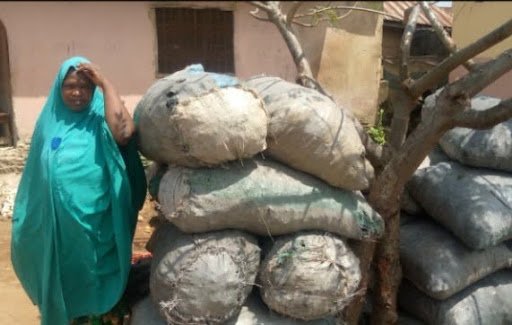
“I once paid ₦60,000, ₦90,000 and ₦100,000 for forestlands in Gwagi, Wayo-Gbako and Wujji. Most residents lease their lands when they need money,” she told The Liberalist.
A ₦5,000 Deposit for Forestlands
In Wayo-Mati, an agrarian community in Wamba LGA, Musa Deja, a logger, revealed how the leasing process works.
“After making payment, the village head charges both the land fee and tax from the merchants,” he said, explaining that traditional leaders often become part of the leasing arrangement.
Deja also described how he avoids paying those charges when acting as an intermediary.
Whenever merchants approach him, he collects their money and tells community members, including his father, that the charcoal belongs to him. After felling the trees and processing the charcoal, the merchants simply arrive with their trucks to collect the finished product. That way, they avoid paying additional fees directly to the village head.
“In our community, if they see a stranger looking for land to process charcoal, the village head and the people are anxious to tax him for money. So I devised a tactic. If someone wants to buy, I will do it as if it’s my own. I used to cut the trees by myself, so they won’t collect anything from me as their brother.”
After explaining the process, Deja asked this reporter, who posed as a charcoal merchant, whether he was looking for forestland. When the reporter expressed interest, Deja offered to secure one at what he described as a lower price.
“One man came and bought some land. He’s a manager of a bread factory. My brother sold it for him too while I cross-cut the trees with my chainsaw.”
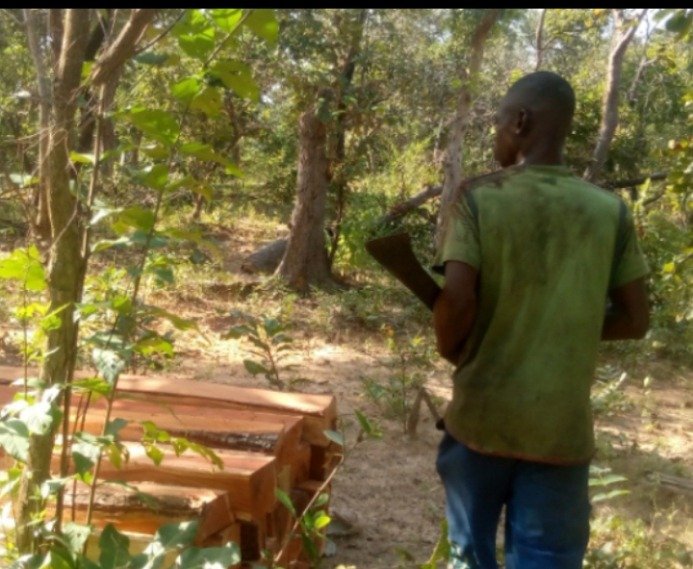
As one of the village’s well-known loggers, Deja navigated the rough track leading into the dense forest. Along the footpath, piles of freshly cut timber lay scattered at different locations.
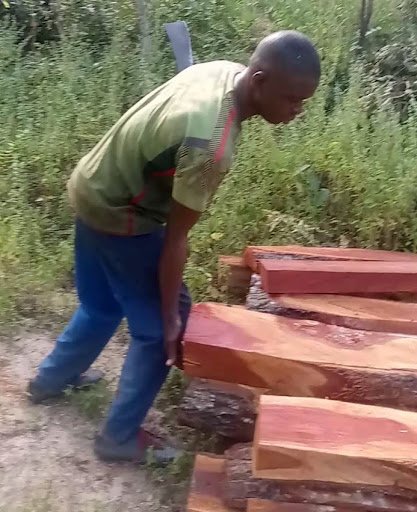
“You see this timber? A truck will come and pack it. It’s my timber. I prefer to get money in the bush than to stay at home. You must have money before you spend,” he said proudly, resting his hand on the logs.
Deep inside the forest, Deja stopped and pointed in different directions, indicating the sections he was willing to lease. He initially demanded ₦50,000 for a large portion of the forest. After further discussion intended to understand how pricing works, he reduced the price to ₦40,000 and even offered to cut the trees himself.

“You can give me ₦40,000. I will cut the strongest trees for you. But you can pay the deposit first so that I can count on you. You should hurry and come and start cutting the trees.”
To test how easily the transaction could be completed, this reporter offered a ₦5,000 deposit. Deja accepted immediately.
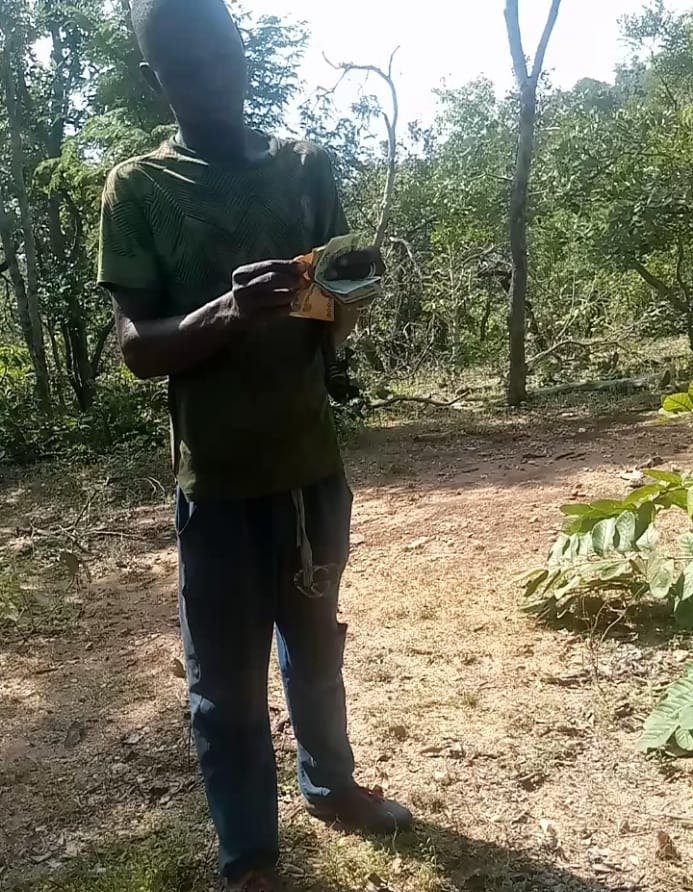
“This ₦5,000, our motorcycle has already consumed it,” he joked before slipping the money into the right pocket of his blue trousers.
His brother, Shuaibu, accepted the same ₦5,000 deposit after leasing another section of the forest but insisted on a final price of ₦45,000.

Before leaving, Deja offered one last piece of advice on maximising profit.
“You should select the trees that will give you better charcoal, both the dry and the green ones.”
When Local Guards Become Merchants
When the Nasarawa State Government launched the Nasarawa State Youth Empowerment Scheme (NAYES) in 2018, it divided the corps into four units across the state’s 13 local government areas, each headed by a divisional commander. The units, including Community Watch, Sanitation Inspectors, Traffic Marshals and Environmental Guards, were tasked with protecting the environment and preventing indiscriminate tree felling, according to the government. Each guard receives a monthly stipend of ₦30,000 to carry out these duties.
However, on a sunny day in November 2025, The Liberalist found a different reality at the NAYES office in Wamba.
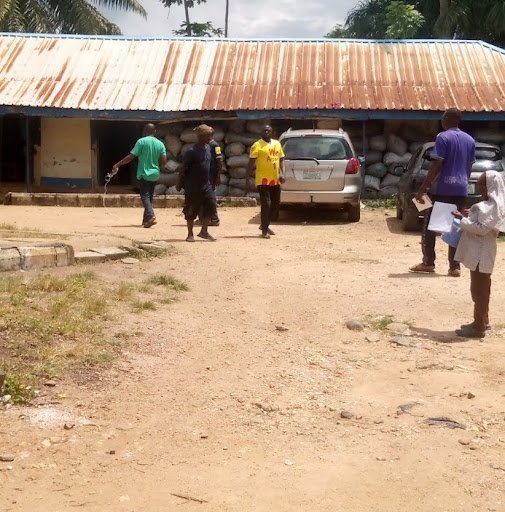
Several men gathered at the entrance of the office, their bodies covered in charcoal soot. Some had rags tied around their heads to cushion the heavy loads they carried. About 100 bags of charcoal lay neatly stacked within the premises.
A few metres away, a man in a green shirt stood in the middle of the compound, directing the labourers to load the charcoal into a waiting trailer.
“Hurry, hurry, let’s get it done. Oya collect it,” one labourer shouted after handing a bag of charcoal to another man inside the trailer.
Standing behind the workers was a tall man dressed in a green shirt and black jeans, holding a thick white thread used to stitch torn charcoal bags.
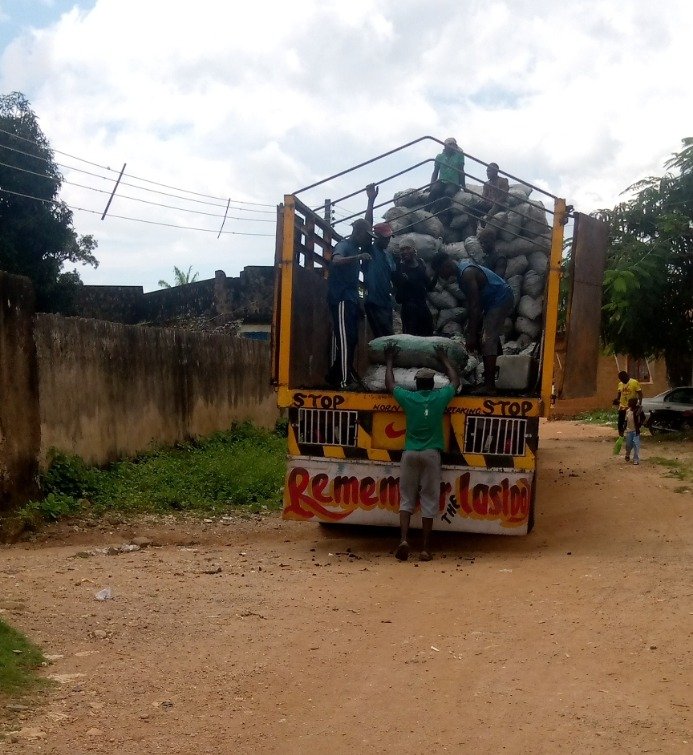
To establish ownership of the charcoal, this reporter approached the NAYES commander in Wamba, Yakubu Waziri. He confirmed that the charcoal being loaded into the trailer belonged to him.
“We sell charcoal at ₦4,600 per bag. But currently the price has dropped,” Waziri told The Liberalist.
He also demonstrated detailed knowledge of the trade.
“Some trailers load 800 bags. And there is one 7UP trailer; it loads 500 bags,” he said.

The charcoal stockpiled at the NAYES office had come from rural communities where Waziri is expected to deploy environmental guards to curb illegal logging and charcoal production.
“We get the charcoal from many villages. We get it from Wayo, Konvah, Uguri and even Kalagu,” he said.
Forests Leasing Fuels Disputes in Rural Communities
The growing demand for forestland has also intensified disputes among rural residents.
For Mohammad Yusuf, leasing the forestland he inherited from his late father became a vital source of income long before an accident left him walking with a crutch.
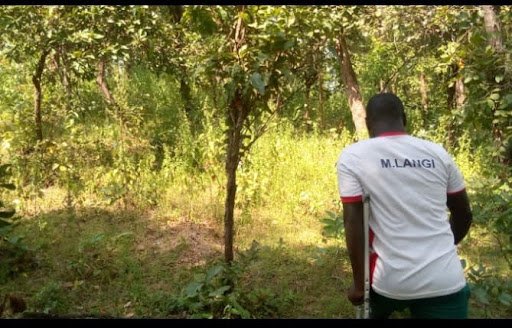
Recalling one transaction, Yusuf said: “The man bought a bush and cleared it. He gave me ₦30,000 in 2024 because charcoal was cheap at the time. For those buying land for crosswood, one truckload is ₦40,000.”
Yusuf told The Liberalist that his forestlands in Langi village still contain large trees. But because leasing offers quick money, other community members have begun laying claim to portions of the land, triggering frequent disputes.
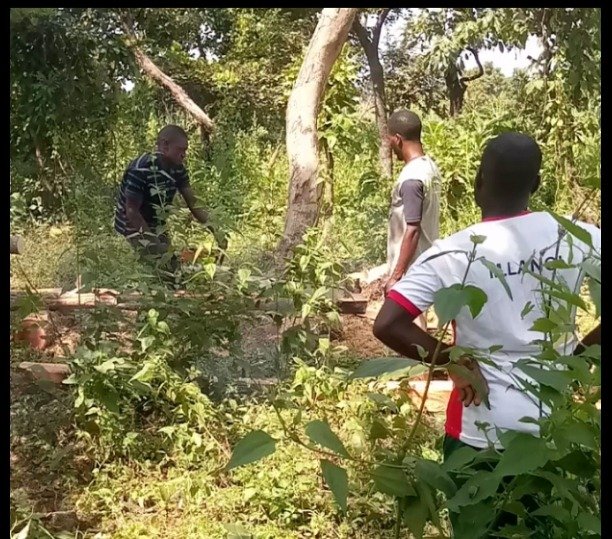
During a visit to Langi forest, this reporter saw a logger identified as Dahiru cutting a rosewood tree with a chainsaw after Yahuza had leased the land for him.
Moments later, another resident identified as Gandoki stormed toward Yusuf.
“Who permitted you to ask this logger to come and cut the wood here? Who gave you that permission?” Gandoki shouted.
Yusuf immediately fired back.
“So you just come here and ask who permitted me without even greeting people? If you want me to come with a fight, let me know. If you come to fight, let me see.”
Turning to this reporter, Yusuf explained the source of the disagreement.
“Gandoki is claiming that all this place belongs to his grandfather, and it’s not true. His grandfather didn’t plant here. I told them I don’t want any dispute regarding the land because the land is mine!”
As the argument intensified, Gandoki insisted the logger stop cutting the trees. Yusuf vowed to take the matter to court.
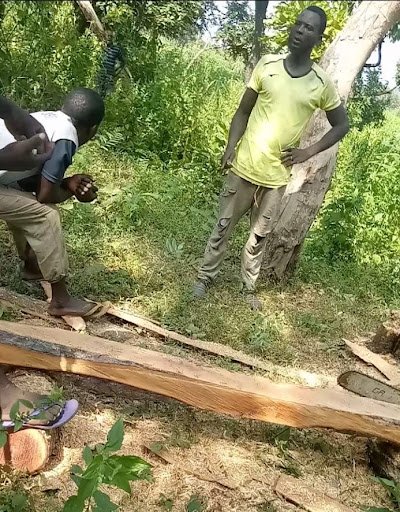
“They have been reporting me to our village head, but I will not settle here. I will take the matter to court. If they are fighting for the land, I am fighting for it too.”
Yusuf is not alone.
Deja told The Liberalist he had faced similar confrontations after leasing forestland to charcoal merchants. On one occasion, community members threatened to destroy his chainsaw. But, as the son of the village head, he said they never acted on the threat.
“There was a time when they said they would destroy my chainsaw because of the land. I told them to go and destroy it if they dared. But I didn’t see them again.”
He described such disputes as common in the community, saying he often challenges anyone threatening him to confront him at his workplace instead.
The conflicts extend beyond Deja.
Salisu Yahaya, a commercial driver in Wamba, said he once clashed with a stranger who collected ₦100,000 after leasing his land to a charcoal merchant. The disagreement escalated before other community members intervened and restored calm.
Despite Charcoal Ban, Government Taxes and Revenue Drive Forest Leasing
For more than a decade, 40-year-old Mohammad Haruna served as deputy chairman of the Charcoal Merchants Association in Wamba LGA. During that time, he also leased forestlands from different communities for charcoal production.
After paying ₦100,000 for a forest in Wude, Haruna said he produced 900 bags of charcoal. He then moved to Maiganga, where he leased three more forestlands, paying ₦40,000 for one, ₦50,000 for another and ₦70,000 for the third. From the three sites, he said he loaded about 700 bags of charcoal.
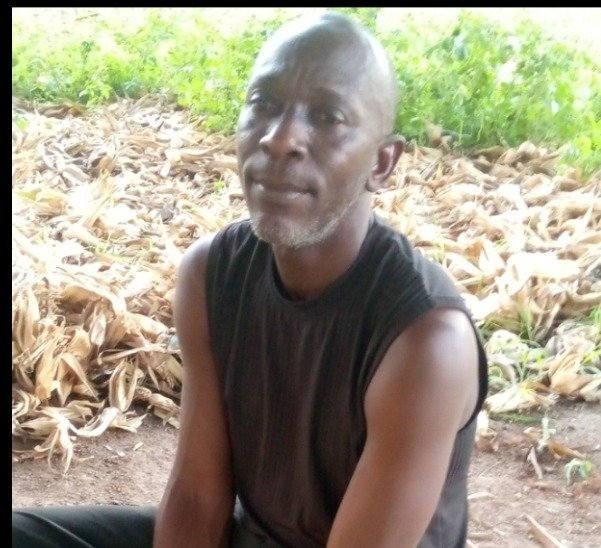
As a retired lessee, Haruna offered The Liberalist a rare glimpse into the taxes and levies government officials allegedly collect despite the state’s ban on charcoal production.
Believing he was speaking to a student researcher rather than a journalist, Haruna spoke freely about the system.
According to him, every vehicle entering a community to load charcoal must pay taxes and revenue. Beyond that, the Charcoal Merchants Association pays ₦150,000 annually to both the local and state governments to allow members to continue operating.
“The local government is collecting ₦50,000 tax. That’s for the trailer. They’re collecting it when the trailer is loading the charcoal. And besides, every year, we settle with the local government and the state with ₦150,000 each from our charcoal association. That’s apart from the ₦50,000 tax that we are paying when loading the charcoal,” Haruna said.
He also complained about additional payments demanded by officials. He said drivers who fail to pay immediately, even after obtaining receipts, risk being forced to pay again at checkpoints.
“They’re collecting it at Kurmin Tagwaye. There is another one in Tofa, a road along Abuja.”
According to Haruna, the collections extend beyond Nasarawa State.
“Outside the state, they used to collect it along Kaduna Road. But we unite, so we are giving them ₦5,000 before they’ll allow us to pass.”
He added that every truck transporting charcoal is expected to carry three receipts, one from the local government, one from the state government and another from the Charcoal Merchants Association.
To verify Haruna’s claims, The Liberalist obtained copies of all three receipts. An official identified as Babaruku regularly issues the state government and association receipts, while another official, Aliyu, issues the local government receipt. Both men are based in Wamban Kurmi.
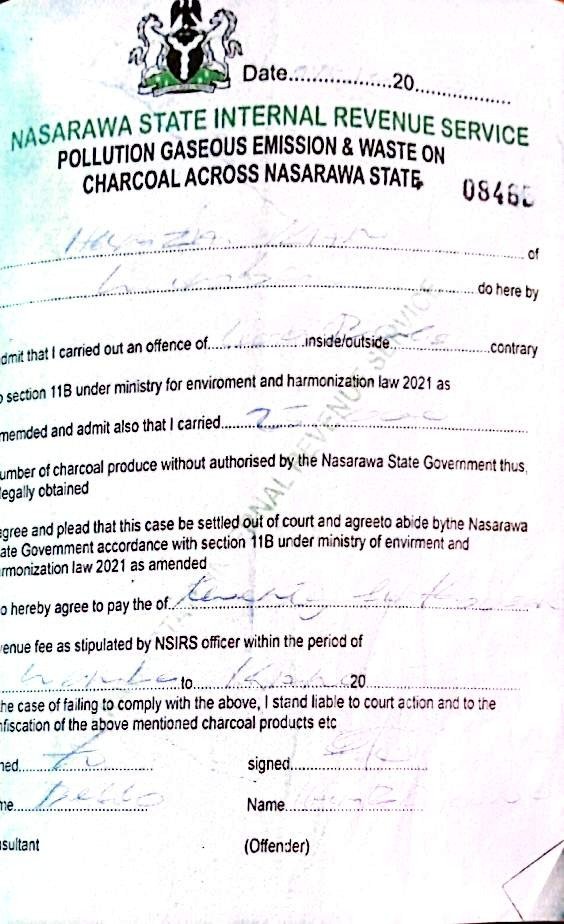
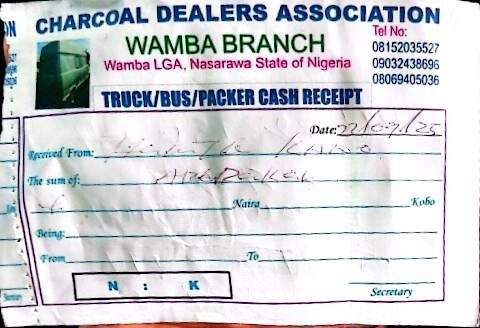

Interviews with dozens of charcoal merchants indicate that government officials continue to collect revenue from the trade despite the charcoal ban. The Liberalist found that these collections have become part of a thriving forest-leasing system that continues to drive deforestation across rural communities.
Rural Land Leasing Fuels Charcoal Supply Networks Across States
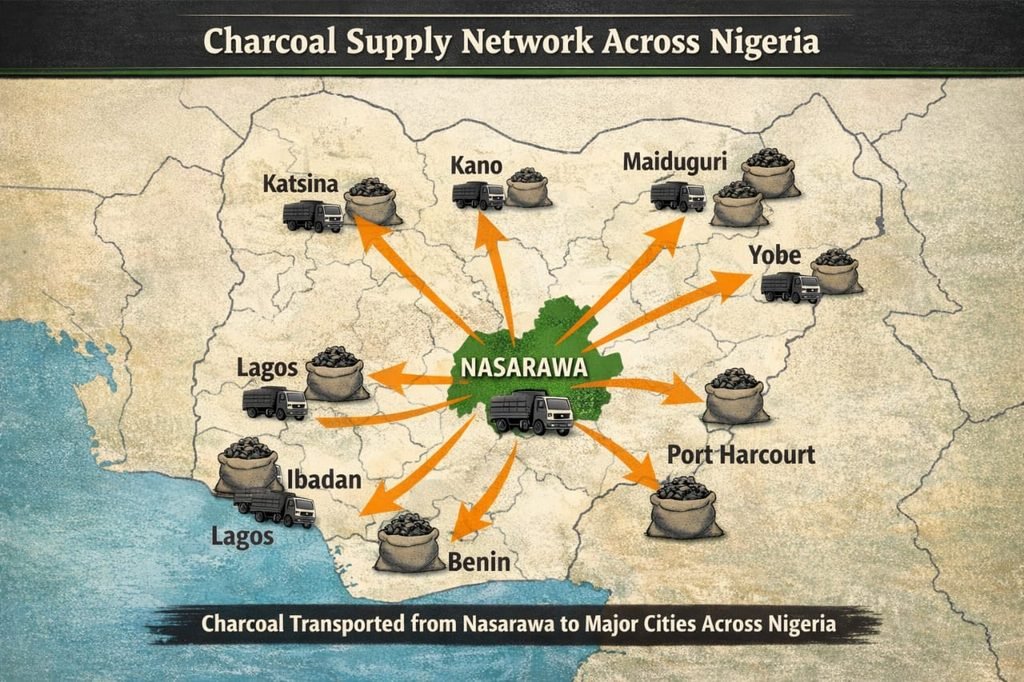
Haruna said his business supplied thousands of bags of charcoal to buyers across Lagos, Benin, Katsina, Kano, Maiduguri, Port Harcourt, Yobe and Ibadan.
“I work with one Lebanese person in Lagos. He bought a lot of truckloads of charcoal from me. We connected, and he bought over 5,000 bags of charcoal from me. While in Ibadan, a woman called Alaja paid for one trailer, which loaded over 800 bags, and I sold it to her,” he told The Liberalist.
He also identified buyers in other parts of the country.
“I sell it to one Abubakar in Port Harcourt. In Katsina, it’s Ibrahim. In Benin, I supply it to Yusuf.”
In Kano, he said, his customer base is even larger.
“There is Mubale, Ibrahim and Hamza.”
Like Haruna, another merchant identified as Musa MaiKano from Kano state was seen loading charcoal in Wamba. Multiple sources told The Liberalist he had operated in the area for years.
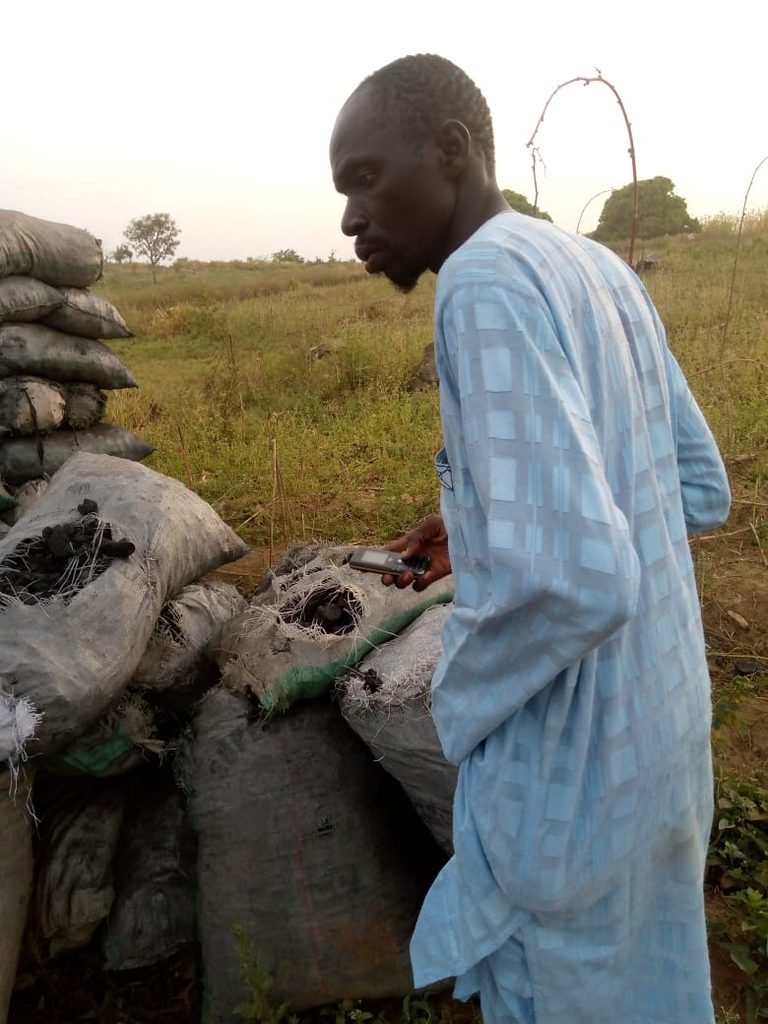
When this reporter asked whether he would sell a single bag of charcoal, he declined, saying the consignment was destined for Kano.
Interviews with multiple sources revealed that merchants from different parts of the country continue to converge on Nasarawa’s rural communities, leasing forestlands from residents and expanding a charcoal supply network that stretches far beyond the state.
The Shrinking Wastelands
The expansion of forest leasing has accelerated forest loss across Nigeria, turning once-thriving woodlands into shrinking wastelands.
The Liberalist found that the Wamba community was once richly forested. According to Global Nature Watch (GNW), the area had about 66, 000 hectares of natural forest in 2020, accounting for 56 percent of its total land area. By 2025, however, Wamba had lost about 1,500 hectares of natural forest to continued degradation. Experts warn that the permanent loss of these forests threatens biodiversity and worsens climate change.
Satellite imagery also reveals the extent of tree cover loss between 2021 and 2025 across the area, highlighting the continuous pressure on the forest.
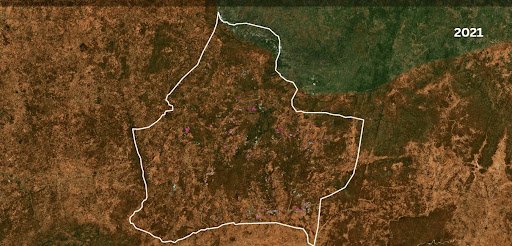
The red markings indicate the areas where tree cover loss is detected, while a satellite background provides the view of the surrounding landscape. The contrast between the areas with continuous vegetation and those with fragmented or reduced tree cover helps to show the changing landscape over time.
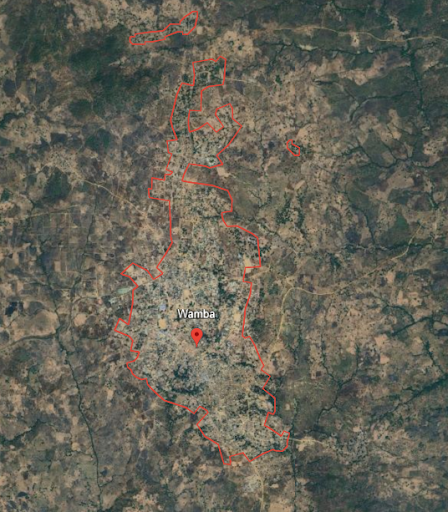
Wamba aerial view from Google Earth Pro. Credit: Abdulbasid Dantsoho
Mayokun Iyaomolere, Executive Director of the environmental organisation Plogging Nigeria, warned that communities leasing forestlands for commercial activities face growing environmental and climate risks.
“When those trees are taken away, the area loses its cooling effect, and erosion increases. Trees help regulate temperature and protect the soil, reducing the impact of heavy rainfall,” he said.
He explained that trees naturally absorb carbon from the atmosphere, helping to slow climate change.
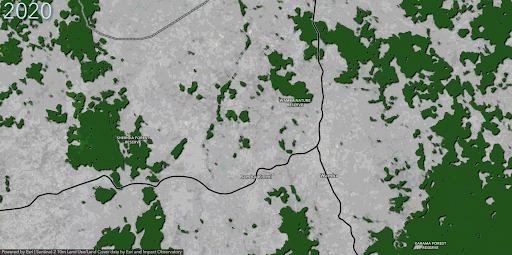
Landcover satellite showing Natural forest area continues to shrink around the three forest reserves of Wamba Forest Reserve, Sherigia and Karama FR from 2021-2025. Credit: Abdulbasid Dantsoho
“They are natural sinks for greenhouse gases. They play a critical role in cooling the environment through the process of evapotranspiration. The land surface becomes more exposed during heavy rainfall if there are no trees,” he added.
The trend extends beyond Wamba.
Between 2020 and 2025, Nasarawa State lost 15,000 hectares of natural forest, releasing an estimated 4.5 million metric tonnes of carbon dioxide into the atmosphere, according to GNW. Satellite analysis by the organisation further shows that all recorded forest loss in the state occurred in areas where deforestation was the dominant driver.
Satellite monitoring data further revealed a critical loss of forest cover. Between 2021 and 2025, the data detected about 108.000 of tree cover loss in Nasarawa State, where vegetation ranging from dense canopy to sparse woodland was cleared, driven by human-led encroachment. The dark red marks indicate the highest degree of tree cover loss and devastation, which is followed by the pale yellow markings highlighting lower density of loss, representing a smaller share of tree cover loss per area.
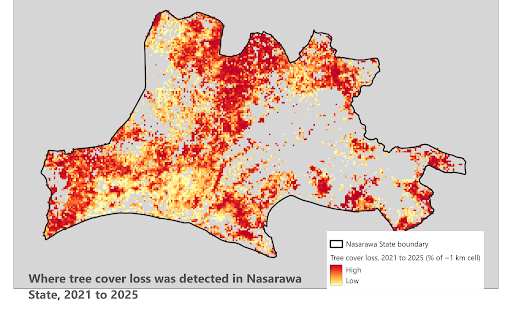
The losses in Nasarawa reflect a wider national crisis.
From 2021 to 2025, Nigeria lost 1.6 million trees of tree cover, about 15 percent of the country’s existing tree cover during the period, releasing roughly 890 million metric tonnes of carbon dioxide into the atmosphere.
The figures reinforce earlier concerns raised by Ibrahim Jubril, former Minister of State for Environment, who said Nigeria loses about 1.5 million trees to indiscriminate logging. He also estimated the country’s annual deforestation rate at 3.5 percent, one of the highest in the world as of 2016.
The continued expansion of forest leasing, The Liberalist found, is helping to sustain this loss.
Fear and Anxiety Over Environmental Risks
For many residents of Wamba, the effects of disappearing forests are no longer distant environmental concerns; they have become part of everyday life.
Abdullahi Isah, a resident of the community, said the continued clearing of forests has heightened fears of worsening environmental hazards.
“Anytime we feel the wind, our minds will not be at rest. And the zinc will be making an unusual sound. That’s if the zinc is new. But for those with old houses and zincs, the rafters are often destroyed. The wind will forcefully remove the zinc to another place. And it’s not like that before,” he stated.
Isah said trees once shielded the community from strong winds, but he now fears worsening erosion and increasingly harsh weather conditions.
He also said the cold experienced during October, November and December has become more intense.
“The cold now is much worse than the one we felt before. The thing is just coming directly, and it’s hitting the community due to a lack of trees. Before, the cold was surely reduced by the trees. We feel the cold around early morning and evening.”
Another resident, Yahuza Safiyanu, said the promise of quick money from logging and forest leasing has drawn many young people away from farming.
“Leasing and logging are turning the community into the Sahara. And the strong youths in the villages have stopped farming. They are now relying on logging to get quick money. And the worst thing is that they’re destroying without replanting the trees,” he told The Liberalist.
Safiyanu said he fears that the disappearance of trees will make communities more vulnerable to airborne diseases, while wildlife has already begun disappearing from the area. He believes the government must urgently stop forest leasing before the environmental damage becomes irreversible.
Sahabi Abubakar, a tea seller, expressed a similar concern, saying he fears flooding will worsen if forest leasing continues unchecked.
Those fears mirror official warnings.
In July 2025, the Federal Ministry of Environment listed Nasarawa among the states at risk of severe flooding. Months later, floods struck two communities in the state, killing one person and destroying about 300 farmlands and crops across three local government areas.
Floods have repeatedly devastated communities in the state. In one of the worst years, the National Emergency Management Agency (NEMA) reported that flooding killed 165 people, left more than 81 missing and affected 119,791 people nationwide.
Studies also show that forest degradation weakens ecosystems that naturally protect communities from flooding while reducing access to food and medicinal plants derived from forests.
Iyaomolere warned that removing tree cover leaves communities increasingly exposed to flash floods and windstorms because there are fewer trees to absorb water and reduce the force of strong winds.
He urged authorities to criminalise rural forest leasing as part of efforts to reduce long-term environmental degradation.
“People should lease their lands, but it shouldn’t be for illegal activities. Rural land leasing needs to be stopped. It needs to be checked. It needs to be criminalised if we are really going to stop it because it leads to deforestation.”
What Experts Say About the Law
Abdulrasheed Hamad, a Nigerian legal practitioner, told The Liberalist that under Nigerian law, all land in each state is vested in the governor, who holds it in trust for the people.
“That means the governor of the state is the owner of the land, and he’s holding the land in trust for the benefit of the people.”
“That’s why individuals cannot own land. Under Nigerian law, an individual can only be a sublessee, while the land is ultimately owned by the governor. This is provided in Section 1 of the Land Use Act. Before you say you are the owner of a land, you have to obtain government consent,” he said.
Speaking on the National Environmental (Control of Charcoal Production and Export) Regulations, 2014, Hamad said the law provides guidelines and penalties for commercial charcoal production and activities involving forestlands.
“According to the regulation, the export of charcoal is prohibited except with the approval of the Federal Department of Forestry. Also, under the regulation, a person must submit an application to obtain a permit before exporting charcoal. The law also requires payment of a prescribed fee before proceeding with commercial charcoal production,” he told The Liberalist.
Hamad said the regulations prescribe penalties for offenders.
“Section 91(1) states clearly that anybody who violates the provisions of the regulation shall, upon conviction, be liable to a fine of not less than ₦1 million or imprisonment for a term not exceeding five years, or an additional fine of ₦10,000 for every day the offence continues.”
“If the offence is committed by a corporate body, it shall, upon conviction, be liable to a fine of not less than ₦5 million and an additional fine of ₦50,000 for every day the offence continues.”
Despite these legal provisions, The Liberalist found that illegal forest leasing, logging and charcoal production continue largely unchecked.
Hamad described forest leasing for charcoal production as illegal because it facilitates environmental degradation. He urged the government to prosecute offenders, including local guards implicated in the trade, while providing affordable alternatives to charcoal through subsidies for cleaner cooking fuels.
“It’s the responsibility of the government to fish out those local guards and prosecute them under environmental laws and even public service laws. The main essence is to serve as a deterrent to others,” he said.
Reaction from the Nasarawa State Government
When confronted with The Liberalist‘s findings, Margaret Elayo, Nasarawa State Commissioner for Environment, said the government is intensifying efforts to curb the forest-leasing trade driving environmental degradation across communities.
“The government is working on strategic plans to stop land leasing by residents,” she said.
Elayo said the ministry is pursuing a broader strategy beyond enforcing the charcoal ban.
“To address this, the ministry is not only enforcing the ban but taking a multifaceted and community-inclusive approach. We are also collaborating with traditional rulers and local stakeholders to ensure local enforcement and compliance.”
She acknowledged that many residents depend heavily on charcoal for their livelihoods and said the government is introducing alternative sources of income.
“The state government is introducing livelihood alternatives, such as agroforestry, beekeeping and sustainable crop farming, to reduce dependence on charcoal production. These initiatives are being rolled out in phases in affected communities, starting with pilot interventions in key areas.”
When contacted, Ezekiel Jaga, the executive Chairman of Wamba LGA, pledged to respond to The Liberalist’s findings as soon as he made his findings.
“I need to contact the department that is concerned so that I can get back to you. I will make my findings from the Agric Department and refer back to you,” he said.
_________________
This report was facilitated by the Wole Soyinka Centre for Investigative Journalism (WSCIJ) under the Story Support component of its Collaborative Media Engagement for Development, Inclusivity and Accountability (CMEDIA) Project.