The recent plan by Aliko Dangote, the billionaire businessman and president of the Dangote Group, to invest over $10 billion in Africa’s power sector has raised hopes for the development of Africa’s economy. Although the project will begin in four years, Dangote aims to address the electricity deficit that has hindered business growth across the continent.
“In the next three to four years, there will be a major transformation in Africa. And that’s why we’re looking at power,” he said.
Over the years, private-sector participation has proven sustainable in managing infrastructure, boosting production, and delivering better services to the people. The success of Dangote’s refinery demonstrates the potential of private-sector investment, especially when compared with the longstanding challenges facing government-owned refineries and power infrastructure, which have suffered years of neglect.
As part of broader efforts to address electricity shortages and strengthen the economy, major investors supported private-sector participation during Africa’s Energy Summit last year. They urged the Senegalese government to allow private firms to invest in the power sector and extend electricity access to millions of Africans.
Africa’s Energy Crisis
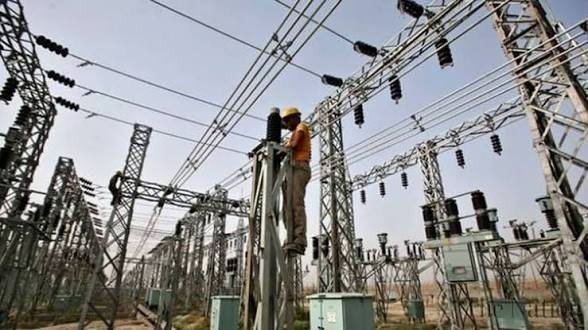
For decades, Africa has grappled with persistent electricity shortages. The energy crisis has discouraged entrepreneurs from expanding their businesses, hindered productivity and slowed economic advancement across the continent. The continued struggle to secure a stable electricity supply has increasingly threatened investors’ confidence and disrupted the operations of industries, companies and other productive ventures. For instance, the Central Bank of Nigeria (CBN) identified persistent power outages as an operational challenge affecting 1,900 firms across industries, services and agriculture. The CBN data further show that 74.5 percent of business respondents identified insufficient power supply as one of the major factors affecting business stability.
In Nigeria, the national grid collapsed 12 times in 2024, followed by four collapses in 2025 and two in 2026. These repeated collapses have forced businesses to depend on generators to keep their operations running, increasing their operating costs. The electricity deficit leaves 88 million people without reliable access to electricity in the country,. The Alliance for Rural Electrification identifies Nigeria as the country with the largest electricity access deficit among 20 countries worldwide. The World Bank has also identified Nigeria as one of the African countries facing severe electricity supply challenges.
Like Nigeria, many African countries have experienced persistent power outages. In Tanzania, frequent blackouts have disrupted business operations and limited citizens’ ability to earn a living from their businesses. Businesses, particularly those outside urban areas, have suffered from unreliable electricity supplies and persistent grid problems.
One of the major consequences of these outages has been declining sales. For a long time, businesses in Tanzania have faced significant financial losses, with estimates suggesting that they lose 15 percent of their annual sales because of unreliable electricity. Manufacturers have also had to rely on off-grid power systems, which increase operating costs and sometimes force them to suspend production.
Other African countries, including Uganda, Ethiopia, Mozambique, the Democratic Republic of the Congo and Madagascar, also face persistent electricity supply challenges that affect businesses and economic growth.
Dangote’s refinery has demonstrated the potential of private investment to transform Nigeria’s petroleum industry. The refinery has helped Nigeria move towards becoming a net exporter of petroleum products to international markets, including Europe, the United States and Brazil. It has also strengthened domestic fuel security by supplying over 60 percent of Nigeria’s petrol. With the capacity to process up to 700,000 barrels of crude oil daily, the refinery has the potential to reduce Nigeria’s dependence on imported petroleum products and ease supply pressures in other African countries.
The broader success of private-sector investment in managing large industrial infrastructure also demonstrates its potential to create wealth for ordinary Nigerians. Dangote’s initial public offering (IPO), which offers 4.1 billion shares to the public, represents another opportunity for Nigerians to participate in the business. As citizens purchase shares, they become investors and hold stakes in the company.
Dangote’s planned investment in Africa’s power sector could help address the continent’s longstanding energy crisis, just as his refinery has helped transform Nigeria’s petroleum industry. It could also help more businesses remain operational and avoid closure. Makhtar Diop, a Senegalese economist and managing director of the International Finance Corporation (IFC), reitrated the potential of private-sector participation to attract greater investment in the energy sector and expand electricity access for millions of Africans, and identified the limited private-sector involvement in financing the sector as a challenge.