
For three decades, the Nigerian government justified state ownership of petroleum refineries under the premise of protecting national interests. The economic outcome of this policy, however, reveals an obvious contrast between state-led monopolies and private enterprise. While the Nigerian National Petroleum Company Limited (NNPCL) spent trillions of naira on dormant assets, the Dangote Petroleum Refinery and Petrochemicals FZE has opened its books to the Nigerian Exchange Group (NGX) for an Initial Public Offering (IPO), proving once again how private enterprises trump when rendering services to the people.
Running from September 14 to October 13, 2026, the ongoing IPO offers 4.1 billion ordinary shares to the public at ₦525 per share. The minimum application of 10 shares (₦5,250) ensures high retail accessibility, aiming to attract millions of individual investors through digital brokers like Cowrywise, Bamboo, Trove and others. The juxtaposition of these two models provides a lesson that true national wealth distribution is not achieved through government monopolies, but by allowing citizens to take charge of the wealth of their nation.
To measure the significance of the Dangote listing, one must examine the baseline of state failure it disrupts. Between 2002 and 2022, the Nigerian government reportedly spent approximately ₦17 trillion (historically valued at over $26 billion) on Turn Around Maintenance (TAM) for its three state-owned refineries in Port Harcourt, Warri, and Kaduna. Despite these massive capital injections, the facilities failed to refine petroleum products for domestic consumption.
Economic experts have consistently criticised this expenditure. Professor Segun Ajibola, a professor of Economics, attributed the failure of state-run refineries to systemic institutional flaws. He blamed the persistent waste on “poor implementation, mismanagement and lack of accountability on the part of government-owned institutions,” arguing that resources diverted to TAM never yielded commensurate results.
Similarly, Idayat Hassan, Director of the Centre for Democracy and Development (CDD), previously pointed at the economic irrationality of state-funded maintenance. “It is becoming counterproductive to try to continue to rehabilitate what is failing. If we do a cost analysis, we should be able to see how much more we need for a new refinery. You don’t need that amount of money to turn around a refinery anywhere in the world,” Idayat explained.
In a state-controlled asset, bureaucrats face no personal financial risk for operational failure. As a result, internal industry sources have described the TAM contracts as an “ATM machine” for officials, where contracts are routinely awarded for the maintenance of refineries that produce nothing.
The Dangote Refinery was built under the strict discipline of private capital, where every cost overrun directly impacted its private backers. Now that the 650,000-barrel-per-day facility is operational, its listing on the NGX shifts the paradigm of resource ownership.
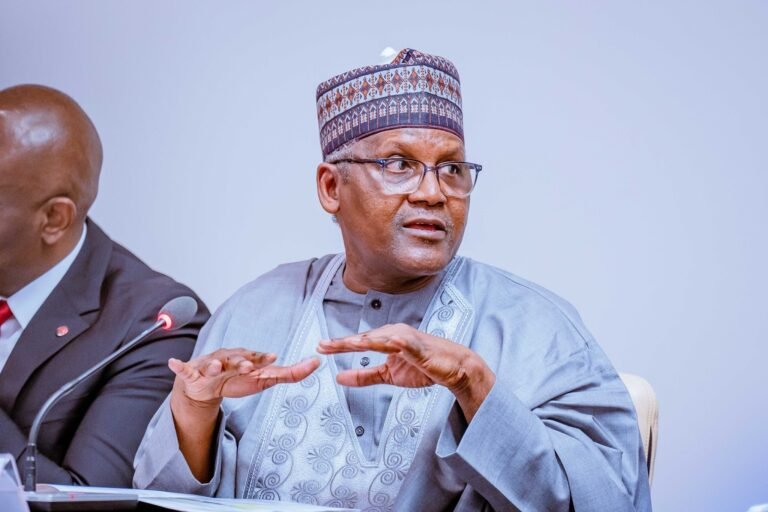
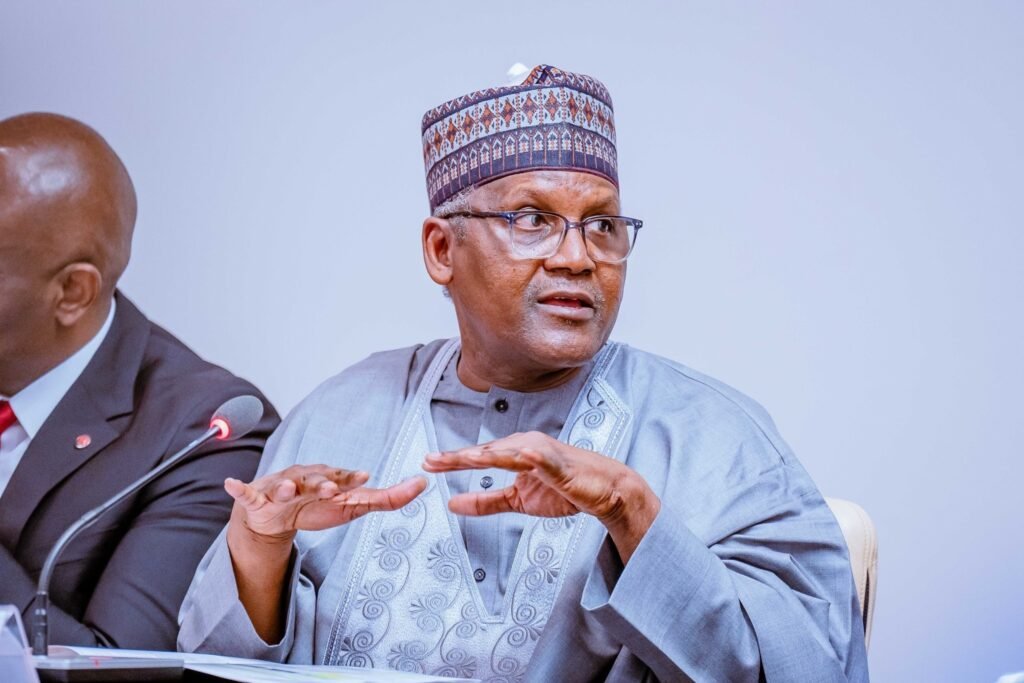
During the “Facts Behind the Offer” presentation at the NGX headquarters in Lagos this week, Aliko Dangote explained the economic rationale behind the IPO. “The primary purpose of this offer is to democratise the NGX,” he stated, indicating a deliberate strategy to broaden market access and ownership across the continent.
The scale of the offering, projected to give the refinery an implied market capitalisation of roughly ₦65.2 trillion (about $47 billion), demonstrates the capacity of private markets to mobilize domestic savings.
Speaking at the same event, Kesegofetse Molatlhegi, Chief Executive Officer of the Botswana Stock Exchange, drew attention to the broader macroeconomic implication of this private sector triumph. “Africa is not poor; it is unmonetised,” Molatlhegi argued, praising the initiative as proof that African capital markets can fund globally significant industrial projects without relying on state intervention.
While some market observers have questioned the ₦525 share price, financial analysts maintain that the valuation aligns with the asset’s underlying fundamentals. Asalu Adegboyega Yinka, a stock market analyst, dismissed claims that the IPO is overpriced, pointing to the facility’s massive production capacity and growth prospects.
“You cannot conclude that a stock is overpriced or underpriced simply because the share price looks high. We need to examine the underlying fundamentals; earnings, EBITDA, cash flow, debt, refining margins, production capacity, asset value, growth prospects,” Asalu explained. He noted that at ₦525 per share, the valuation is consistent with a private placement completed earlier this year, adding that calling the IPO expensive without establishing valuation parameters “is merely an opinion, not a valuation conclusion”.
By lowering the entry barrier to ₦5,250 and utilising digital investment platforms, the IPO bypasses institutional gatekeepers. It allows civil servants, students, and small business owners to secure a legally protected claim to future dividends.
_________________
Mutalib Jibril is a Journalism for Liberty Fellow at the Liberalist Centre.