
Economy · News
Customs Bow to Pressure, Reverse Import Levy
Studies consistently show that Nigeria’s import system faces challenges such as high tariffs, unclear valuation procedures, and frequent policy shifts, making it harder for businesses to operate.
Listen to this report
AI narration · about 2 minutes
 Quick brief
- The Nigeria Customs Service (NCS) revoked import declarations under the suspended 4 percent free-on-board (FOB) levy six days after its introduction on February 11, according to assistant comptroller Abdullahi Maiwada.
- The 4 percent FOB levy was expected to add an estimated N2.84 trillion in extra costs to Nigeria's annual imports valued at N71 trillion, potentially increasing prices in manufacturing, retail, and construction sectors, The Liberalist reported.
- The Liberalist article by Shereefdeen Ahmad highlighted that the levy would burden importers already facing tariffs up to 35 percent and a 7 percent value-added tax, risking higher consumer prices and reduced market competitiveness.
AI-generated from the story.
Share the summary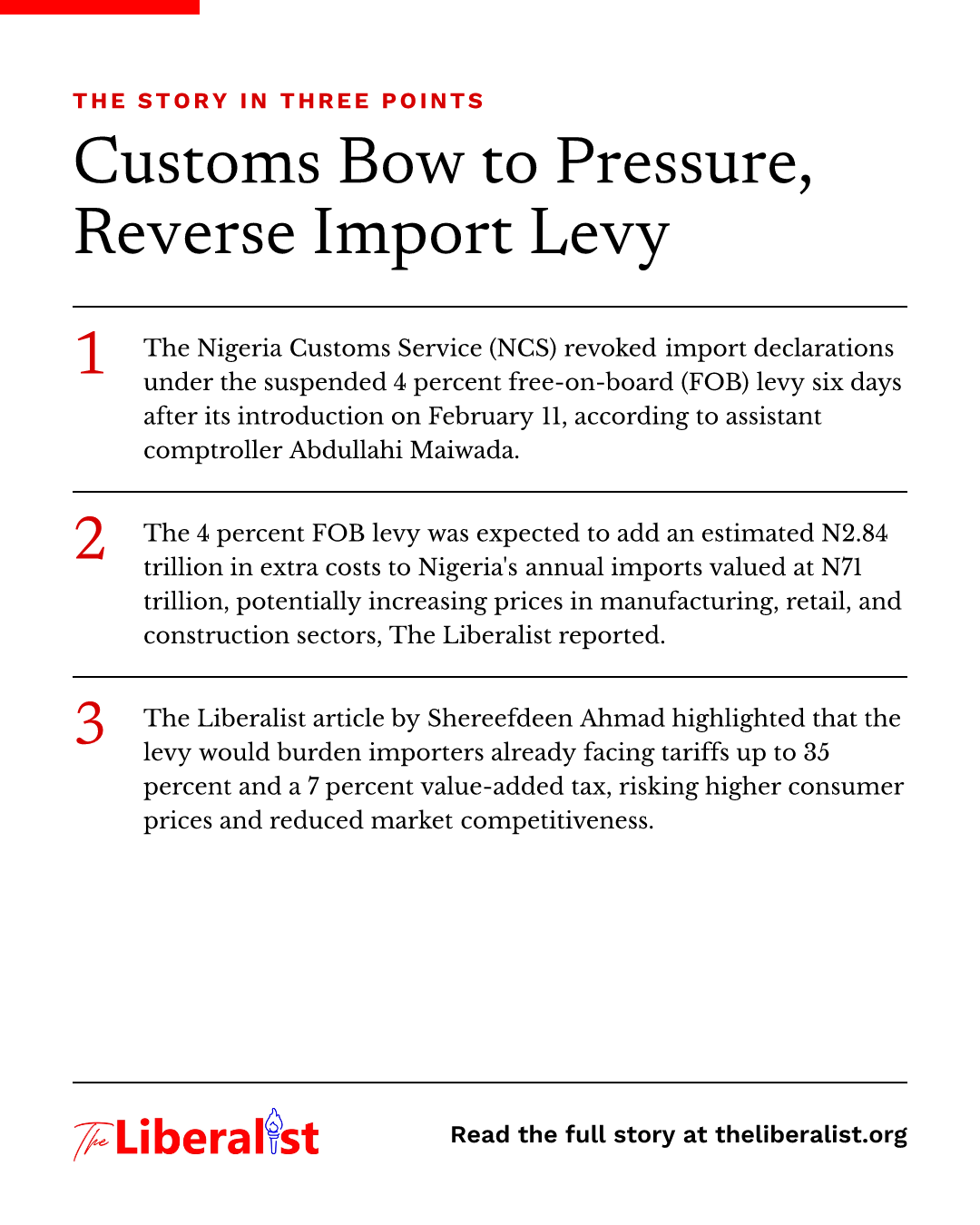
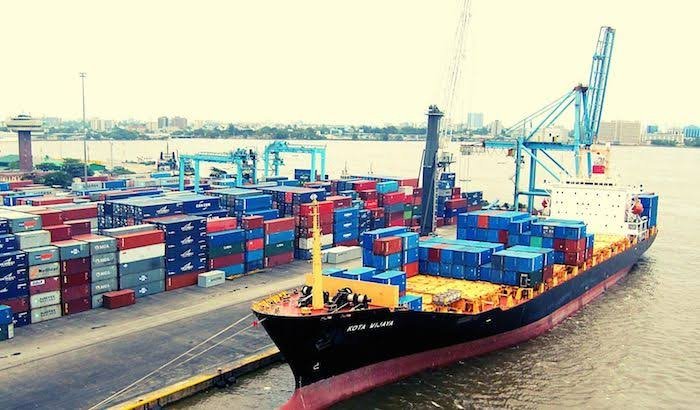
The Nigeria Customs Service (NCS) has revoked import declarations filed under the now-suspended 4 percent free-on-board (FOB) levy, following The Liberalist’s article on the policy’s economic impact.
The levy, widely criticised as an additional burden on importers, was expected to drive up import costs and worsen economic conditions for Nigeria. Under FOB terms, the sellers handle export clearance and transport goods to the departure port, while buyers assume all costs once the shipment is loaded.
The Liberalist article written by staff writer Shereefdeen Ahmad, “Nigeria: New Customs Levy Could Drive Up Import Costs”, highlighted how the four percent charge would further strain businesses already contending with multiple levies, including import tariffs that could as high as 35 percent or as low as five percent (depending on the goods), a 7 percent value-added tax. The article detailed the potential consequences for industries relying on imported raw materials, warning that the policy could increase consumer prices and reduce market competitiveness.
Six days after the levy’s introduction, the NCS announced its suspension on February 11.
In a statement on Monday, Abdullahi Maiwada, assistant comptroller and national public relations officer at the NCS, said the policy’s suspension was to “ensure clarity, maintain consistency, and prevent disruptions in clearance processes.”
He further stated that importers, customs agents, and other stakeholders affected by the policy must recapture their declarations to proceed with the clearance of their goods. The NCS assured that its “commands nationwide have been directed to provide the necessary assistance and clarifications to importers and agents requiring support during this period.”
With Nigeria’s annual imports valued at N71 trillion, the now-suspended levy would have added an estimated N2.84 trillion in extra costs—driving up prices across sectors, including manufacturing, retail, and construction.
Studies consistently show that Nigeria’s import system faces challenges such as high tariffs, unclear valuation procedures, and frequent policy shifts, making it harder for businesses to operate.
The Liberalist’s article emphasized the levy’s effects would extend across multiple sectors, including manufacturing, retail, and construction. It noted Importers factoring in the additional cost would likely raise product prices, leading to higher costs for consumers.
Follow to get an email when we publish
Get The Liberalist Weekly
Every story we published this week, in your inbox each Friday. Free.
Share this story
About the author
The Liberalist
Reporting and analysis from The Liberalist newsroom, a pro-freedom publication covering human rights, civil liberties and economic freedom across Africa.
More from The LiberalistReporting like this takes time on the ground. Help keep it going.
Donate