
Analysis
‘Freedom in Dire State in Central Africa’ — Report
The report reveals that weak institutions, insecurity, limited economic opportunities and political restrictions undermine progress across the region.
 By Usman Yakubu Usman
24 November 2026 · 3 minute read
Listen to this report
AI narration · about 4 minutes
 Quick brief
- Preparing the summary…
AI-generated from the story.
Freedom and prosperity continue to face a gridlock in Central Africa, with six of the region’s nine countries scoring below a 50 percent benchmark, according to the 2026 Freedom in Africa Report (F[in]AR).
The report reveals that weak institutions, insecurity, limited economic opportunities and political restrictions undermine progress across the region. While a few countries recorded relatively better performances, others remain affected by poor governance and limited access to essential services.
Launched by the Liberalist Centre on the 31st October at the Conference of Freedom Advocates (CFA) in Abuja, F(in)AR assesses the state of freedom and prosperity across African countries. The report reviews three interconnected dimensions: political freedom, economic freedom and prosperity, and tracks the performance of individual countries to show how political rights, economic opportunities and living conditions shape the well-being of citizens.
Central Africa faces the most difficult starting point, the report reads. For several countries, political weakness, limited economic opportunity and low prosperity appear together, making it harder to solve one problem in isolation.
Across the continent, the report identifies different levels of progress. While some countries have recorded improvements, others continue to stagnate due to political restrictions, economic decline and poor access to essential services. These challenges remain particularly evident in Central Africa.
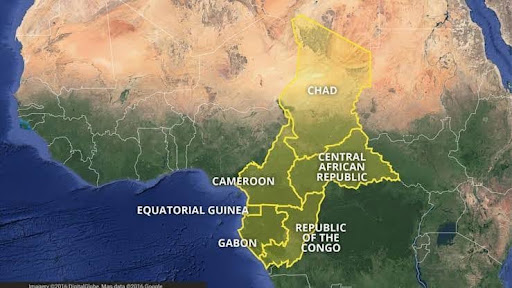
The subregion comprises nine countries, including Angola, Cameroon, Central African Republic, Chad, Democratic Republic of Congo, Equatorial Guinea, Gabon, Republic of Congo, and São Tomé and Príncipe. Agriculture, cattle herding and fishing provide livelihoods for many people in the region. However, poverty and food insecurity remain a disturbing challenge. According to F(in)AR, only three countries in the region, São Tomé and Príncipe, Gabon and Angola, recorded better performances.
In Angola, political freedom, economic freedom and prosperity recorded improvements at similar levels. The country recorded an overall score of 50.2 in 2026, a slight improvement compared to the 49 score in 2025. F(in)AR attributes the country’s economic performance partly to diversification into agriculture, mining and oil extraction. São Tomé and Príncipe scored 69.3 in 2025 and 64.2 in 2026, while Gabon improved from 53.6 in 2025 to 59.2 in 2026.
However, six of the nine Central Africa’s countries scored below the 50 percent benchmark in the overall freedom index, highlighting the region’s persistent challenges. While Cameroon recorded a slight improvement overall, the country scored 45 percent in 2026 against 40.8 in 2025. Following a similar trajectory, Congo Republic recorded 44.8 and 41.2 in 2026 and 2025 respectively.
Chad remains among the region’s poorest performers. With a population of more than 20 million, the country continues to struggle with insecurity, limited economic opportunities and weak institutions. The report records Chad’s prosperity score at 37.9, while its overall freedom score stood at 27.9 in 2026, compared with 39.7 in 2025.
Other countries in the region, like Equatorial Guinea, DR Congo, and the Central African Republic recorded just 33.9, 39.2, and 33.5 in 2026 respectively.
Weak Institutions Undermine Freedom
According to F(in)AR, the declining state of freedom in Central Africa points to institutional and economic challenges that have continued to constrain development across the region. In Chad, analysts linked the country’s economic difficulties to increased government spending and a declining share of oil revenue, which reportedly fell to 24 percent from 70 percent in recent times. The African Development Bank (AfDB) and other international organisations have also raised concerns about weak institutions and inadequate investment in essential sectors, particularly education and healthcare.
These challenges have limited the government’s capacity to improve living conditions and expand opportunities for citizens.
“Central Africa faces the most difficult starting point, the report reads. For several countries, political weakness, limited economic opportunity and low prosperity appear together, making it harder to solve one problem in isolation,” the report says..
To address these problems, F(in)AR recommends that governments build independent institutions capable of serving citizens effectively.
“The way forward must therefore begin with the basics: stronger public institutions, greater political stability, improved infrastructure, better access to essential services and a business environment capable of creating jobs. Countries such as São Tomé and Príncipe and Gabon show that stronger performance is possible within the region. The broader challenge is turning these pockets of progress into a wider regional trend,” it adds.
Follow to get an email when we publish
Get The Liberalist Weekly
Every story we published this week, in your inbox each Friday. Free.
Share this story
About the author
Usman Yakubu Usman
Staff Writer
Usman Yakubu Usman is a Staff Writer at The Liberalist.
More from UsmanReporting like this takes time on the ground. Help keep it going.
Donate