In the wake of incessant insecurity in Nigeria, a generation of children is being orphaned, forced to navigate hunger, trauma, and abandonment with little hope of a future.
Across communities where gunmen operate without consequence, hundreds of thousands of children have lost one or both parents to extremist violence. For many of them, childhood ends the moment terror enters their homes.
For Tala Adamu, that moment came early.
“Anyone who tried to escape the village and had their plans exposed was hunted down and killed by Boko Haram,” Adamu recalled in a report by HumAngle. “That was what happened to my father.”
Adamu was nine years old when armed men stormed his family’s home in Boboshe and shot his father at close range. Neighbours gathered to pray over the body before burying him in a shallow grave. Within months, Adamu’s mother died of cholera in an overcrowded internally displaced persons camp in Maiduguri. Overnight, he became an orphan, thrust into an adult world defined by fear, hunger, and unrelenting grief.
Sadly, Adamu is one of many.
Across northern Nigeria, children who once dreamed of classrooms and schoolbooks are now forced into menial labour simply to survive. Many grow up without education, psychosocial support, or protection. For some, the weight of trauma and poverty becomes unbearable, leaving them vulnerable to recruitment by the very terror groups that destroyed their families. This vicious cycle fuels further violence, deepening the crisis of orphanhood and insecurity.
For decades, armed groups have infiltrated rural communities with near impunity, imposing levies, abducting villagers, and executing those who resist. Defiance is often met with sudden death.
According to the United States Department of State, terrorist violence has displaced more than two million people across Adamawa, Yobe, and Borno states as of 2022, while an estimated 333,000 Nigerians have fled to neighbouring countries as refugees.
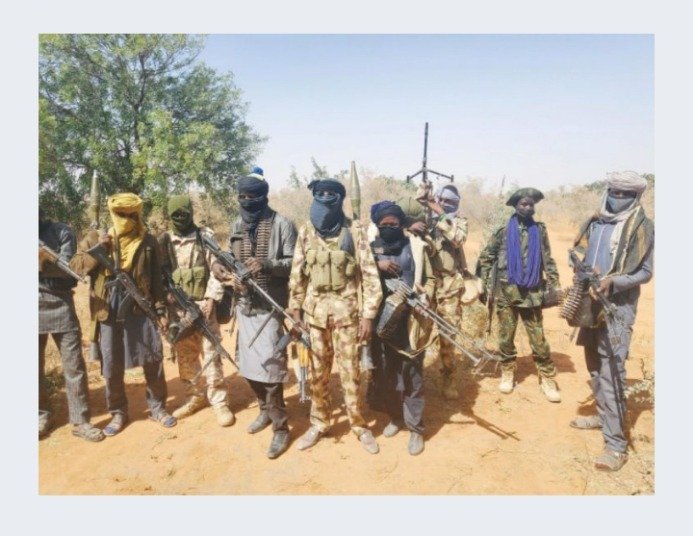
Terrorists. Credit: Arise TV
Meanwhile, across northern Nigeria, where gunmen strike with alarming regularity, the toll of bloodshed continues to rise. Mass killings and abductions have turned vast rural areas into zones of fear, adding relentlessly to the country’s death count. Between 2023 and 2024 alone, more than 700,000 people were reportedly killed by terrorists.
Beyond the killings, hunger has become a weapon of war.
In Shiroro, Niger state, reports show that starving children are deliberately lured by terrorist groups with food and basic supplies, then trained as child soldiers. When food is available in forest camps, children displaced by violence often seek refuge among armed groups as their only means of survival. The weaponisation of hunger against vulnerable children has become a reality across Nigeria’s conflict zones.
As killings and kidnappings persist, the humanitarian crisis deepens. Widespread displacement has left millions of children severely malnourished. In early 2025, the International Federation of Red Cross and Red Crescent Societies (IFRC) reported that more than two million children in Nigeria were suffering from acute malnutrition, warning that hunger remains one of the country’s deadliest threats to child survival.
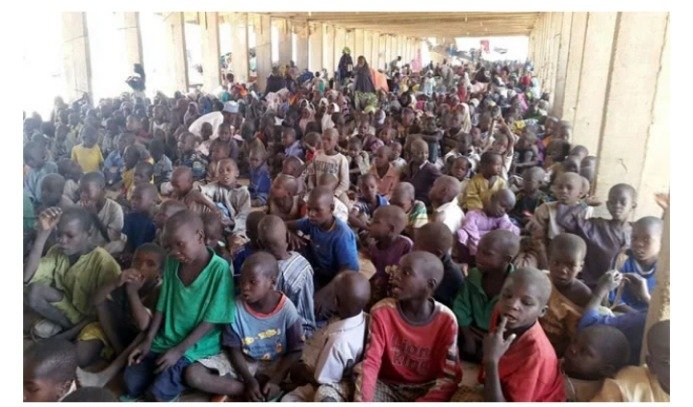
Malnourished children in IDP. Credit: Punch
The IFRC identified Nigeria’s North-East and North-West as the epicentres of severe malnutrition, disproportionately affecting children and women. Many families survive on little or no food and are forced to drink unsafe water after repeated attacks drive them from their homes. This reality mirrors the fate of Tala Adamu’s mother, who died of cholera after drinking contaminated water in an overcrowded displacement camp.
Displacement also shatters education and ambition.
Three years ago, according to a HumAngle report, Sani Ibrahim was a 17-year-old secondary school graduate in Yanbuki, Zurmi Local Government Area of Zamfara State. He dreamed of attending university and building a better future. That dream collapsed when terrorists invaded his village and killed both of his parents. Left without support, Ibrahim abandoned his education to focus on survival, turning to subsistence farming to feed himself.
“I feel terrible whenever I remember what happened, but I leave everything to God,” says Ibrahim. “Both my parents were killed by terrorists in November 2021. It was the darkest moment of my life. They were already planning to send me to university.”
The impact on children’s education has been devastating. In 2024, the United Nations Children’s Fund (UNICEF) disclosed that it had provided basic literacy education to more than 285,000 children orphaned by terrorism over the past three years in Borno state alone. Yet millions of other affected children across Nigeria remain outside the reach of such interventions, without access to education, adequate nutrition, or basic healthcare.
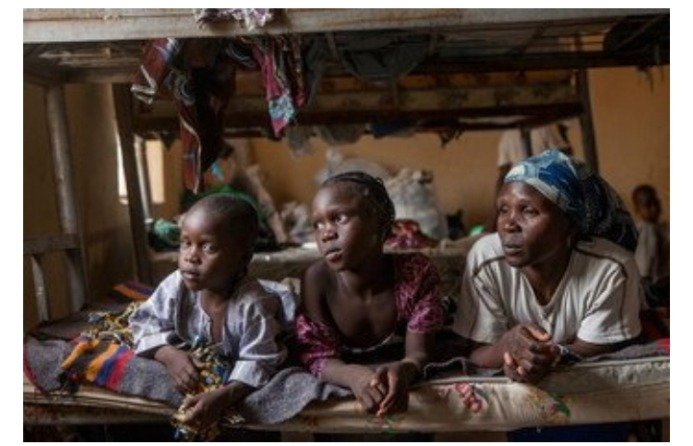
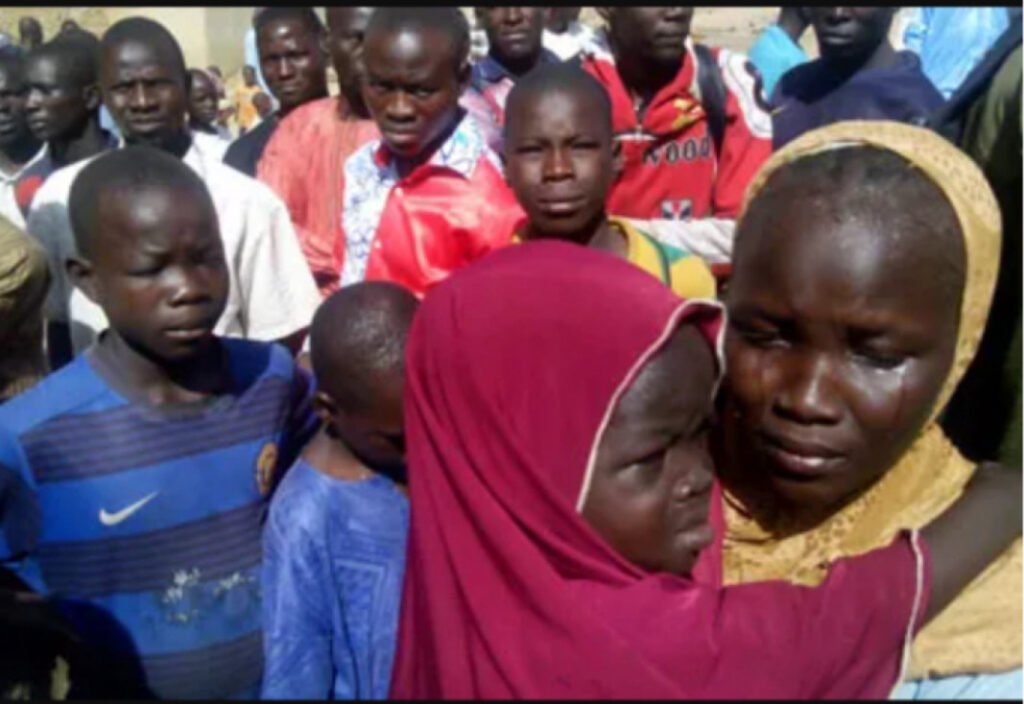
Displaced children and their mother in IDP. Credit: UNICEF
Children forced out of classrooms by violence are swelling Nigeria’s already staggering out-of-school population. New data from 2024 reveals that more than 18.3 million Nigerian children are no longer attending school, the highest number globally.
Save the Children, an international organisation advocating for children’s rights, warns that conflict leaves children dangerously exposed when violence becomes a barrier to education and safety. In its report, the organisation stressed that attacks on communities do not end with the sound of gunfire.
“Children suffer the devastating effects of attacks. Many may never return to school, as their most basic rights to learning and protection are violated,” the report reads. “They are exposed to further harm, including child marriage, teenage pregnancy, and child labour.”
Experts say children make up the majority of those affected by terrorism in Nigeria, underscoring the long-term threat to the country’s development. Cheikh Ousmane Toure, the United Nations country director in Nigeria, said that nearly 60 percent of those affected by insecurity are young people.
“These figures are not just statistics,” says Toure. “Each one represents a child whose life, dignity, and future are at risk. Nigeria’s development depends on protecting and empowering its young population.”
Amnesty International warned that unless the impact of prolonged conflict on children is urgently addressed, Nigeria risks losing an entire generation. Joanne Mariner, Acting Director of Crisis Response at Amnesty International, described the war in the country’s northeast as an assault on childhood itself.
“The past decade of conflict between Nigeria’s military and Boko Haram has devastated childhood in northeast Nigeria,” says Mariner. “Nigerian authorities risk creating a lost generation unless they urgently confront how this war has targeted and traumatised thousands of children.”