Analysis · Rule of Law
Mali’s Democratic Transition Falters Under Military Regime
While Goita continues to tout his leadership as a stabilising force, analysts caution that his extended rule has eroded Mali’s democratic institutions.
Listen to this report
AI narration · about 4 minutes
 Quick brief
- On July 10, Colonel Assimi Goita signed a law granting himself five years of renewable leadership without elections, deviating from the promise to return Mali to civilian rule, officials like Malick Diaw claimed this reflected popular will.
- In May, Goita disbanded all political parties and associations following pro-democracy protests, with Human Rights Watch reporting abductions of opposition figures such as Abba Alhassane, El Bachir Thiam, and Abdoul Karim Traore.
- Analysts including Ousmane Diallo and Nouhoum Togo warn that Goita's extended rule has eroded democratic institutions, making elections difficult, while opposition groups plan legal challenges and continued civil society resistance.
AI-generated from the story.
Share the summary
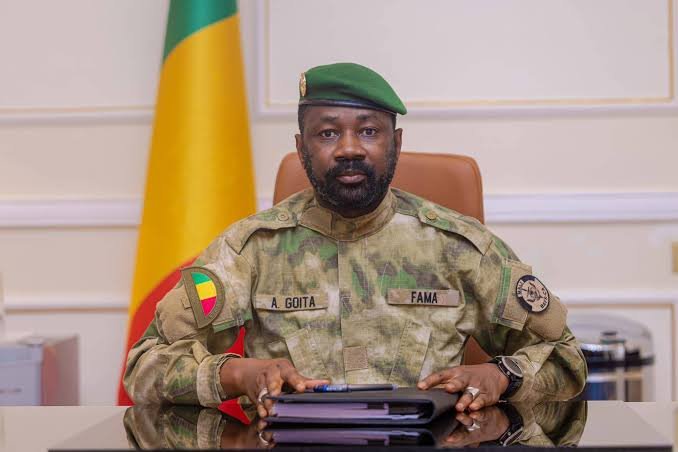
Mali’s democratic transition has entered a deep state of uncertainty under Colonel Assimi Goita’s leadership. On July 10, the military ruler signed a law granting himself five years of country leadership, renewable indefinitely without elections.
This move significantly deviates from the earlier promise to return Mali to civilian rule. Though officials like Malick Diaw, the president of the National Transitional Council (NTC), hailed the decision as “a major step forward in the rebuilding of Mali” and that “the adoption of this text is in accordance with the popular will,” this is not actually the case.
The national conference that paved the way for the new law was convened in April but met strong resistance. Most political parties boycotted the talks, accusing Goita of stifling dissent and using the process to tighten his grip on power.
The adoption of this text is in accordance with the popular will.
What began in 2020 as a pledge to restore democracy following the ousting of former President Ibrahim Boubacar Keita has morphed into a protracted military regime with fading signs of civilian return. First, the military installed an interim civilian administration but was quickly ousted in a second coup in 2021 by Goita, who has remained in power ever since.
Democracy Under Siege
Before Goita signed a law that could keep him in power for life, he had earlier proclaimed a decree in May disbanding all political parties and associations in Mali. This is the aftermath of a pro-democracy protest that erupted in the capital city, Bamako, where demonstrators took to the streets waving placards with inscriptions like “Down with dictatorship, long live democracy.”
In a live broadcast, Mamani Nassire, the minister in charge of “political reforms,” announced that “political parties and organisations of a political nature are dissolved throughout the national territory. It is forbidden for members of dissolved political parties and political organisations to hold any meetings.”
This crackdown hasn’t stopped at banning political groups. Several opposition figures have reportedly been arrested or disappeared. Human Rights Watch reported the abduction of Abba Alhassane, secretary general of the Convergence for the Development of Mali (CODEM), one of the leading political parties in Mali, by masked gunmen. Other political voices, like El Bachir Thiam of the Yelema party, and Abdoul Karim Traore, a youth leader of CODEM, have also gone missing under suspicious circumstances.
“These arrests represent a dangerous trend,” warned Ousmane Diallo, a Sahel-based researcher at Amnesty International in the Sahel region. “We see it as Goita trying to consolidate and hold on to power, and they have resolved to stand against it.”
While Goita continues to tout his leadership as a stabilising force, analysts caution that his extended rule has eroded Mali’s democratic institutions.
The path to elections, once viewed as a short bridge to stability, now seems obstructed by fear and repression. “The damage is not irreversible, but it’s going to be very difficult to get back on track for elections because things have gone very far from what was initially promised,” says Diallo.
Nouhoum Togo, head of the now-defunct Union for the Safeguard of the Republic party, added that “the Malian constitution recognises political parties, so we are going to take our case to the Constitutional Court. In the meantime, we will continue our fight as a civil society.”
Follow to get an email when we publish
Get The Liberalist Weekly
Every story we published this week, in your inbox each Friday. Free.
Share this story
About the author
Shekinat Kareem
Shekinat Kareem is a Staff Writer at The Liberalist.
More from ShekinatReporting like this takes time on the ground. Help keep it going.
Donate