
Analysis · Governance
Nigeria’s Centralized Federalism Is Failing Local Communities
For over 65 years of achieving self-government, Nigeria’s major issues are not addressed in local communities.
 By Usman Yakubu Usman
6 October 2025 · 3 minute read
Listen to this report
AI narration · about 4 minutes
 Quick brief
- In 2024, Nigeria's healthcare crisis led to the death of 36-year-old Chinenye Nweze in Onitsha due to inadequate medical attention, with over 75,000 women dying in childbirth in 2023, according to UN estimates.
- The government spent ₦14.36 billion on rural electrification in 2024, yet many communities in states like Edo, Ogun, and Taraba remained disconnected by 2025, with critics blaming distribution companies for neglecting rural areas.
- Fourteen major road projects in northern Nigeria were left unfinished in 2024, contributing to insecurity and economic hardship, while NGOs like WAFAI and PECi link these issues to governance failures and lack of local government autonomy.
AI-generated from the story.
Share the summary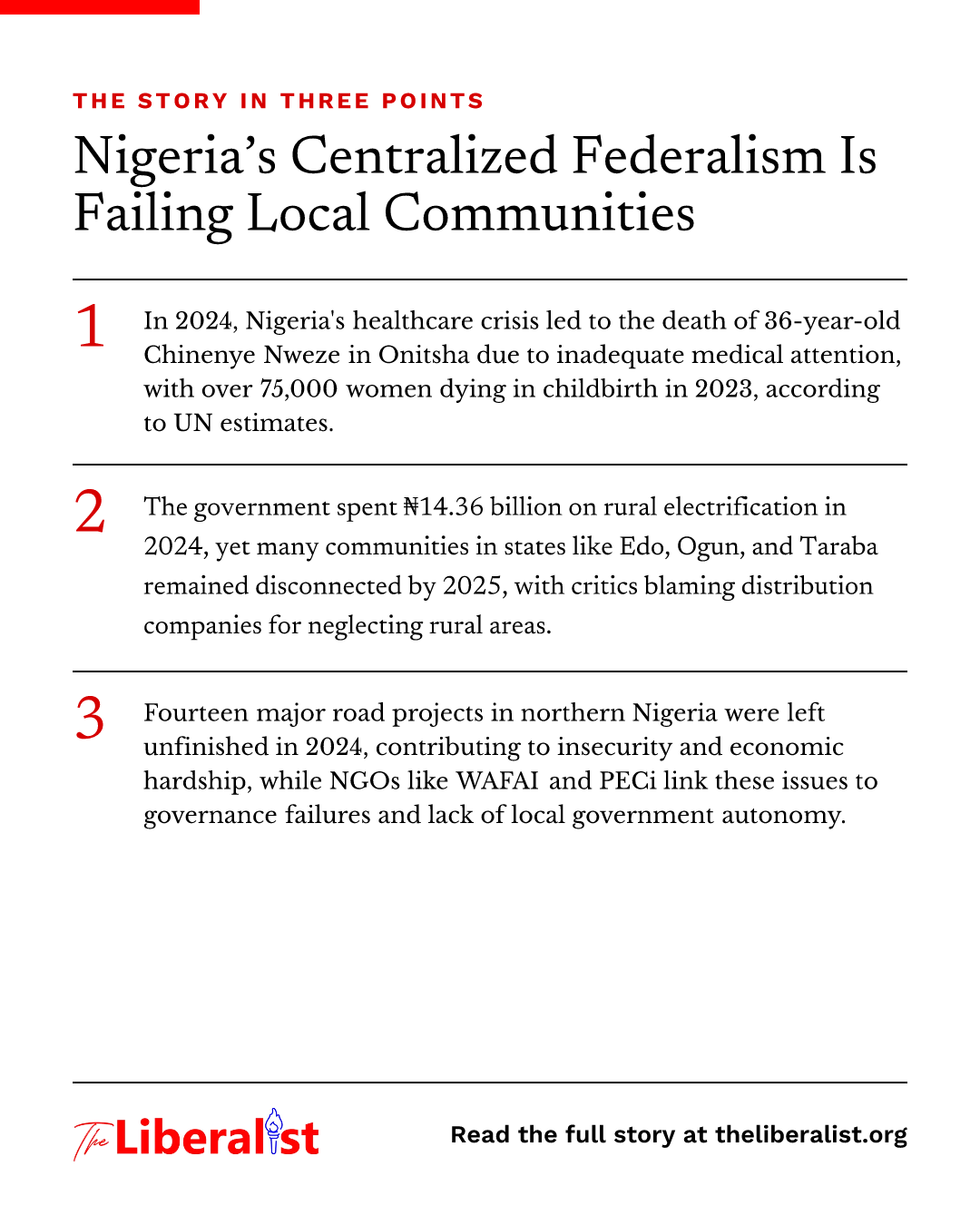
Every year on October 1st, Nigerians mark independence with speeches about unity, progress, and hope. Yet, 65 years since self-rule, the daily realities in rural towns and local councils tell a story of neglect. Despite billions of naira flowing through the federation account, the lives of millions at the local level remain untouched by development.
Few sectors reflect this failure more vividly than healthcare. In hospitals across Nigeria, especially primary healthcare centres, the local shortages of personnel and facilities leave patients to their fate. One case in Onitsha in 2024 illustrated the tragedy: 36-year-old Chinenye Nweze bled to death in a hospital due to inadequate medical attention.
This disturbing reality affects the rural dwellers in the 774 local governments across the country. According to a recent UN estimates for Nigeria, more than 75,000 women died during childbirth in 2023 alone, roughly one every seven minutes, and as BBC affirmed, Nigeria is described as the worst country to give birth.
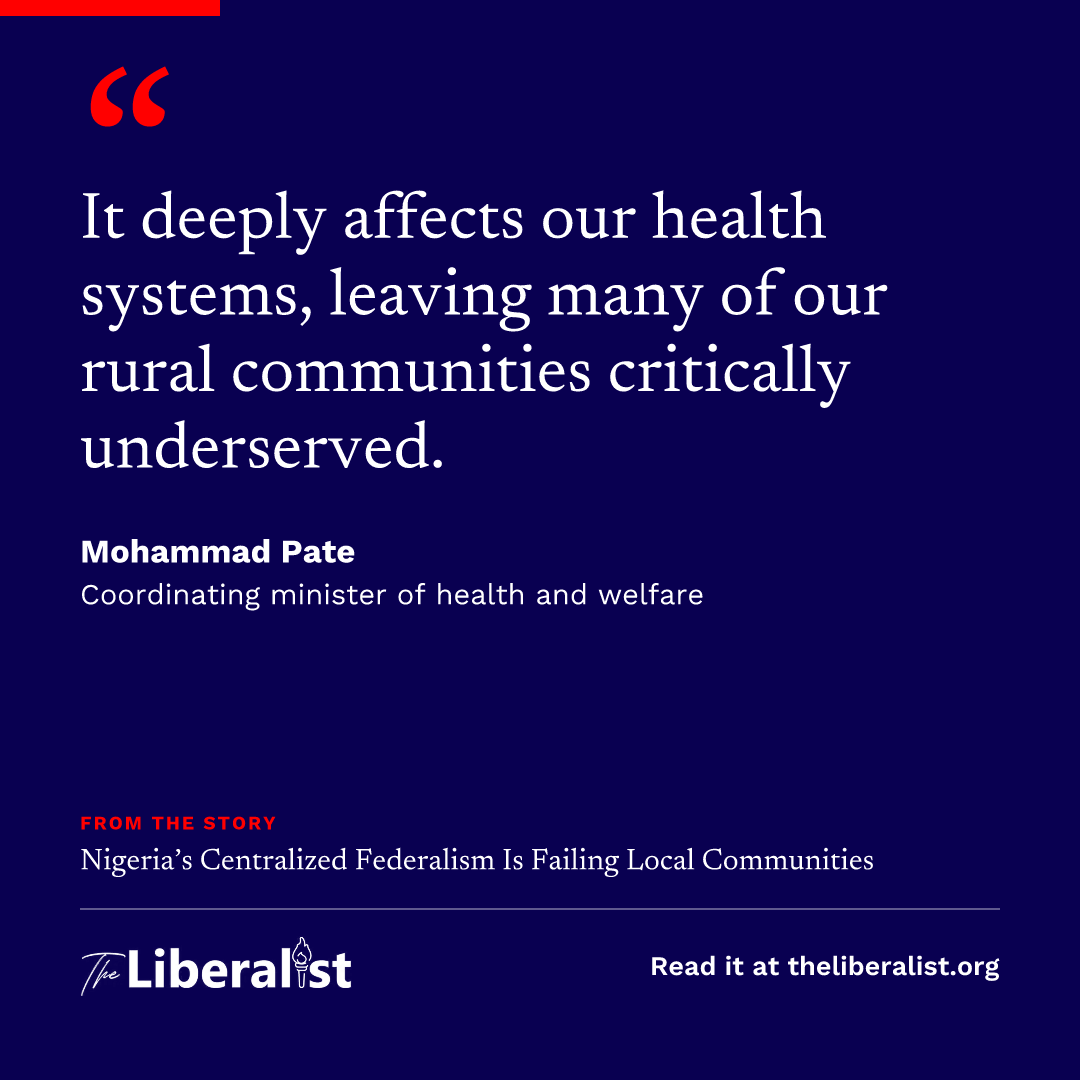
It deeply affects our health systems, leaving many of our rural communities critically underserved.
Nigeria’s medical crisis is compounded by the mass exodus of doctors who leave the country in search of better pay abroad. The coordinating minister of health and welfare, Mohammad Pate, warned in April that the country has lost over 16,000 medical doctors in just seven years.
“It deeply affects our health systems, leaving many of our rural communities critically underserved,” lamented Pate.
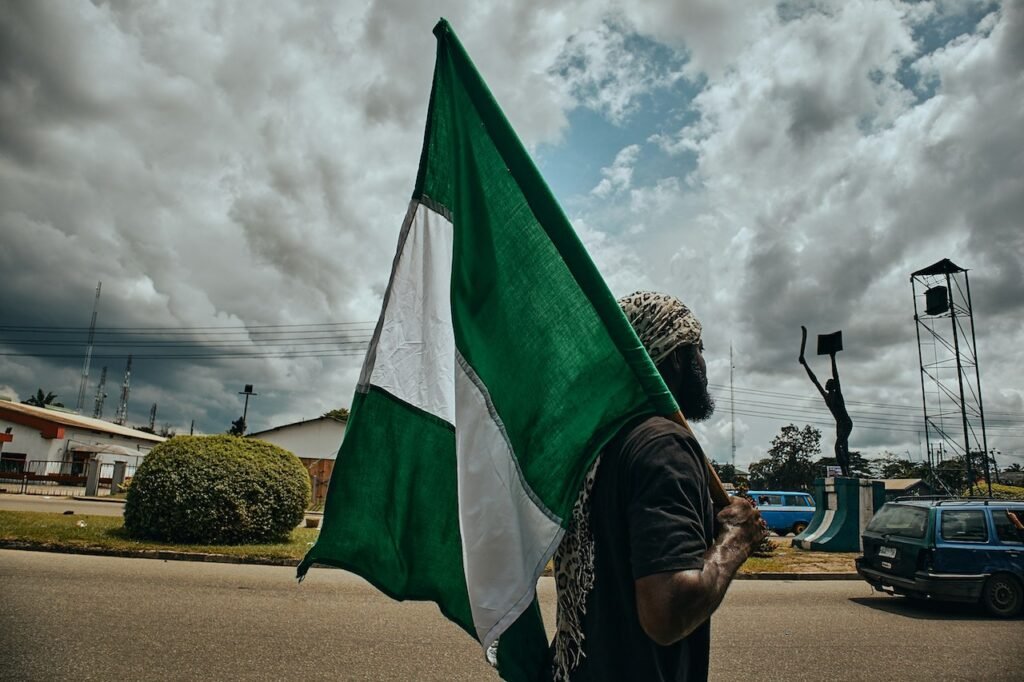
But the health sector is one of many dysfunctional areas affecting the local communities. Electricity, a symbol of modern life, barely reaches many villages. In 2024, the government reportedly spent ₦14.36 billion on rural electrification, yet by 2025, communities across Edo, Ogun, Taraba, Yobe, Sokoto, Jigawa, and others remained disconnected from the national grid. The National Assembly itself acknowledged the rot, probing past administrations from Obasanjo to Jonathan for pouring huge sums into the power sector without results.
Critics like energy analyst Chinedu Amah accused distribution companies of chasing lucrative franchise zones while neglecting rural areas. He said it does not “make sense that the distribution companies are focused on cornering franchise areas that they surely are not looking to serve.”
Roads, too, have become markers of neglect. From Ondo to Akoko in the southwest, and across northern states, abandoned projects and crumbling highways have turned daily travel into a gamble. In some cases, the bad roads have done more than isolate villages, they have become breeding grounds for kidnappers and robbers. Leadership Newspaper in 2024 listed 14 major road projects in the northern area left unfinished. Each one is a lost opportunity to connect communities and spur economic survival.
Civil society groups argue this pattern of abandonment is not accidental but rooted in governance failures. The Women and Family Advancement Initiative (WAFAI), a non-governmental grassroot foundation, warns that neglect of grassroots communities fuels unemployment, poverty, and insecurity.
“Good leadership and governance is about the uplift and development of those at the grassroots. If this is not achieved, there will be socio-economic challenges. Poverty and unemployment are on the rise and this is fuelling insecurity in our society,” said Dr. Francisca Obi, the WAFAI founder.
Others point directly to corruption and the denial of local government autonomy. Peasant Empowerment Concern Initiative PECi, another non-governmental organisation, cautioned that rural Nigerians will remain in entrenched poverty so long as local councils cannot control their own finances.
Follow to get an email when we publish
Get The Liberalist Weekly
Every story we published this week, in your inbox each Friday. Free.
Share this story
About the author
Usman Yakubu Usman
Staff Writer
Usman Yakubu Usman is a Staff Writer at The Liberalist.
More from UsmanReporting like this takes time on the ground. Help keep it going.
Donate