
Nigeria’s democracy stands at a defining crossroads. Citizens, civil society groups, and policy advocates are demanding comprehensive electoral reforms. Controversies surrounding the Independent National Electoral Commission’s Result Viewing Portal (IReV) during the 2023 general elections intensified these demands. While technology introduced transparency safeguards, many Nigerians now ask: can elections be credible if the voter remains economically vulnerable, politically pressured, and institutionally unprotected?
This is the fundamental issue raised in the Institute for Free Market and Entrepreneurship West Africa (IFREME) policy research on Nigeria’s electoral environment. Electoral credibility, according to the policy, is not only about electronic portals, BVAS machines, or transmission glitches, but about the broader condition of voters’ freedom in Nigeria’s political space.
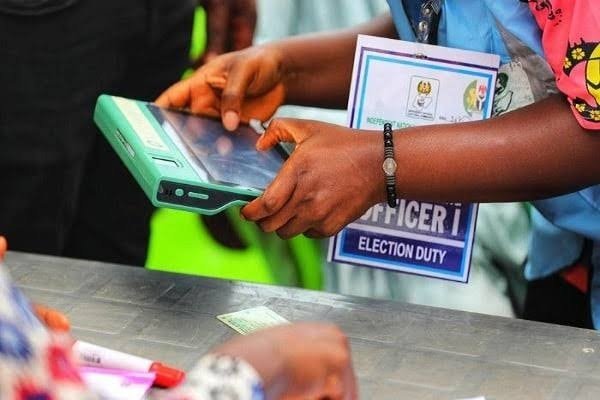
The debate over IReV has dominated electoral reform conversations. Many Nigerians expect that real-time upload of polling unit results would significantly reduce manipulation, restore confidence, and strengthen the integrity of elections. But when inconsistencies emerged, the result was widespread public distrust.
At the IFREME, we emphasise that electoral malpractice thrives not only because systems fail, but because incentives in Nigeria’s political economy reward manipulation over accountability. At the heart of our argument is the idea that democratic elections cannot be separated from the economic and institutional realities surrounding them. In contexts where poverty is widespread, where political competition is treated as a zero-sum struggle for state resources, and where enforcement is weak, elections become less about public choice and more about elite capture. This is why vote buying, voter intimidation, and political clientelism persist despite repeated reforms.
The policy research introduces the concept of a Nigerian Voters’ Freedom Index, highlighting that electoral integrity should be measured not only by procedures but also by whether citizens are truly free to vote according to conscience rather than coercion or inducement. One of the most troubling features of Nigeria’s recent elections is the normalisation of vote buying. Across multiple states, reports documented the exchange of cash, food items, or transfers for votes. In many communities, elections have become transactional events where political actors treat citizens as commodities.
IFREME argues that vote buying is not simply a moral failure; it is a symptom of economic hardship and weak institutional deterrence. When voters face unemployment, inflation, and insecurity, the immediate incentive of inducement becomes powerful. Thus, electoral reform must confront Nigeria’s socioeconomic realities, not just the mechanics of voting. Although Nigeria’s electoral laws contain provisions against vote buying, intimidation, and manipulation. Enforcement remains weak. We point out that the problem is not the absence of rules but the absence of credible punishment.
Politicians and their agents often act with impunity because institutions responsible for prosecution and deterrence lack independence, capacity, or political will. Without accountability, electoral malpractice becomes rational behaviour in a system where the benefits outweigh the costs.
The IReV controversy also illustrates a major challenge: transparency tools are only effective when institutions are consistent and trustworthy. The promise of electronic transmission was meant to reduce human interference. But the failures of implementation created suspicion that technology itself could be manipulated or selectively applied. This reinforces our position that reforms must go beyond introducing platforms; they must ensure that systems are governed by clear rules and institutional discipline. Credibility cannot be downloaded; it must be built.
IFREME recommendations suggest that Nigeria must rethink electoral reform through a free society lens: reducing the incentives for corruption while strengthening citizen power. Key priorities should include strengthening electoral transparency mechanisms. IReV and similar platforms must be backed by enforceable legal obligations, independent technical audits, and transparent public reporting.
Also, the government must criminalise and prosecute vote trading effectively. Vote buying should not be treated as a cultural norm but as a direct assault on democratic choice. The country should reduce the cost of politics. Nigeria’s elections are highly monetised because political office is seen as the gateway to wealth.
As part of the recommendations, voters’ economic empowerment should be expanded.
It is very important because an economically free citizen is harder to bribe and easier to mobilise around issues. Build trust through institutional independence. INEC and related bodies must operate free from partisan interference, with consistent adherence to procedures and transparent decision-making.
We must note that the democratic future depends on voters, not just votes. Nigeria’s democracy cannot survive on election-day innovations alone.
The agitation for electoral reform must therefore be holistic. IReV matters, BVAS matters, technology matters, but what matters more is whether Nigerians can trust that their vote counts and their democratic choices are protected. As we made clear in the past, the future of elections in Nigeria depends on stronger institutions, freer citizens, and a political culture where leadership is earned, not purchased.
Oluwatosin Ogundeyi is the Executive Director Institute for Free Market and Entrepreneurship West Africa, Ibadan, Nigeria.