
In 2024 nominal average per person income in the United Arab Emirates (UAE) was $49,400, roughly eight times that of South Africa’s $6,250.
On global rankings for Gross Domestic Product (GDP) per capita, the UAE is among the top 25 countries, while South Africa ranks around the 110th, indicating the degree to which the UAE is ahead in relative living standards.
The resultant accelerating migration of many of the world’s most affluent people and businesses toward the United Arab Emirates is neither incidental nor episodic. It is the outcome of a meticulously planned and executed national model designed to attract capital, talent and residency.
Simultaneously, South Africa has endured a sustained brain drain and exodus of high-net-worth individuals whose departure reflects a deeper crisis of confidence in the country’s institutional, economic and security landscape. A direct comparison of the two jurisdictions reveals the scale of reform South Africa must undertake to recover its competitiveness.
The UAE has constructed one of the world’s most explicitly pro-capital and pro-market fiscal environments. It imposes no personal income tax, no capital gains tax, no inheritance tax and no net-wealth tax. Corporate taxation remains modest, calibrated with strategic intention and complemented by free zones that offer full foreign ownership, streamlined incorporation and relatively frictionless business operations. This architecture does more than preserve capital. It amplifies it. For globally mobile individuals and businesses accustomed to complex tax burdens and unpredictable policy shifts, the UAE’s clarity and consistency act as a powerful magnet.
South Africa’s fiscal regime operates at the far opposite end of the spectrum. Progressive income taxes that reach high maximum marginal rates at very low dollar thresholds, high capital-gains taxes not inflation indexed, punishing estate duties and an intricate corporate-tax system, steadily erode any jurisdictional attractiveness. Political discourse periodically floating the possibility of property confiscation and additional taxes injects further unease into long-term financial planning. For families whose time horizons stretch across generations, such uncertainty is a decisive factor.
Residency policy is another area in which the UAE has refined its competitive edge. Investor visas, long-term “Golden Visas” and property-linked residency schemes offer clarity, speed and predictability. Administrative processes are disciplined and largely immune to the discretionary turbulence that serves to undermine investor confidence in SA. The wider UAE regulatory environment, moreover, is consciously designed to facilitate enterprise and not to encumber it.
On the other hand, South Africa presents a markedly different experience. Its visa and residency systems too often impede rather than enable. Entrepreneurs, investors and returning expatriates face layers of regulatory uncertainty spanning licensing, labour and shareholder compliance, sectoral oversight and municipal governance. In an economy that requires dynamism and large capital inflows to counteract stagnation, these obstacles inflict obvious self-harm.
Governance lies at the core of both countries’ reputational trajectories. The UAE benefits from a strategically coherent state, notably high administrative competence and low levels of corruption. Policy signals are consistent; the rule of law is applied with discipline and major infrastructure programs are executed on time and within budget. The result is a climate in which investors can plan at scale and over long horizons, confident that the institutional environment will not shift under their feet.
South Africa’s institutional degradation over the past couple of decades has had the opposite effect. Cadre deployment, incompetence, corruption and uneven state capacity have damaged public trust and undermined the credibility of regulatory authorities. Policy inconsistency, particularly in sectors central to economic growth such as energy, mining, finance and telecommunications, has injected chronic uncertainty into investment planning. For investors accustomed to operating within fair and predictable systems, such volatility is entirely untenable.
Additionally, South Africa suffers from one of the highest violent crime rates globally. Households are compelled to construct parallel private security infrastructures at great cost, effectively substituting for state and municipal failure. A national environment of personal risk weighs heavily on the decision making of families contemplating relocation.
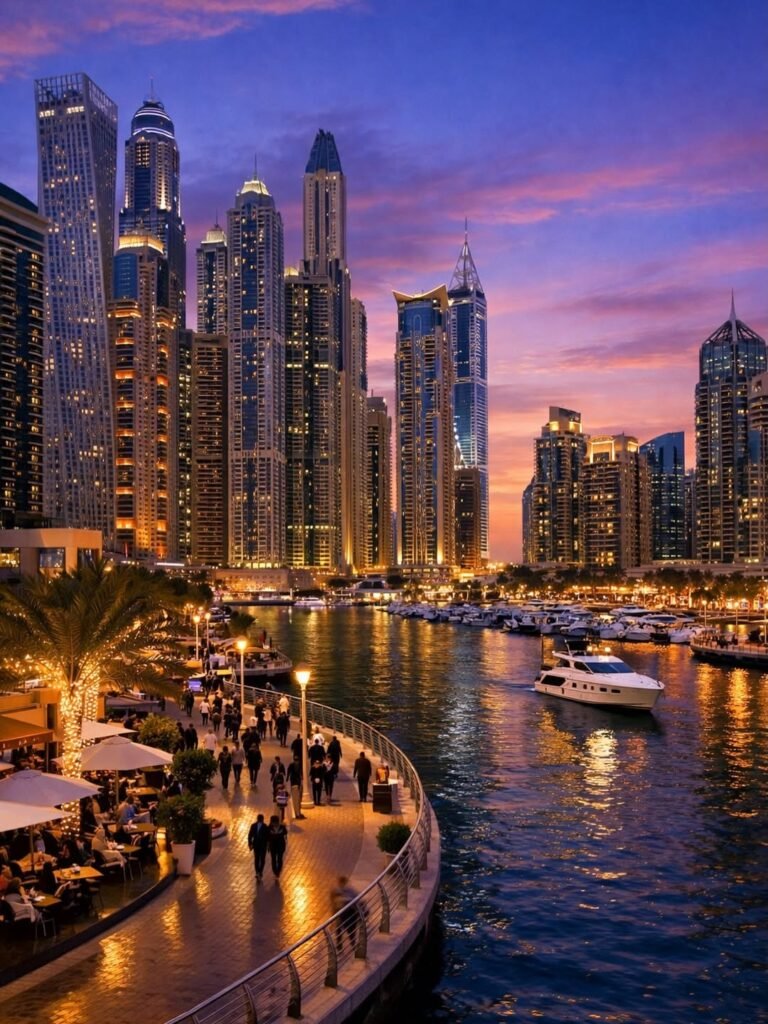
Infrastructure further sharpens the contrast. The UAE’s roads, airports, seaports, energy, water and telecommunications networks, state hospitals, schools and transport systems are maintained to exceptional standards. The country has positioned itself as a global aviation and logistics hub, seamlessly connecting its residents to major centres of commerce. This level of infrastructure reliability is not merely convenient; it reinforces confidence in the state’s bona fides and competence.
South Africa’s excellent infrastructure inheritance has deteriorated under sustained neglect and lack of maintenance. Electricity outages, water-system collapses, sewerage reticulation failures, pot-holed roads, declining municipal capacity, collapsing freight-rail networks and dysfunctional ports have imposed heavy economic and social costs. These failures directly affect individuals and investors whose business interests depend on stable energy, efficient logistics and functioning urban systems. Each additional layer of dysfunction becomes another push factor encouraging relocation to more reliable and investor friendly jurisdictions.
Currency stability also shapes migration patterns. The UAE’s dirham, firmly pegged to the US dollar since 1997, offers a predictable monetary environment that supports long-term wealth preservation. Currency stability protects residents from inflationary shocks and from the erosion of asset values that accompany volatile exchange rates.
The South African rand tells the opposite story: Long-term depreciation punctuated by severe volatility driven by political risk and structural weaknesses. For investors whose wealth is denominated in global currencies, the rand’s instability under an antiquated exchange control regime represents a profound threat, accelerating the desire to domicile assets elsewhere.
Real estate markets in the two countries reflect their broader trajectories. The UAE’s property sector continues to attract international capital through strong rental yields, buoyant demand and the absence of punitive property taxes.
South Africa’s property landscape is uneven. The broader market is undermined by municipal dysfunction, infrastructure decay, security risks and the ongoing depreciation of the currency. Real returns are inconsistent and, in many cases, negative in global terms.
These cumulative factors explain why the UAE has come to be viewed as a secure, rules-based, opportunity-rich environment in which wealth can grow and families can thrive. South Africa, despite its natural beauty, sophisticated financial services, private enterprises and deep reservoirs of human capital, is increasingly perceived as a high-risk environment for most households.
For South Africa to reverse this outflow and compete with jurisdictions such as the UAE, it needs to embark on reforms of exceptional depth and seriousness. Governance integrity must be restored through the professionalisation of the public service, the eradication of cadre deployment and the decisive prosecution of corruption. Personal security needs to be re-established as a core function of the state through rebuilt policing capacity, revitalised intelligence structures and a dramatic reduction in violent crime.
Infrastructure rehabilitation requires a national restoration program focused on stabilising the energy grid, repairing water and sewerage reticulation systems, modernising ports and freight rail and reconstituting municipal competence. This demands extensive public-private collaboration and a regulatory framework conducive to rapid capital deployment with secure inviolable property rights.
South Africa must also create a competitive fiscal and regulatory environment by simplifying compliance obligations, resisting taxes that fuel emigration and introducing incentives for investment, innovation and skills retention. Visa and residency systems require modernisation to attract investors, entrepreneurs and global talent through clear criteria and expedited processes. Moreover, long-term currency stability depends on structural economic reform, disciplined fiscal management and a currency market operating according to full international norms, not locally conjured rules.
The UAE’s rise as a global magnet for wealth creation is the consequence of strategic intention and administrative discipline. It provides examples South Africa can emulate.
Our country retains extraordinary latent potential, but potential alone does not anchor capital or retain globally mobile intellectual capacity. Only by restoring security, rebuilding institutions, repairing infrastructure and establishing a predictable regulatory order can South Africa hope to stem the outflow of its most productive citizens and once again position itself as a destination worthy of global confidence.
Dr Brian Benfield, retired professor, Department of Economics, University of the Witwatersrand, is a Senior Associate and Board member of the Free Market Foundation.