

As the Nigerian government intensifies efforts to achieve a one-trillion-dollar economy by 2030, experts and policymakers identify infrastructural stability as a catalyst for realising this ambition.
The $1 trillion economy framework forms part of the Renewed Hope Development Plan (2026–2030) that the government unveiled last August. President Bola Ahmed Tinubu stated that he expects the plan to facilitate investment and strengthen the economy, projecting the annual Gross Domestic Product (GDP) to reach a total value of $1 trillion.
Over the years, Nigeria’s GDP has significantly fluctuated. The economy fell sharply from $668 billion in 2019 to $252 billion in 2024 before recovering slightly to $285 billion in 2025. This recovery places Nigeria among Africa’s top six economies alongside Egypt, South Africa, Algeria, Morocco, and Ethiopia.
Earlier this month at the 2nd National Economic Council (NEC), Doris Uzoka-Anite, Minister of State for Finance, stated that the country requires a 10 percent annual growth rate over the next decade to actualise the $1 trillion aspiration. However, this bold economic stride requires strategic development, with policymakers pointing to industrialisation, private partnership and infrastructure as the major drivers.
“Nigeria cannot achieve a $1trillion economy without industrialisation,” Senator John Enoh, Minister of State for Industry, Trade and Investment, recently told journalists in Lagos.
The Energy Crisis
Experts question the government’s readiness to tackle the recurring neglect of key infrastructure like the power sector, dilapidated roads, and neglected refineries that could boost economic progress. While Nigeria’s dream may seem achievable, millions wonder how businesses will flourish without stable electricity.
The erratic power supply collapsed 12 times in 2024, four times in 2025, and twice in 2026. This unstable grid leaves the country in constant blackout and forces businesses to rely on unsustainable generators, consequently impeding economic growth.
Tony Elumelu, Chairman of Transcorp Group, noted that loopholes in the power sector are obvious. He reminded the government about the abandoned grid, believing that without a better strategy to fix broken power infrastructure, a $1 trillion GDP is a mirage.
“Access to electricity remains the single most critical factor in fixing the Nigerian economy,” he said. “Especially as we seek to have the non-oil sector make greater contributions to our economy. We know that to grow a $1 trillion economy, electricity must be fixed. That is not the case today.”
While poor power supply affects over 82 percent of businesses, a 2025 World Bank report revealed that Nigeria ranks as the top country in Africa with the worst power supply. These blemishes underscore the deficits that truncate economic growth. A study shows that the average Nigerian firm encounters power outages seven times every week, creating a major difficulty that destabilises the business sector. The study describes the electricity as “lowly in quality and generally unstable.”
Since industries like real estate, trade, telecommunications, and crop production contributed 75 percent of the GDP in the first quarter of 2025, when infrastructure fails, these businesses lose profits and the dream of a $1 trillion economy is lost with it.
The Road infrastructure
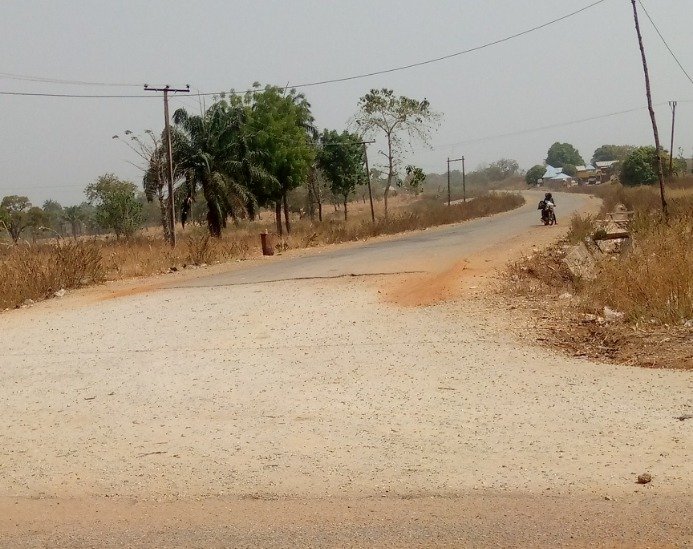
Like the power sector, Nigerian roads are far from safe for transporting business items. Potholes delay goods, cause accidents, and damage vehicles. Some rural farmers must leave bumper harvests to rot because they lack accessible roads to major markets. One notable incident in 2024 involved a truck carrying a container that overturned while navigating a large pothole on Agege Road in Lagos. Witnesses confirmed the driver was not speeding; the bad road conditions caused the accident.
Over 90 percent of goods and people use roads in Nigeria, underscoring their importance in transforming the economy. However, data from early 2025 shows that road accidents killed at least 131 people across eight states in just two months. A World Bank report also revealed that Nigeria loses about $1 billion annually due to poor road infrastructure. While many Nigerians have the potential to boost businesses, they fear broken roads and prioritise safety over the worsening plight of insecurity.
But it will be an oversimplification to limit the potential impediments of Nigeria’s ambitious GDP growth to infrastructure. The Bashir Adeniyi Centre for International Trade and Investment (BACITI) noted that the one-trillion-dollar goal remains unrealistic without diversification into manufacturing, strategic planning to tackle inflation, the removal of tax bottlenecks, and an end to the policy reversals affecting the private sector.