
Analysis · Rule of Law
The Push for Inmate Voting in Nigeria
To many advocates, voting behind bars is more about respecting the rights of the inmates who have already lost so much.
 By Usman Yakubu Usman
22 August 2025 · 2 minute read

Listen to this report
AI narration · about 3 minutes
 Quick brief
- In 2020, Ghana allowed inmates in Ho Central Prison to vote, a practice Nigeria is considering for its 2027 elections with over 77,800 inmates potentially eligible, pending National Assembly approval.
- INEC chairman Prof. Mahmood Yakubu stated voting is a human right not revoked by incarceration, but the Nigerian National Assembly must amend electoral law to include inmates, following a 2014 court ruling that went unimplemented in 2015.
- Human rights advocates argue denying inmates the vote violates the 1999 Constitution, noting many inmates await trial and are presumed innocent, while countries like Malawi, Namibia, and Ghana have already allowed prisoner voting in recent elections.
AI-generated from the story.
Share the summary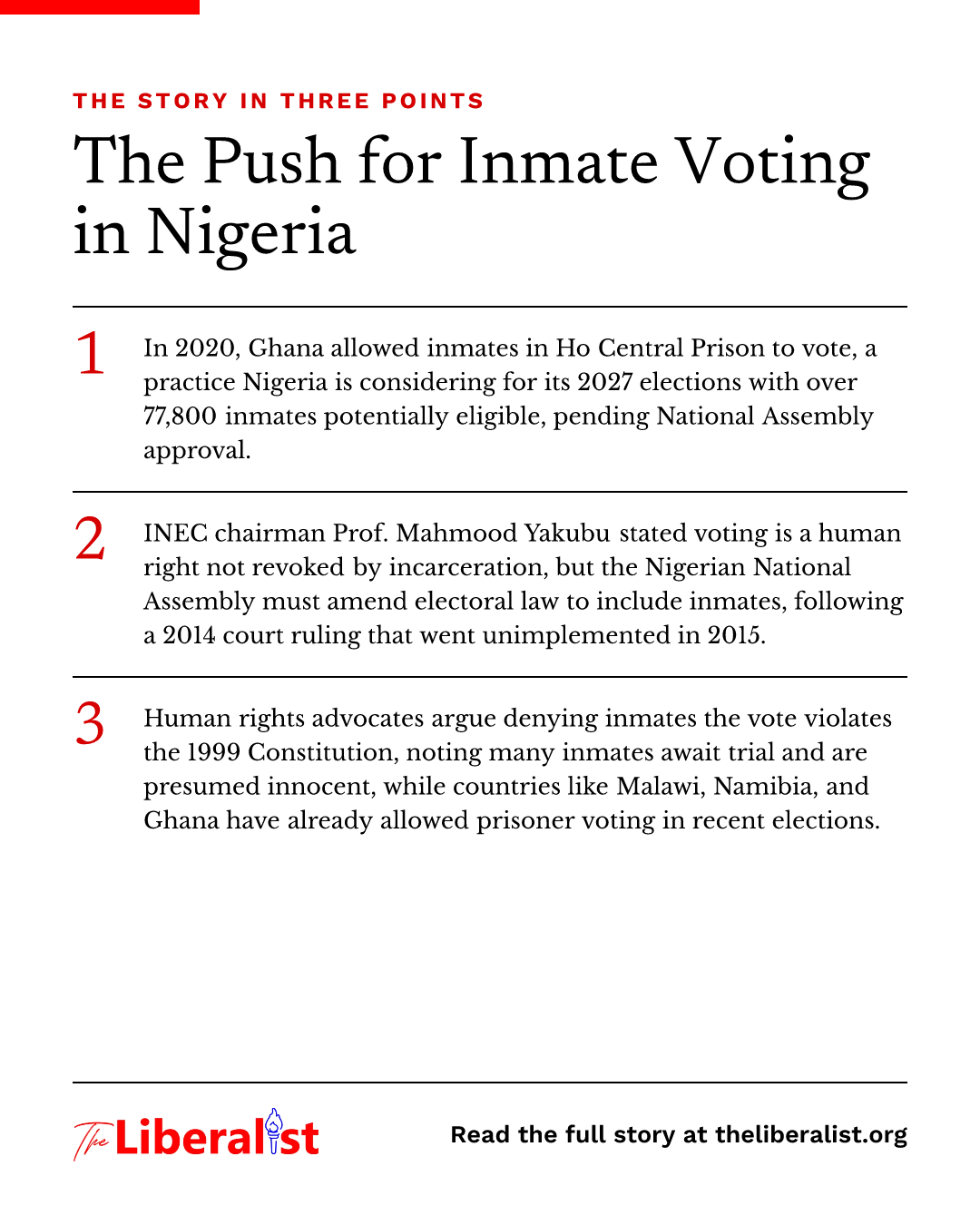
In 2020, for the first time in Accra, Ghana, polling units extended beyond city streets and into the Ho Central Prison. There, inmates under the watch of guards cast their ballots.
While such a scene remains unthinkable in Nigeria, it has just become hopeful.
With over 77,800 inmates spread across correctional facilities, the prospect of prisoners voting in the 2027 elections has again come into the limelight. The Independent National Electoral Commission (INEC) recently signalled its intention to allow Nigerian inmates the right to vote in the 2027 election.
We are aware that the right to vote is a human right which can not be taken away from citizens on account of time served in a constitutional facility.
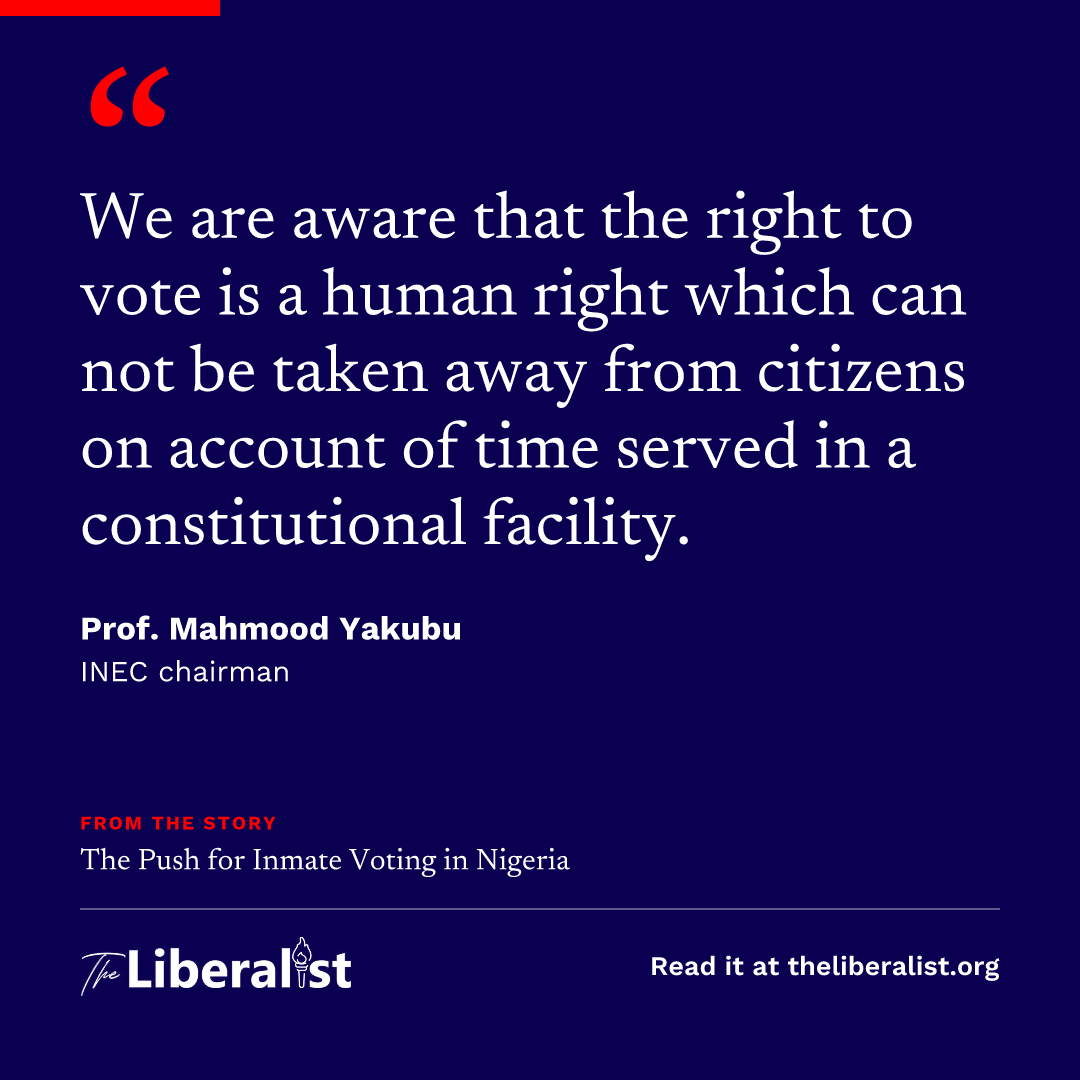
“We are aware that the right to vote is a human right which can not be taken away from citizens on account of time served in a constitutional facility,” said Prof. Mahmood Yakubu, INEC chairman.
However, this decision awaits the validation of the Nigerian National Assembly, which needs to amend the electoral law and integrate inmates into the voting net ahead of the 2027 general election.
But this is not a new fight. Back in 2014, a Federal High Court in Benin ruled that inmates had the right to vote. Yet during the 2015 elections, the judgment sat unimplemented, leaving out more than 57,000 potential voters.
Today, human rights advocates argue that denying inmates the right to vote violates the 1999 Constitution. Sections 77, 117, and 132 state plainly that every Nigerian of voting age is entitled to participate in elections.
“Apart from mental incapacity, there are no buts or ifs,” says Abiodun Baiyewu, Executive Director of Global Rights.
To many advocates, voting behind bars is more about respecting the rights of the inmates who have already lost so much. In fact, argues activist Deji Adeyanju, detention does not extinguish citizenship and fundamental human rights in a democratic country.
Lawyer Ekon Ejembiem agrees with Adeyanju’s submission and adds that inmates can safely participate in the upcoming elections with the proper security arrangements. More importantly, not all inmates are convicts; thousands await trial and are presumed innocent until proven guilty, he said. To strip them of their vote is double jeopardy.
Lessons from Africa
Nigeria’s hesitation looks increasingly out of place on the continent. Malawi is among the African countries Nigeria could emulate. After identifying the need for inclusive elections, the court ruled in favour of the prisoners exercising their voting rights in 1999. From that moment, the prisoners were rigorously educated and reintegrated into the polls to vote in many elections.
Namibia also achieved a milestone when prisoners were allowed to vote in the 2021 elections. Then we have Ghana, our West African neighbour, which broke ground in 2020 by bringing election materials into prisons.
For Nigeria, the stakes go beyond numbers. Prisoner voting could be a test for the country’s democratic maturity.
Follow to get an email when we publish
Get The Liberalist Weekly
Every story we published this week, in your inbox each Friday. Free.
Share this story
About the author
Usman Yakubu Usman
Staff Writer
Usman Yakubu Usman is a Staff Writer at The Liberalist.
More from UsmanReporting like this takes time on the ground. Help keep it going.
Donate