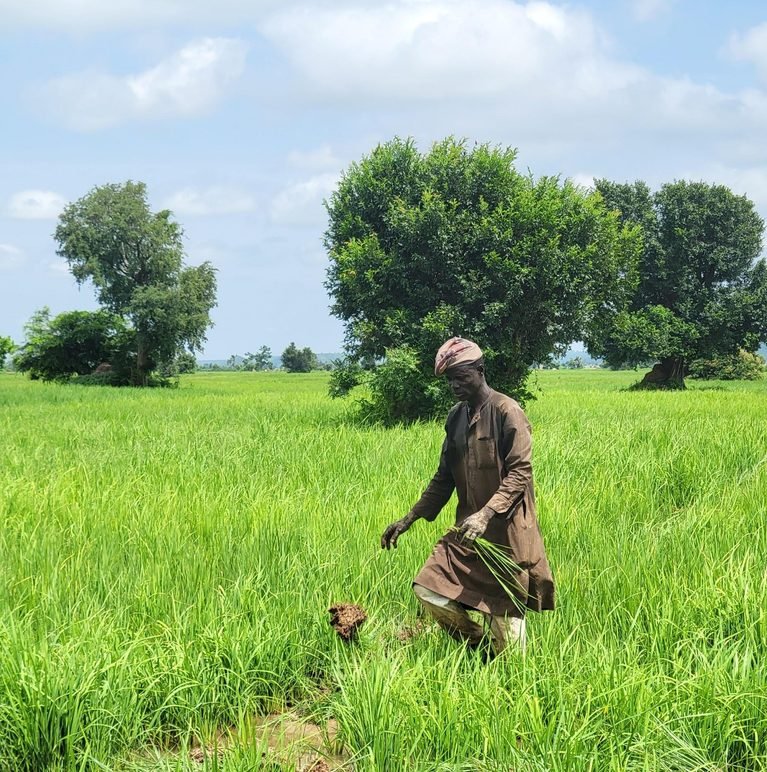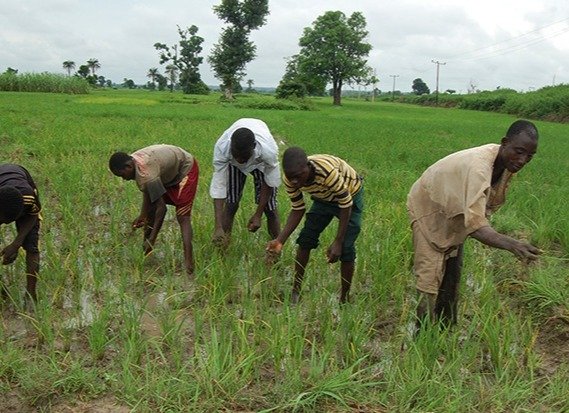

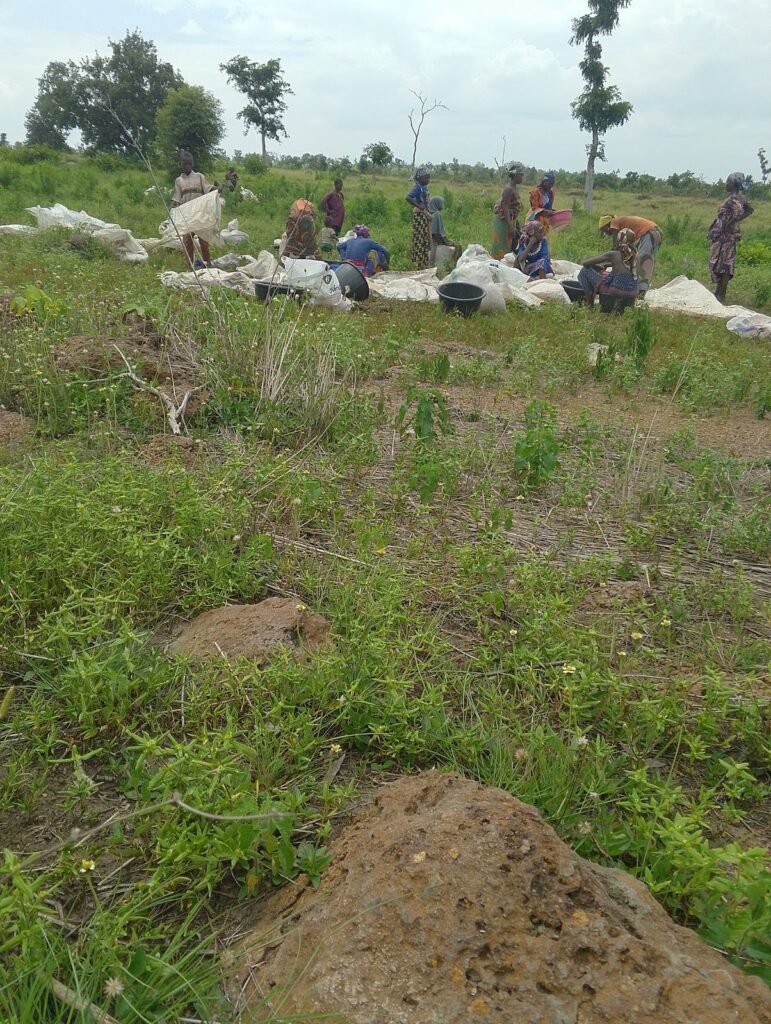
A few years ago, Abubakar Muhammad, a resident of Faigi in Edu Local Government Area of Kwara state, took pride in farming as a source of livelihood. For over a decade, it sustained his family. But the road that once led to his farm now leads to death.
Reminiscing about the good old days, Muhammad recalled that in 2024, he invested over ₦2 million in farming, harvesting 50 bags of sesame seeds and 18 bags of guinea corn. With sesame seeds selling at ₦130,000 per bag and guinea corn at ₦40,000, he generated over ₦7 million.
“But last year, I invested the same amount of money, yet I barely harvested 11 bags of sesame seeds,” Muhammad told The Liberalist. He said the fear of armed groups, locally known as bandits, crippled his farming activities.
Like other residents of the Faigi community, Muhammad avoided his farm, fearing attack or abduction. When he finally summoned the courage to visit in September, his worst fears were confirmed. Thieves had harvested nearly half of his plants.
In recent times, bandits have carried out a series of violent raids across rural communities in Irepodun, Ifelodun, Patigi, Ekiti, Kaiama and other LGAs in Kwara state. Their violent activities have begun driving away locals from their farms.
For years, insecurity has held sway in Nigeria, especially in the northeastern and northwestern parts of the country, where Boko Haram and bandits have been unleashing terror for years. But the situation is now fully creeping into the North-central region.
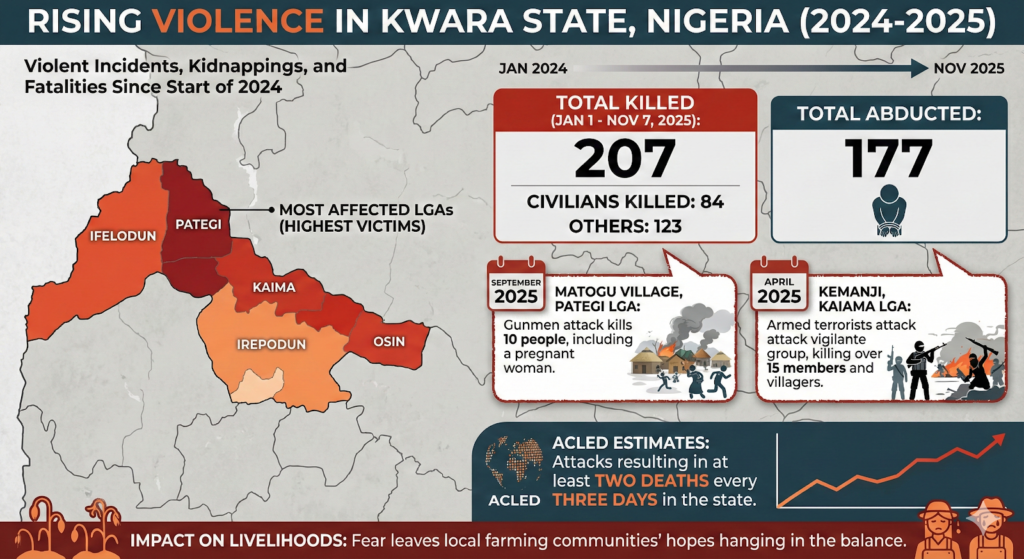
Since the beginning of 2024, Kwara state has recorded numerous incidents of attacks, kidnappings, and other violent crimes. Civilians are abducted for ransom, and in some cases, killed. Between January 1 and November 7, 2025, at least 207 people were killed in the state. During this period, 177 individuals were abducted, with Ifelodun, Pategi, Kaima, Irepodun and Osin LGAs having the highest number of victims.
For instance, in September, gunmen killed 10 people, including a pregnant woman, in Matogu village, Patigi Local Government Area of Kwara state. In another instance, in April 2025, armed terrorists attacked a vigilante group in Kemanji, Kaiama LGA of the state, killing over 15 members and villagers.
Armed Conflict Location and Event Data (ACLED), an organisation that tracks violent incidents across Nigeria, estimates the attacks resulting in at least two deaths every three days in the state. This recent stigma has left the hopes of locals who depend on farming for livelihoods hanging in the balance.
A Man Who Lost Over ₦5 million
2025 was supposed to be a breakthrough year for Abubakar Adam, another farmer from Faigi community. In April, the 28-year-old farmer invested over ₦5 million in 10 hectares of farmland growing major crops such as sesame and guinea-corn.
As months progressed, Adam would stare at his farm with admiration, watching workers till the soil with pride. By August, his Guinea corn and sesame would be available for customers from other parts of the country who come to buy the produce in bulk.
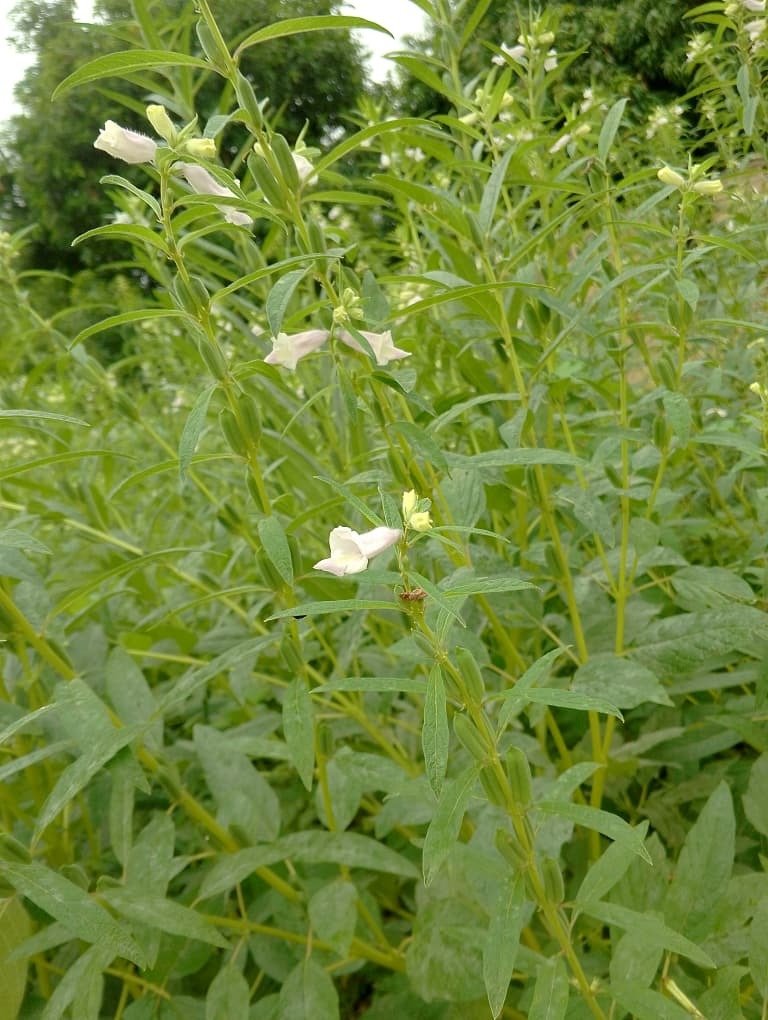
However, Adam’s dream of a fruitful harvest was short-lived after his labourer reported sighting some gunmen on their farmland. At that time, Adam said he didn’t treat the story seriously until one day when the armed group stormed the farm in his presence.
“Since then, the bandits started stopping us from entering our farms,” says Adam. “Sometimes they block the route entirely, and other times they send threats that make it unsafe for us to go. That affected the crops, timing and the harvest.”
Adam lost over ₦5 million, including his time, labour and customers who came from different parts of the country to buy his goods. The security situation also forced the Kwara state government to shut down Gbugbu, a popular market for farm products, consequently affecting the prices of locally manufactured goods in the state. For instance, a bag of sesame was sold at ₦130,000 in 2024. However, the price dropped in 2025 to as low as ₦70,000.

The high demand for sesame in the international market made it one of the leading agricultural products, contributing significantly to Nigeria’s economy. According to FAO, Nigeria produced an average of 509,712 metric tonnes (MT) of sesame seeds in 2022 alone. In the first quarter of 2024, the country exported sesame seeds totalling over ₦247 billion, with China, Japan and Turkey being the strongest markets.
Gbugbu: The Market That Once Was
On a busy Friday evening at Idi Ape, Oja Oba, in Ilorin, the Kwara state capital, traders marketed their wares as crowds surged through the market.
Iya Alhaji, as she is popularly known, sifted maize with her head buried in the task. However, her welcoming smile dissolved when asked about the Gbugbu market.
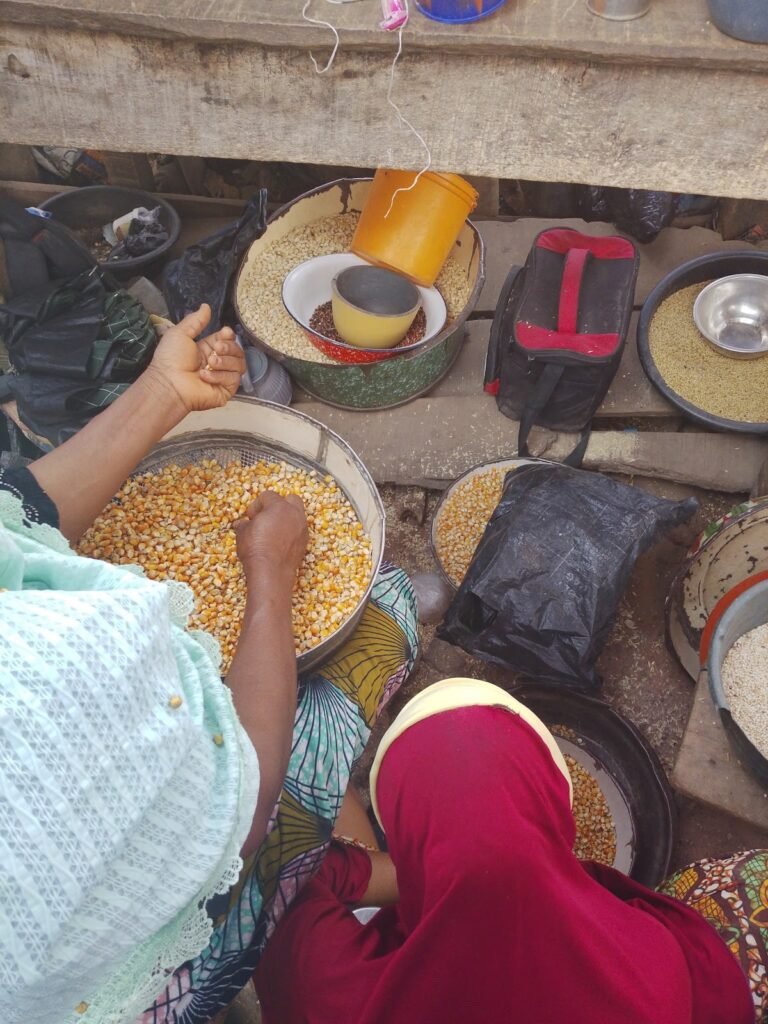
“It has been over five months since we stopped going there,” she said. “The state government closed the market due to the insecurity, and this has greatly affected food prices.”
Pointing at trays on her table, she explained the sharp rise in guinea corn prices.
“When the market functioned, we bought a bag for ₦32,000. Now, we pay ₦38,000, a cost we unfortunately pass to consumers. We still visit smaller markets like Oke Oyi and Bani, but none offer profitable deals like Gbugbu due to its size.”
Stories from the South
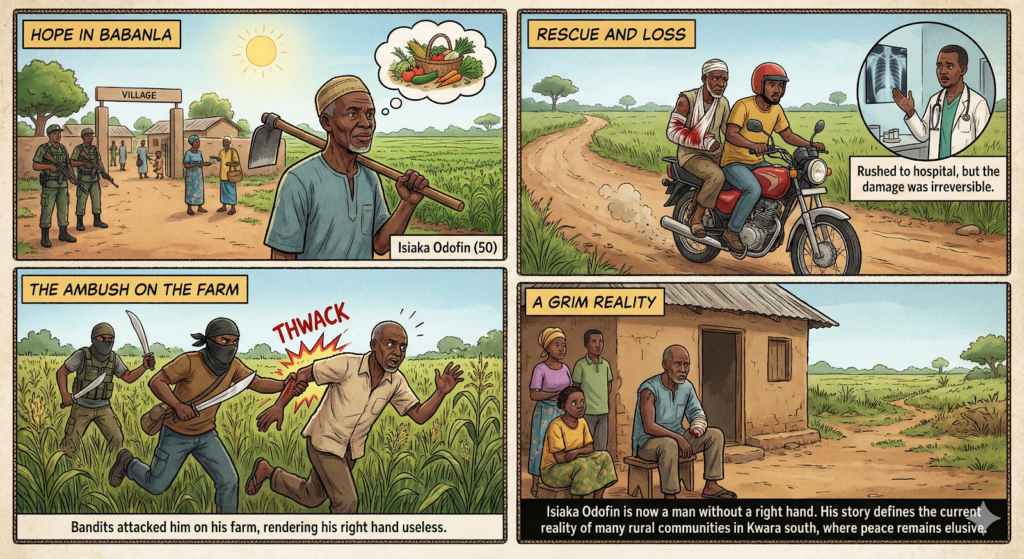
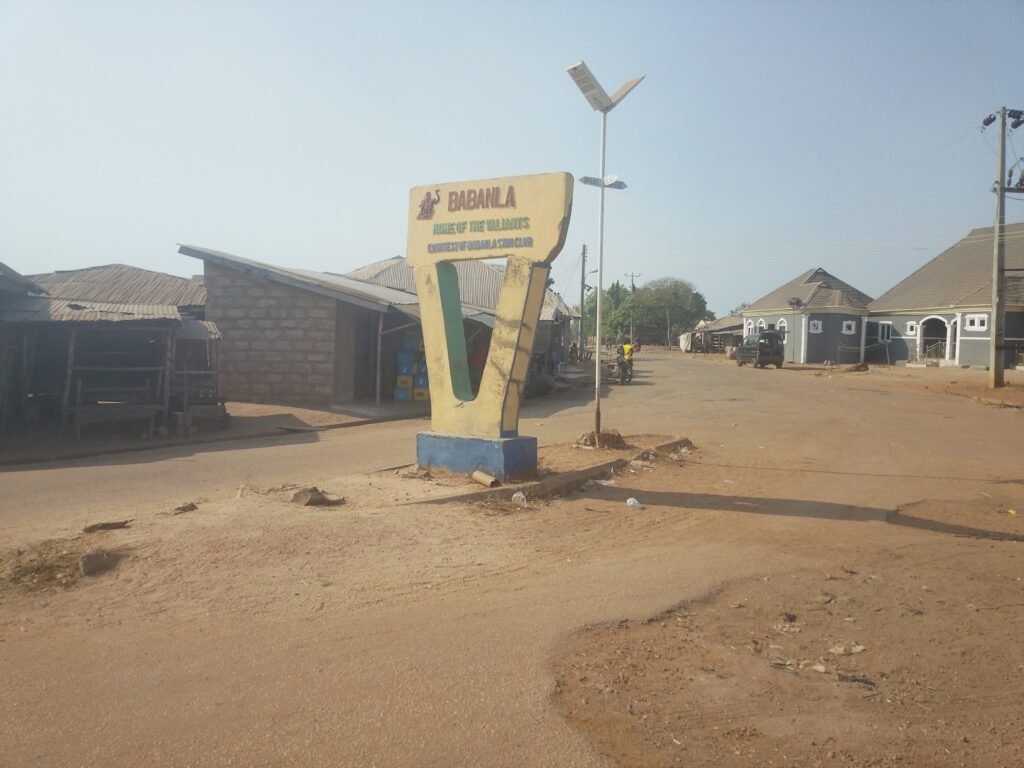
The existence of security personnel around Babanla, a rural community in Ifelodun LGA, Kwara South, gave Isiaka Odofin, 50, a sense of relief. The past months have been heralded with a series of attacks and kidnappings in Babanla, a condition that rendered many farmers incapable of entering their farms.
Shortly after security operatives were deployed to his village, Isiaka thought peace had finally returned. He headed to his farm one faithful day, hoping to harvest something for his family’s consumption.
“They [bandits] met him on the farm and tried to kidnap him. He ran for safety, but unfortunately, they caught up with him,” Abdulfathai Ahmad, a resident of the community and neighbour to Isiaka, told The Liberalist. “They matcheted his right hand and beat him until they thought he wasn’t breathing anymore.”
Isiaka Odofi was later rescued by a bikeman who took him to the hospital. But he is now a man without a right hand. His story is one among the many tales that define the current reality of many rural communities in Kwara South.
In another instance, on a hot Friday afternoon in August 2025, armed bandits stormed the Babanla market. While everyone scampered for safety when the gunmen started shooting sporadically, 76-year-old Baba Oloye could barely take a few strides to save himself.
Baba Oloye said the terrorists met him inside his shop, and they carted away valuables, including money and foodstuffs, nearly stripping him naked in an attempt to ensure he didn’t hide anything.
Saidu Muraina Agboola, the Babanla community leader, said since that day, customers who patronised the market from far and wide have stopped coming out of concern for their safety.
“There are some of my customers from Oja Tuntun, Ilorin, who normally come here with trailers to buy foodstuffs. They said they would rather look for customers elsewhere, where the atmosphere is safer.”
Speaking with The Liberalist, Olaitan Oyinlola, the Kwara South Coordinator for the Joint Task Force, described the insecurity as a recent crisis.
“It started only two years ago, and we have been battling it since,” he said. “Currently, no fewer than 25 communities are deserted. Consequently, the government mobilised the Vigilante Squad and national security agencies to comb the forests from Oke-Ode to Babanla.”
Oyinlola highlighted federal support, saying that the government deployed a brigade of nearly 1,000 soldiers with advanced ammunition previously accessible only to the bandits.
However, despite these ambitious steps cushioning the effect of insecurity, residents languish in constant fear, one that is crippling their sources of livelihood. Abdulqadir Usman, a resident of the Shagbe community, said the security situation has stripped him of his cattle-rearing business, turning him into a bikeman.
“I have moved my family members to Oke Ode because the kidnappings and attacks became very close and frequent. We are not in the best condition, but we are alive, and that’s something worth being grateful for,” Usman lamented.