
Across the continent, African citizens barely enjoy digital freedom, according to the Freedom in Africa Report (F[in]AR 2025), an index that measures the state of freedom and prosperity across the continent.
Launched on October 25 at the Conference of Freedom Advocates (CFA) in Abuja, F(in)AR is an initiative of the Liberalist Centre, a policy and research think tank dedicated to advancing liberty and prosperity across Africa. The report provides a detailed overview of the continent, examining how rights, opportunities, and outcomes intersect across Africa’s diverse economic and political landscapes.
The report says governments overregulate digital space to stifle dissent. They have also devised a new tactic: shutting down the internet and blocking citizens’ social media handles, especially during protests and elections. In 2024 alone, there were 21 shutdowns in 15 countries, signalling growing concern about suppressing digital freedom, which continues to dwindle on the continent.
F(in)AR assesses freedom and prosperity through three interconnected dimensions, including political freedom, economic freedom, and prosperity. While the report did not collect raw or primary data, it draws on globally recognised datasets that provide standardised, internationally comparable indicators. For the methodology, indicators were selected based on conceptual relevance, data reliability and coverage, and comparability and transparency.
The report paints a picture of digital freedom in Africa by describing it as a “growing problem” across the continent. Comoros is a symbolic reality of the disturbing trend.
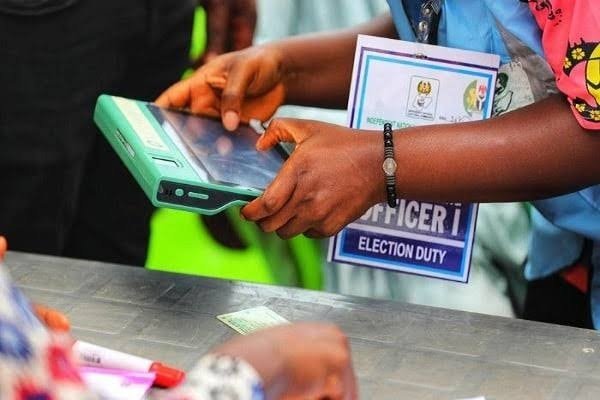
After Comorian President Azali was declared the winner for the fourth time in January last year, citizens perceived fraud in the country’s election. They broke out in groups to protest and demand a probe into the election results. However, authorities responded with force, blocking all channels of digital communication, including shutting down the internet, WhatsApp and mobile calls.
The report describes Comoros as one of the worst-performing African countries in terms of citizens’ freedom, scoring 47 percent below the minimum 50 percent standard.
While Comoros dangles on the brink of the minimum standard, Sudan has fallen sharply away from the line, scoring just 36 percent, highlighting the persistent crippling of freedom in the country. The weaponisation of cybercrime law against citizens has become a growing concern in the country.
In early 2025, Sudan found itself in a dangerous terrain under the draconian rule of the military government, which hurriedly implemented a cybercrime law without consultation.
The law criminalises online speech and blocks digital spaces. To ensure strict adherence to the arbitrary law, the government imposes a heavy fine of 10 million Sudanese pounds on offenders and ten-year prison terms on social media users and reporters. The law equally empowers security forces to conduct digital searches, seize gadgets or wipe out dissenting content. Despite the country’s constitution guaranteeing the right to freedom of expression and access to information under Article 57, the junta forces continue to trample on the citizens’ rights to digital freedom.
The growing number of countries with digital suppression unravels the horrible trend of authoritarian regimes. According to F(in)AR, other poor-performing countries include Burundi, scoring 37 percent; Equatorial Guinea, 35 percent; and Ethiopia, 45 percent.
“For countries like Comoros, Guinea-Bissau, and Mauritius, this was their first time cutting off access entirely, leaving millions without communication, banking, and essential online services,” the report notes. “Most of these blackouts were triggered during protests or elections, as governments sought to control the flow of information and limit online mobilization.”
In 2024, the government suspended internet service in Annobon, a province in Equatorial Guinea, when opposition rallies against the reign of President Obiang Nguema. This plunged the citizens into a blackout, highlighting a pattern of state control in the digital space.
Data show that 2024 was the worst year, with authorities shutting down the internet over 296 times in 56 countries worldwide. Africa recorded 21 internet outages in 15 countries, marking the highest in a single year on the continent.
Beyond the suppression of freedom of expression, the World Economic Forum noted that internet shutdowns in Africa are stagnating the economy and digital trade, as citizens struggle to communicate or make transactions with small and medium-sized enterprises.
For instance, the recent ban on X and internet shutdown in Tanzania cost the country a whopping $238 million due to losses in production, businesses, and internet services. Over $165 million was lost to the economy due to the suspension of X alone for 160 days.
“In an increasingly digitized Africa, turning off the internet doesn’t just silence voices, it bleeds economies and undermines the continent’s progress towards inclusive growth,” says Amged B. Shwehdy, a Research Fellow at the United Nations Economic Commission for Africa (UNECA).
Gbenga Sesan, the Executive Director of Paradigm Initiative (PIN), a digital rights group, says these disruptions are economically devastating and deeply damaging to digital rights, adding that every shutdown chips away at trust, investment, and human potential.