Press freedom is experiencing a disturbing decline across many African nations, a 2025 World Press Freedom Index published by Reporters Without Borders (RSF) reveals. The index, which assesses the state of media freedom in 180 countries, says the African continent recorded the highest number of nations with worsening economic indicators compromising newsrooms’ editorial independence.
Even though a handful of African nations like South Africa, Namibia, and Gabon made progress in safeguarding press freedom, the broader trend across the continent shows more repression, with only nine of 54 African countries recording improvements over the last 12 months, according to the index.
South Africa and Namibia remain Africa’s press freedom champions, maintaining global rankings within the top 30 on the RSF index. Their success is attributed to strong institutions and robust legal protections like South Africa’s court order decriminalising unauthorised communications interception, aimed to safeguard the confidentiality of journalists’ phone conversations and the need to protect their sources.
In contrast, systemic repression, violence, and state-sanctioned media manipulation continue to compromise independent journalism in countries like Nigeria, Eritrea, Cameroon, Ethiopia, Uganda, and Rwanda. In the 2025 ranking, Eritrea retains its position as the worst country in Africa and in the world in terms of press freedom, recording just 11 percent score and dropping five points from 2024. The situation in the country is that, “all independent media have been banned since 2001,” according to RSF. Only government-controlled outlets like Eri-TV and state-run newspapers are allowed to operate, turning journalism into a mouthpiece for the regime.
Nigeria, Africa’s most populous nation and a key media hub, maintained its 122nd position, but its press freedom score dropped from 51 percent in 2024 to 46 percent in 2025. The decline signals rising state hostility toward the media. Press Attack Tracker, a project by the Centre for Journalism Innovation and Development (CJID), recorded 72 incidents of press freedom violations in 2025 alone.
One of such instances was the hostility gesture of Umaru Bago, Niger state Governor who ordered the revocation of Badegi Radio’s license after unilaterally accusing the station of inciting public unrest. The move quickly triggered backlash from civil societies, with the Nigerian Guild of Editors describing it as an outright assault on press freedom. “This act of censorship and intimidation undermines the fundamental principles of a democratic society, where a free press is essential for holding those in power accountable,” the body says.
Nigeria’s press freedom condition has even become dangerous, as academic institutions, where students are supposed to learn how to voice out their concerns, are also becoming a place of intimidation and persecution for journalists. In March 2025, the University of Ibadan physically assaulted and intimidated two campus journalists, Olanshile Ogunrinu and Oluwasegun Akanni, while reporting on student union election-related events, with their phones seized and journalistic activity disrupted.
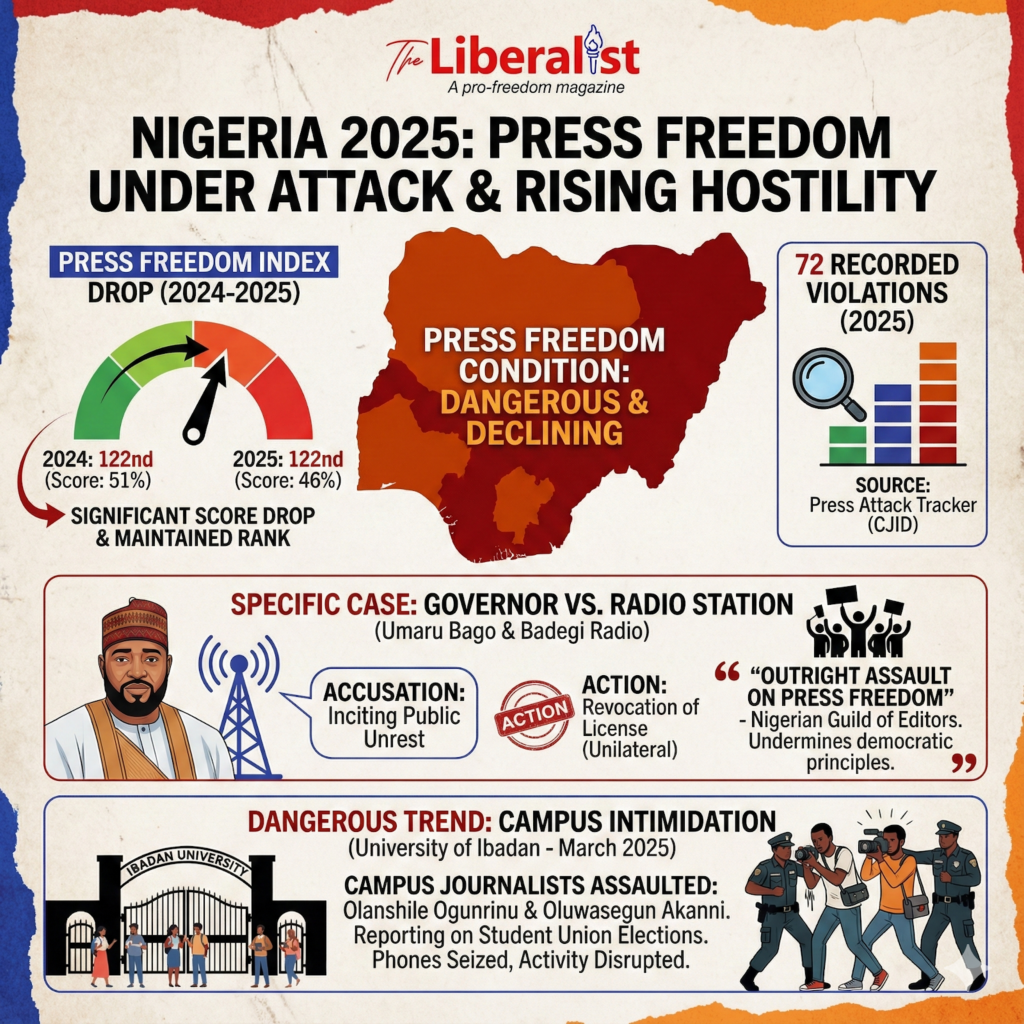
Infographic: Shereefdeen Ahmad
In Cameroon in February, assailants clamped down on Joseph Abena, a regional correspondent for privately owned Equinoxe TV, and Augustin Ndongo, a camera operator, while investigating an agricultural facility owned by Samuel Tony Obam Bikoué, a controversial figure praised by President Paul Biya. The attackers threatened the journalists and seized their equipment.
Cameroon, a country dubbed as one of the world’s worst jailers of journalists, slipped one step backward in the 2025 RSF press freedom index. Earlier ranked 130th last year, it currently holds 131st with a score drop from 44 percent to 42 percent.
Experts Raise Concerns
In a co-authored commentary, Akitunde Babatunde and Adebayo Aare, the Executive Director and a Project Coordinator at CJID, observed that despite the critical role of the media in informing the public and setting the democratic agenda, Africa’s journalism landscape faces unprecedented challenges.
“Governments across the continent—armed with sophisticated surveillance tools—increasingly work to stifle press freedom,” the duo wrote. “Legal crackdowns, internet shutdowns and physical attacks have become common tactics in silencing independent media, despite the fact that many African constitutions and declarations guarantee freedom of association and expression.”
In 2025, Sudan became a major hotspot for violence against journalists. According to International Federation of Journalists (IFJ), nine media workers were killed in Africa in 2025, with Sudan alone accounting for six of the deaths. The six journalists were killed while covering the ongoing civil conflict, particularly involving the Rapid Support Forces (RSF) and other armed actors. Since the conflict in Sudan began in 2023, journalists reporting on the civil war have been specifically targeted by the warring factions, forming part of broader targeting of media in war zones.
Earlier ranked 149th last year on the index, Sudan now slipped down to 156th position with a score drop from 35 percent to 30 percent in 2025.

Infographic: Shereefdeen Ahmad
In March 2025, Burkina Faso’s military junta arrested three prominent journalists, including the president and vice president of the journalists association and a TV journalist covering a press protest, with their whereabouts remaining unknown for some time. This action drew strong condemnation from rights groups as a blatant press-freedom crackdown.
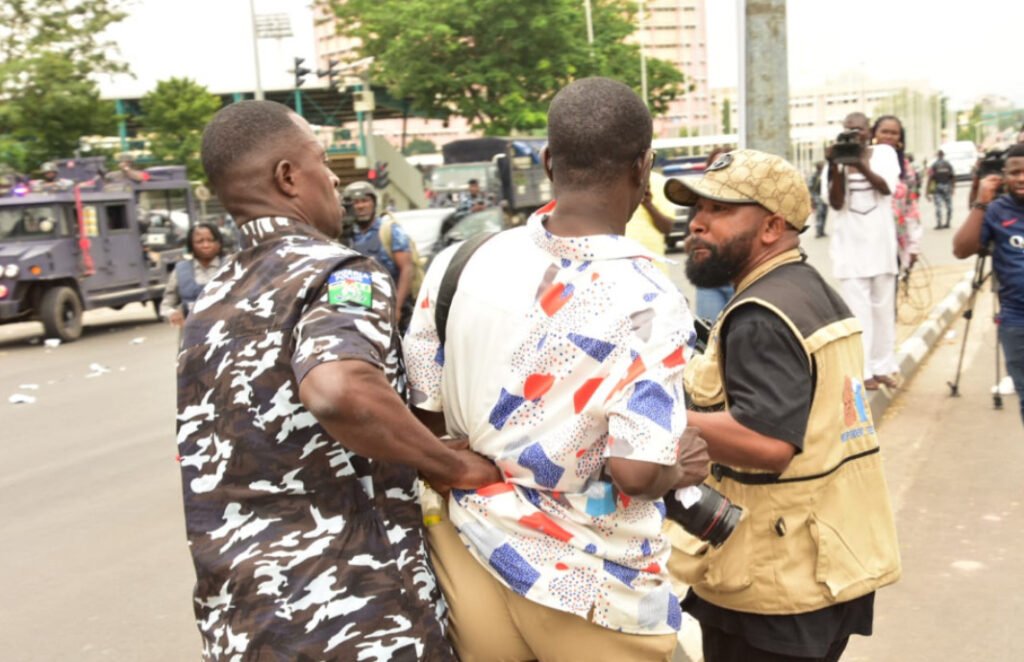
CIVICUS Monitor data shows that governments in Africa detain journalists as their primary tactic to silence dissent. According to the organisation, authorities in 33 out of 50 countries and territories south of the Sahara detained journalists in 2025, adding that Somalia, a top detainer of journalists, arrested 46 media workers between January and April 2025 alone.
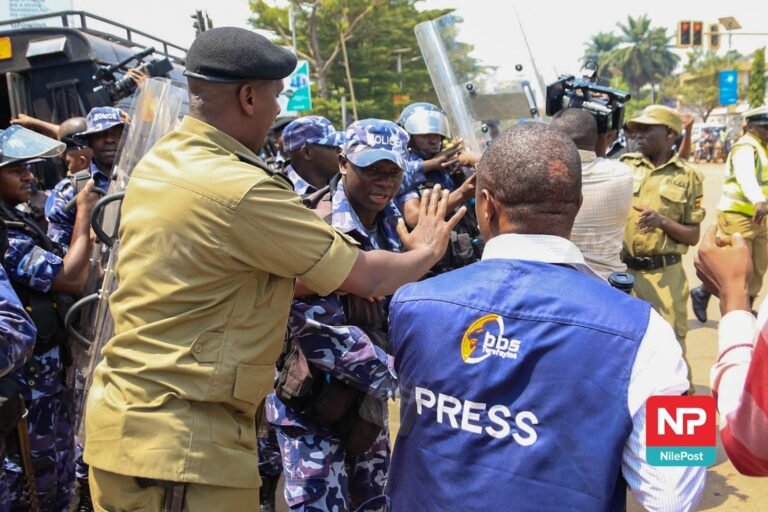
Members of the General Service Unit (GSU) of the Kenyan Police attacked Standard Media Group journalist Daniel Chege while he was covering a protest in Molo, Nakuru County. Despite showing press credentials, the security operatives assaulted him with batons, sustaining multiple injuries. This illustrates the physical risks journalists face even when clearly identified while reporting on public demonstrations.
“The state of fundamental freedoms in Africa, South of the Sahara is alarming, with severe and widespread civic space restrictions,” says Dr Baiye Mbu, West and Central Africa researcher for CIVICUS Monitor. “Journalists are being detained in Africa more than anywhere else on Earth. Excessive and lethal force against protesters is commonplace.”