
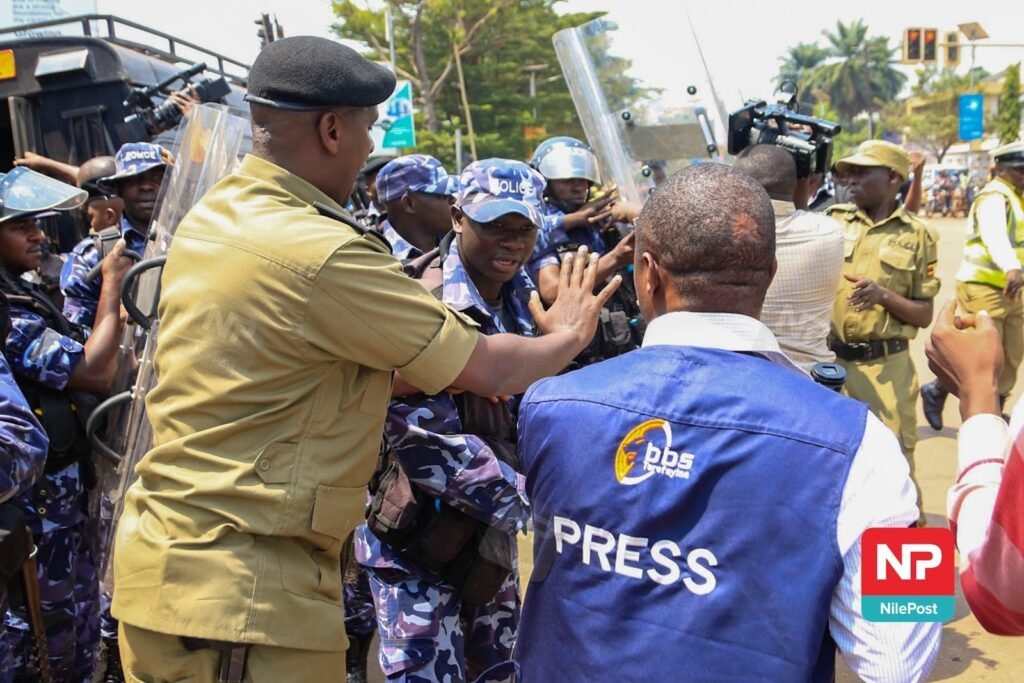
Despite robust constitutional safeguards, Kenya’s commitment to a free and independent press is facing a drastic deterioration. A February 2026 report by the Thomson Reuters Foundation reveals a landscape where the law is increasingly being weaponised to silence dissent and suppress public interest reporting.
Titled “Weaponising the Law: Threats to Media Freedom in Kenya,” the report documents a systematic shift toward lawfare, which is defined as the deliberate misuse of legal provisions to intimidate, exhaust, or economically weaken media actors.
The abuse of court processes has emerged as a central mechanism for targeting journalists, with 24 percent of survey respondents identifying it as a top threat. Strategic Litigation Against Public Participation (SLAPP) suits are frequently used by powerful political and private actors to burden journalists with resource-intensive litigation intended to deter scrutiny rather than seek justice, according to the report. Courts are increasingly used to obtain prior restraints or gag orders to prevent the publication of investigative stories, such as allegations of sexual misconduct.
Kenya’s High Court declared criminal libel unconstitutional in 2017, on the grounds that criminalising defamation discourages free speech and access to information. But the report found that the state continues to use newer laws, including the Computer Misuse and Cybercrimes Act, to arrest bloggers and journalists for cyber harassment. In some cases, these arrests lead to tragic outcomes, such as the case of blogger Albert Ojwang, who died in police custody after being arrested while investigating high-level corruption.
The report notes that a growing body of vague and overly broad legislation has created an enabling environment for suppression, which constituted 29 percent of the weaponised instruments. Counter-terrorism measures under the country’s Prevention of Terrorism Act are often conflated with legitimate journalism, as reporting on or live-streaming protests has been rhetorically framed by state officials as terrorism disguised as dissent.
Also, the National Cohesion and Integration Act is often misused to monitor government critics by conflating offensive expression with criminal incitement. Reflecting these trends, Kenya’s position in the Reporters Without Borders Press Freedom Index dropped significantly from 102nd in 2024 to 117th in 2025.
Rapid technological change is equally outpacing legal protections, leaving journalists exposed to state-sponsored digital attacks. During the 2024 protests against the Finance Bill, the government ignored court orders and disrupted internet access to limit the flow of information. Security agencies have also been accused of using spyware, such as FlexiSPY, to monitor the devices of filmmakers and investigative reporters, with 22 percent of respondents highlighting technology-facilitated harms, including cyberstalking and online harassment, a significant threat that particularly affects women journalists.
The Kenyan government frequently uses financial tactics to punish critical media houses, with 40 percent of respondents saying these pressures create a culture of intimidation. The Government Advertising Agency has been accused of weaponising revenue by withholding contracts from outlets that publish critical coverage, a practice described as an economic sanction on independent journalism. Labour conditions also remain precarious, as 80 percent of freelance journalists work without formal contracts, leaving them vulnerable to exploitation and less likely to pursue risky investigative stories.
According to the report, “Kenya’s media operates within a legal and political landscape marked by contradiction: constitutional guarantees are strong, yet implementation remains uneven; the media sector is vibrant, yet increasingly vulnerable to legal, economic, and technological pressures.”
A pervasive culture of impunity continues to undermine the media, leading to 48 percent of participants raising journalist safety as a primary concern. The report notes a persistent failure by law enforcement to investigate the killings of journalists, as in the 2022 fatal shooting of Arshad Sharif. This climate of impunity emboldens perpetrators and forces many journalists into self-censorship to survive.
“Ultimately, safeguarding media freedom is not only a legal imperative but a democratic one,” the report reads, adding that a well-functioning media enables public accountability, informed participation, and trust in institutions.
“By addressing the threats identified in this report and implementing the recommendations that follow, Kenya can take meaningful steps toward strengthening its democracy and ensuring that journalists can continue to play their critical role in society,” it concludes.