
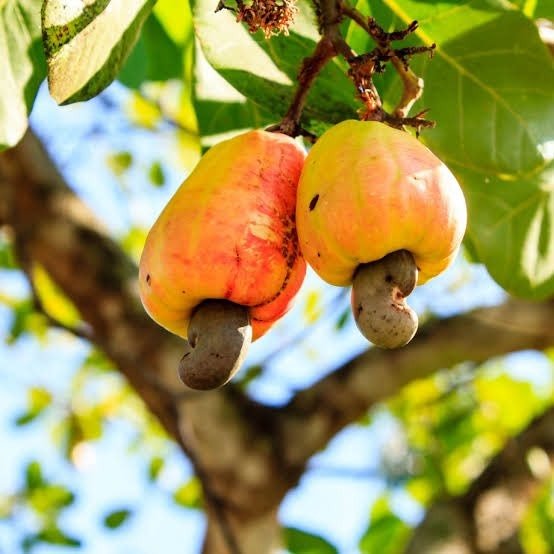
When news of the Nigerian government’s plan to ban the export of raw cashew nuts popped up on Nurudeen Bare’s phone screen, his heart nearly jumped out of his chest. With the cashew season barely some weeks away, the 27-year-old farmer hopes to pay his labourers with the farm’s proceeds.
Nurudeen’s fear is not unfounded. He remembers a period a few years ago when cashew buyers from the Benin Republic stopped coming into Nigeria to buy raw nuts. During that period, Nurudeen says cashew prices declined significantly; a basin that sometimes sold as high as ₦40,000 dropped to as low as ₦10,000.
“It happened because there were few buyers and surplus cashew nuts,” Nurudeen told The Liberalist, adding that if the government officially bans cashew exports, “it will significantly cripple our livelihood because there will be a surplus that local processors alone cannot buy.”
Nurudeen’s household in the Baruten Local Government Area of Kwara state produces over 140 bags of cashew nuts per season. They use the income to pay labourers, settle children’s school fees, and buy herbicides to prepare for the next farming season.
“Cashew is the only product that provides money to settle these bills because it’s not something you can store and eat like maize, yams, and guinea corn,” Nurudeen said.
Stakeholders Raise Concerns
Just like Nurudeen, fear gripped many farmers when news broke of the government’s move to ban raw cashew nut exports, a move orchestrated by the Cashew Processors and Packagers Association of Nigeria (CAPPAN). The group argued that foreign buyers dominated the farm gates and starved local processors of raw materials.
However, stakeholders in the cashew value chain and experts warn that the country could face a wave of large-scale unemployment, a collapse in agricultural production, and a severe decline in agricultural exports if the federal government approves CAPPAN’s proposal.
Alhaji Makama Ademu, chairman of Kogi Cashew Dealers and Stakeholders Association says Nigeria lacks the processing capacity to handle more than five percent of its annual production.
“If the government bans raw cashew export, 95 percent of what we produce will be left to rot,” Alhaji Makama says. “We don’t have the processing capacity to handle even a fraction of Nigeria’s output. This will destroy the farmers, destroy the value chain, and eliminate three major segments which are sub-buyers, licensed buying agents, and merchants.”
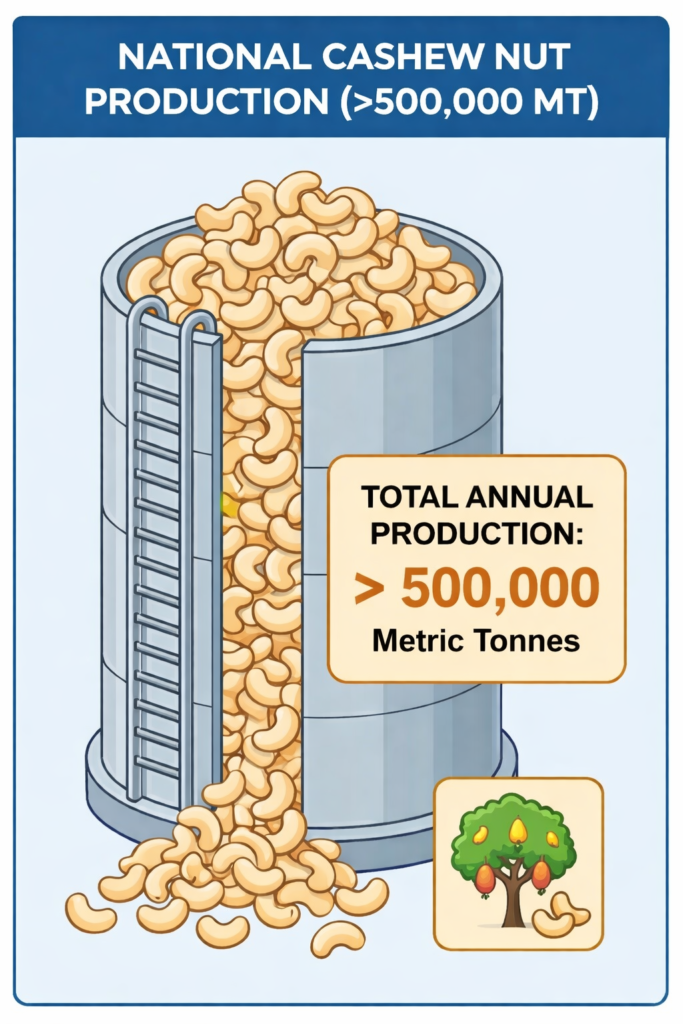
Currently, Nigeria produces about 580,000 metric tons of cashew annually, contributing an estimated ₦3.7 billion into the country’s economy. The National Cashew Association of Nigeria (NCAN) urged the federal government to shelve the proposed plan to ban the exportation of cashew nuts, equally warning that such a move could worsen poverty, cripple the non-oil export sector, and repeat the mistakes associated with Nigeria’s crude oil industry.
Banning cashew exports without first building domestic processing capacity, he says, will truncate the chances of Nigeria to grow its economy on other resources other than crude oil.
The farmers cautioned that the proposed ban could also have severe consequences for youths who have found livelihoods in cashew exportation. They want the federal government to at first consider establishing functional processing factories across major cashew-producing states such as Oyo, Kwara, Kogi, and other parts of the country where raw materials were readily available.
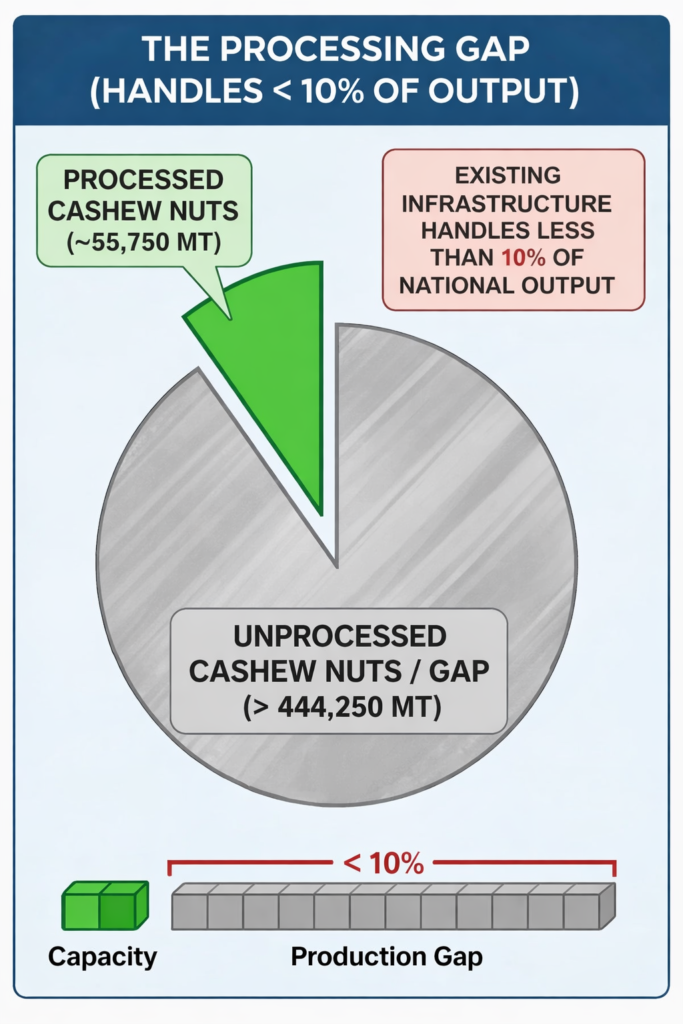
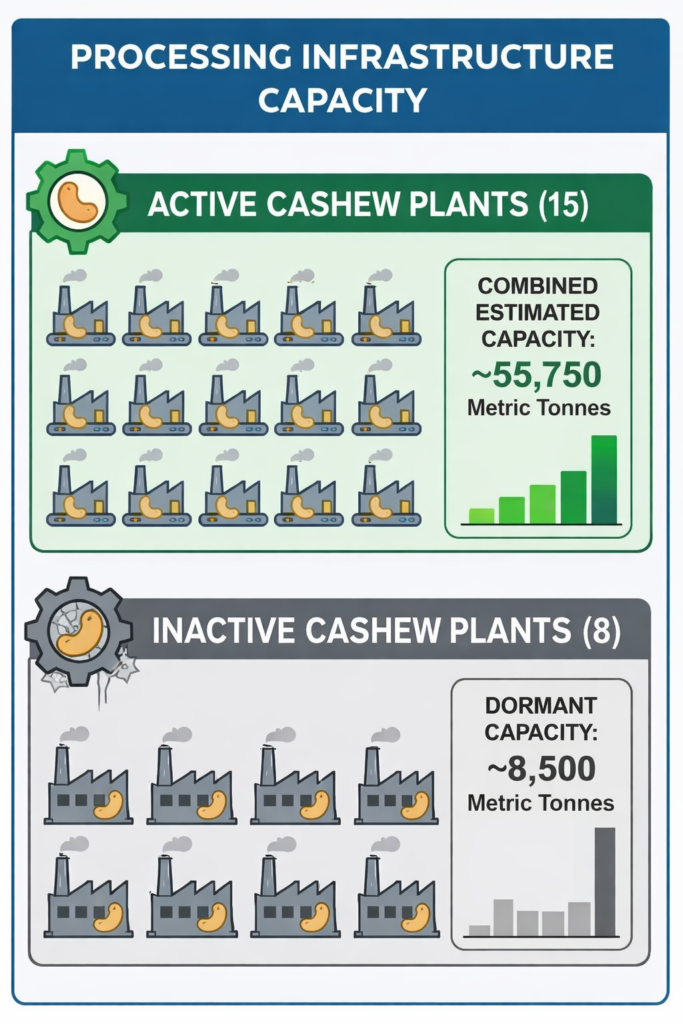
Data shows that Nigeria operates about 15 active processing plants with a combined estimated capacity of 55,750 metric tonnes annually, alongside 8 inactive plants representing an additional 8,500 metric tonnes of dormant capacity. However, with annual production exceeding over 500,000 tonnes, the existing processing infrastructure can handle less than 10 percent of national output.
“Most cash crops, just like cashews, are meant for export,” Dr. Bello Audu, an economic expert and lecturer at Usmanu Danfodiyo University, Sokoto, told The Liberalist. According to him, exports bring advantages, specifically boosting the country’s foreign exchange because the international market highly demands these cash crops.
“The policy to ban the export of cashew contradicts free market principles,” he says. “The government should ask questions before considering an export ban on cashew nuts, especially when the country lacks local processing capacity.”
Lesson from the Past
This is not the first time the Nigerian government has made such a move.
In August 2025, President Bola Tinubu imposed a six-month ban on raw shea nut exports to encourage local processing and increase Nigeria’s share of the global shea value chain. However, the consequences were overwhelming.
Exporters faced potential contract defaults and legal exposure due to the abrupt change, which undermined investor confidence. Because Nigeria lacked enough domestic processing capacity, demand for raw nuts dropped sharply, causing prices to plunge and significantly reducing incomes for producers and women in the shea trade.
The policy equally harmed the livelihoods of millions of mainly female collectors and traders who depend on export markets, contradicting the government’s stated goal of boosting rural income.
In another instance, Nigeria’s repeated ban on rice imports combined with border closures had wide-ranging trade effects that restricted cross-border export flows of rice and related agricultural products. The ensuing consequences proved counterproductive. Traders resorted to smuggling and parallel markets, mostly importing rice through Benin, which undermined official revenue and distorted prices.
Instead of lowering prices, protectionist border closures and restrictions pushed domestic rice prices up, hurting consumers and informal traders.
While a bill to ban cashew nut exportation sits before the National Assembly, cashew farmers continue to live in anxiety and fear regarding the fate of commodity prices should the government implement the policy or pass the bill.
“When I came across the news a few days ago, all the expectations I had for my cashew farm dropped because I knew the price would crash,” Danjuma Woru, another cashew farmer, told The Liberalist. Cashew, Danjuma adds, is the only crop that gives farmers the financial power to handle important expenses, and it is devastating to see the government attempting to place a ban on its export.
Biliyaminu Manne shares Danjuma’s worries, stating that the government should reconsider the policy to avoid hurting cashew farmers.
“The bill before the National Assembly seeking to ban cashew nut exportation would be anti-people and would deal another devastating blow to the nation’s non-oil export sectors,” says NCAN.