
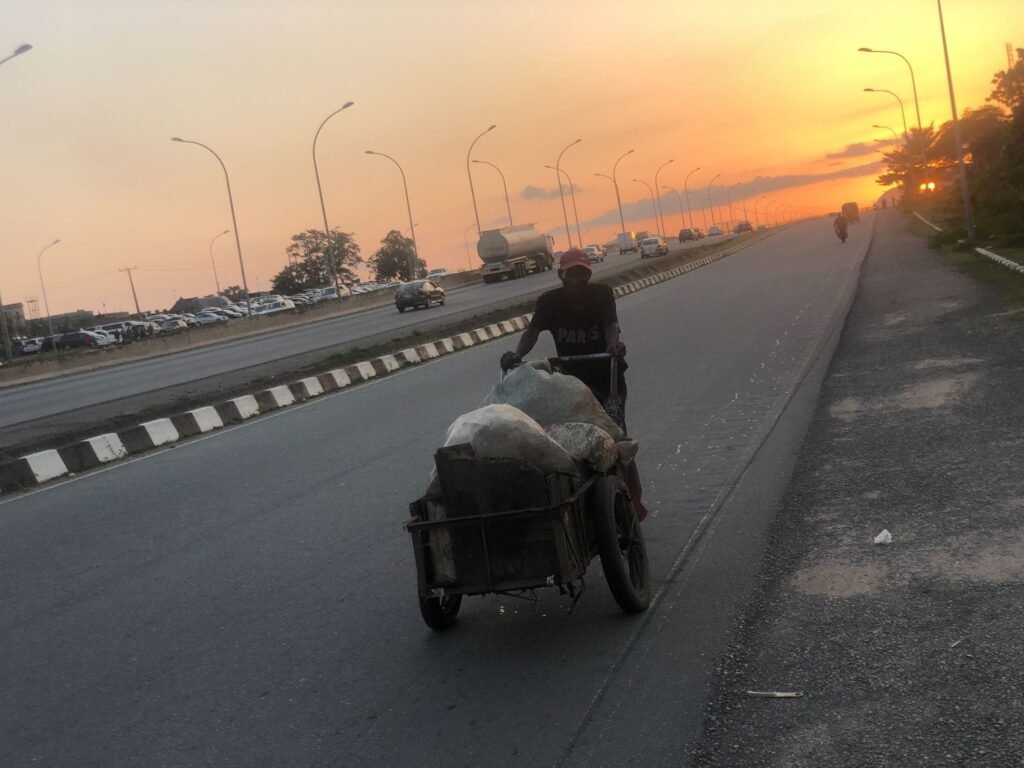
Haruna Kawula wears a torn T-shirt as he struggles to lift a long, heavy sack beside the road. Locals hail him, fondly calling him ‘bolla,’ a nickname that suggests he scavenges garbage
While others see stench and mess, Kawula sees a livelihood that puts food on his table. As the sun casts its fiery embrace upon the earth, Kawula separates plastics from iron and other metals. He has spent six months in this waste collection business, and he loves it.
“The work pays,” he told The Liberalist. “I make like five to ten thousand naira daily.”
In a country where the minimum wage stands at ₦70,000 monthly, Kawula potentially earns more than a minimum-wage worker. However, he faces daunting challenges: navigating rotting garbage, risking exposure to disease vectors, inhaling toxic fumes from burning waste, and dealing with the social stigma of the “scavenger” label.
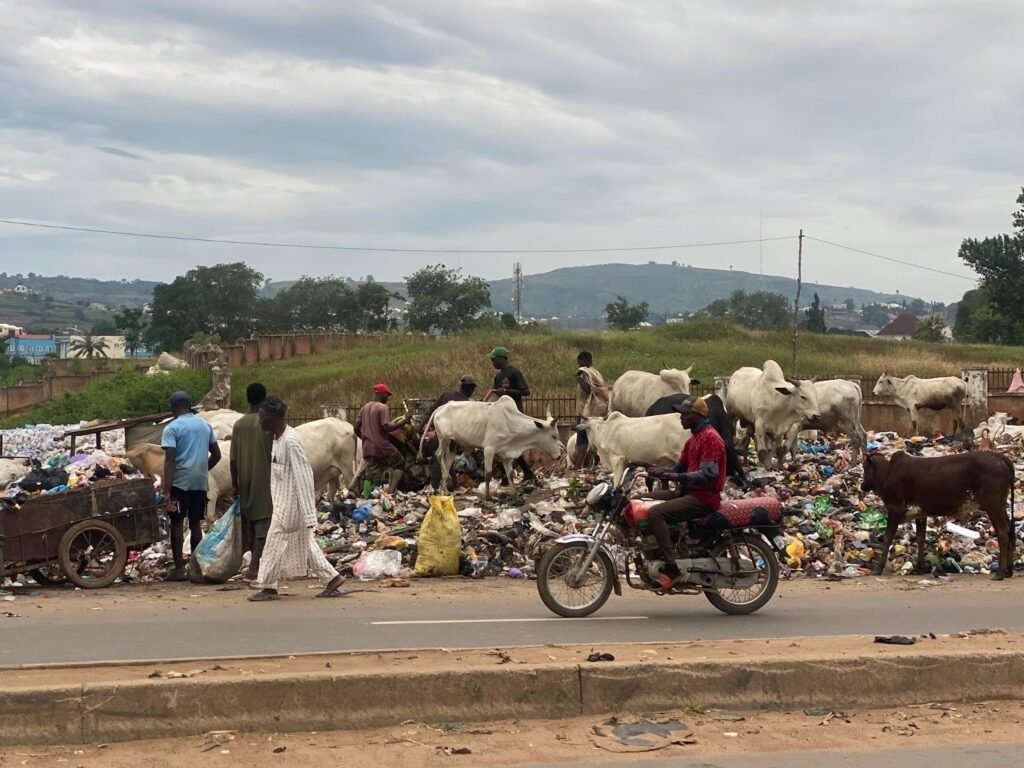
To most residents around Dustbin Junction in Gwarinpa, Abuja, Kawula’s presence constitutes a nuisance, particularly the smell, the flies, and the mess. Yet for him and dozens of others, this dirt forms an economy of its own, an unregulated system thriving in the absence of a reliable waste management structure.
Nigeria generates approximately 32 million tonnes of waste annually, but formal channels collect only about 30 percent of this. Consequently, an estimated 22.4 million tonnes remain uncollected. Informal waste pickers and scavengers like Kawula fill this gap. They manually sort portions of this uncollected waste and extract recyclable materials that might otherwise persist in the environment or overflow landfills. Their activity serves as an alternative waste management method alongside formal systems.
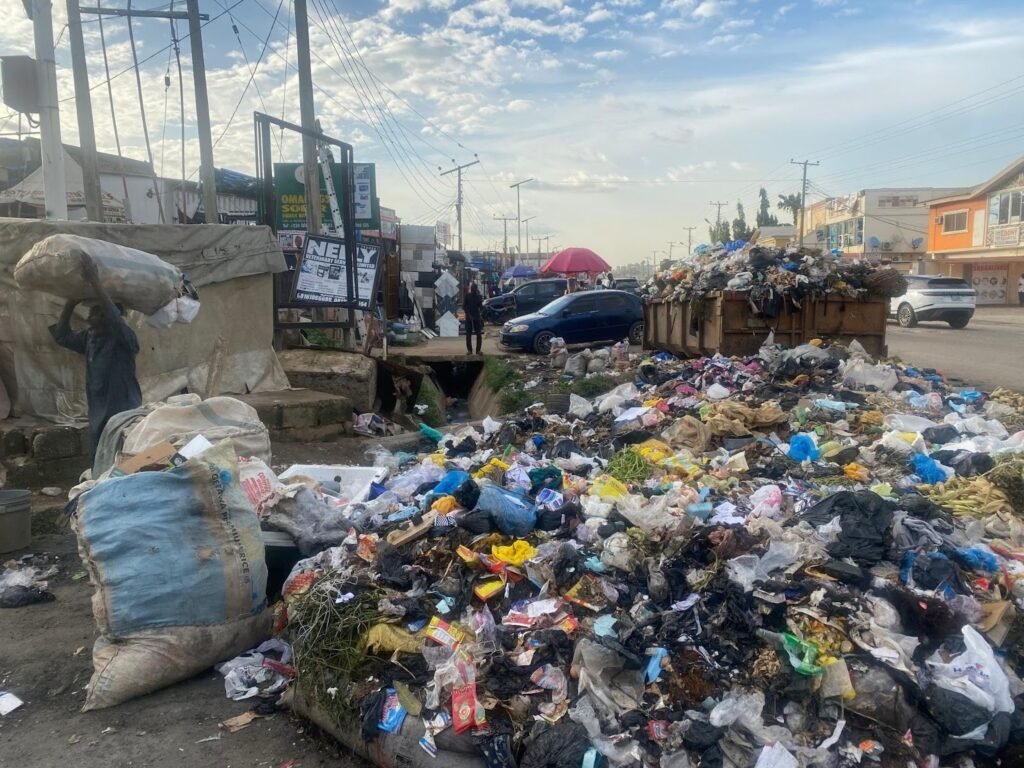
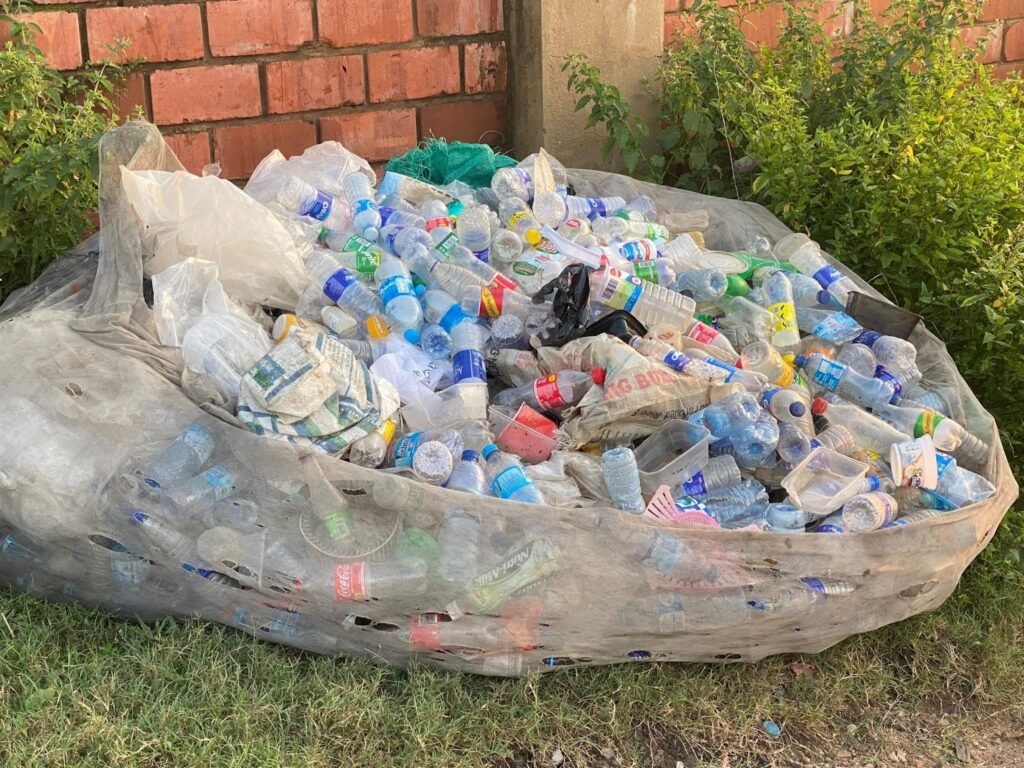
Like Kawula, Yasser Ahmad, a 30-year-old man, told The Liberalist that he left a butchering business for waste collection. Pointing at a pile of plastic bottles glinting in the sun, Ahmad said, “This one alone will give me ₦1,500 if I sell it to people who buy bottles.”
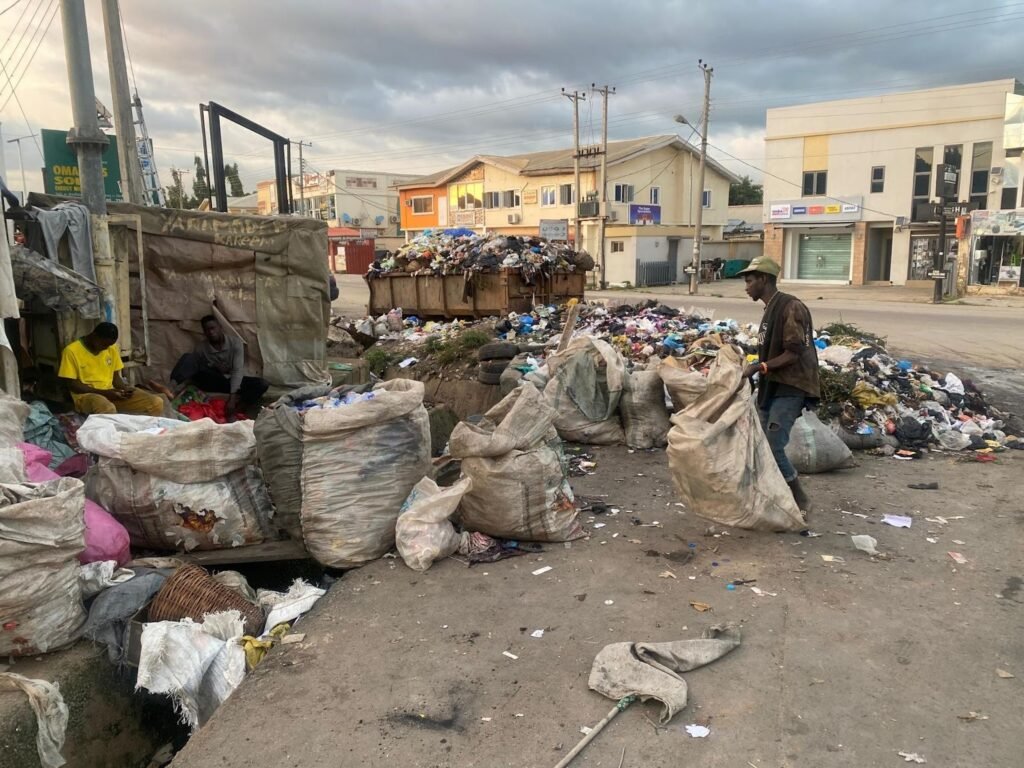
The business follows a straightforward structure. Collectors gather waste from homes and roadside stalls, charging between ₦200 and ₦500 for each load. They then select items suitable for resale, including plastics, bottles, cans, and scrap metal. They often dump the rest by the roadside or in open spaces that serve as illegal dumping sites.
The Middlemen
Middlemen operate between the collectors and the recyclers. Abdullahi Lawal, popularly known as “Baban Bolla,” loosely translates as “Big bolla man,” works as one such middleman. Lawal said he has operated a dumpsite in this capacity for 15 years. He purchases plastic and other recyclables from the scavengers at ₦500 per kilogram for certain materials and up to ₦1,000 for others. He then loads them onto trucks and sells them to companies that recycle the materials.
“I buy from the bollas, ₦1,200 per bag,” he said, pointing to a truck loaded with transparent bags shimmering in the sun. “When I get enough, I sell to a company that makes real money.”
The margins may appear small, but the turnover remains high. For every ₦10,000 a recycler spends on waste, they can make double that amount from factories or exporters who process the materials into new products like water bottles, roofing sheets, or plastic chairs. The business thrives on the endless supply of urban waste and the desperation of those at the bottom who do the dirty work.
A report values Nigeria’s green economy at approximately $250 billion, with plastic recycling playing a significant role. This supply chain functions entirely outside formal waste management structures, a dirty but functioning system born out of neglect, characterised by few working trucks and irregular waste collection. Yet, this cycle represents more than just a business, it helps keep the environment clean amidst the formal system’s failure.
Residents often must rely on these informal collectors. They told The Liberalist that environmental workers who once collected waste door-to-door now appear sporadically at best
The Abuja Environmental Protection Board (AEPB), a body responsible for environmental sanitation in the city, could not be reached for comment. The email address listed on the agency’s official Facebook page was invalid, and the listed phone numbers were unreachable.
To keep the capital city clean, the AEPB employed 54 waste management contractors for refuse evacuation and sanitation enforcement last year. Mrs Kate Ogbonna, Acting Director of AEP, also said the FCT Minister Nyesom Wike demanded stricter adherence to performance standards and introduced a dedicated task force, ‘Operation Sweep Abuja Clean,’ to enforce environmental regulations and penalize negligence.
However, residents said this yielded little or no result. “The government truck does not come every week,” said Basirat Raheem, a provision shop owner around Dustbin Junction. “If you wait for them, your dustbin will fill up; these boys help us even if they smell.”
Rebecca Audu, another resident, echoed Basirat’s concerns, adding that environmental workers complain about a lack of government payment. “It’s only when we pay them money that they will come and pack waste.”
At both Dustbin Junction and the Nyanya-Karshi Road, refuse regularly blocks traffic lanes. When it rains, the situation becomes even more dire. The waste blocks drainage channels, causing flooding that spreads contamination further.
An Economy Driving “Bolla” Near to Death
While the waste recycling business thrives for survival, health experts warn that waste collectors and residents near dumpsites face serious health issues. Dr. Olaruwaju AbdulAzeez at Lagos state University Teaching Hospital (LASUTH) told The Liberalist that people who live or work near open dumpsites risk many associated health problems.
“The list is extensive and sobering,” he said. “Infections top the roster, like malaria, typhoid, fever, and cholera, all of which contaminated water and mosquito breeding grounds transmit.”
Dr. AbdulAzeez noted that open burning at dumpsites releases carbon monoxide and other pollutants that aggravate asthma, cause chronic obstructive pulmonary disease (COPD), and can lead to cancer. “Burning plastic, tyres, and electronics at the open dumpsite can also expose those living or working nearby to cancer.”
Christiana Ndukwe, a medical practitioner in Gwarinpa, confirms that the “air pollution from smoke and toxic fumes can lead to respiratory problems like asthma and bronchitis. Direct contact with contaminated waste can also cause skin and gastrointestinal infections,” he said.
Residents’ testimonies validate the medical warnings. Rebecca Audu said she usually falls sick because of the smell.
Celestin Abugo has operated his business at this junction for over seven years. For the past three months, he said, the situation has become unbearable. “We don’t sell anything. No reasonable human being will come closer and ask you for something because of the smell,” he complained.
“It’s seriously affecting us, because most of the time I go to the hospital for check-ups for malaria and typhoid,” Abugo continued “And most of the time, they tell us that it’s from here but we cannot dodge it.”