

Stephen Abba, a remote data analyst, routinely borrowed up to ₦8,000 in data subscriptions from MTN each month, comfortably repaying the debt when his salary landed in his bank account. This reliable system kept Stephen employed until April this year, when the network suspended the service without warning.
Because his job required constant internet access and he sometimes experienced cash shortage, Stephen resorted to staying up all night to use MTN’s night bundle to complete his assignments. However, sleep deprivation caused him to miss some nights. This led to repeated missed deadlines, which ultimately cost him a freelance gig.
For years, the Nigerian telecommunication airtime loan market has operated efficiently. Launched around 2012, this system uses an automated algorithm based on recharge histories to grant instant airtime on credit. The service provides an emergency lifeline to roughly 40 million active subscribers and is valued at an estimated ₦300 billion to ₦400 billion annually.
Gbenga Adebayo, chairman of the Association of Licensed Telecommunications Operators of Nigeria (ALTON), noted that airtime credit is not a traditional financial loan product but a vital piece of economic infrastructure relied upon by millions, particularly within the lower-income segment of the population.
However, in April, the functional market falls to a sudden halt, upending the lives of millions of everyday Nigerians.
Muizat Abubakar, a debater preparing for the Nigerian Universities Commission Debate Championship, faced a similar crisis like Stephen. The competition mandated daily training sessions and assessments, with one critical test scheduled for 11:00am on 19th April. When her primary Airtel network suffered a sudden outage, she turned to her backup Glo SIM, only to find she could not purchase data via OPay because her financial account was linked to the dead Airtel line.
“I quickly tried to use Glo’s borrowing feature but I found the service was blocked,” Muizat told The Liberalist, adding that it caused her to miss the compulsory assessment.
Stephen and Muizat are among the millions of Nigerians suffering the consequences of a heavy-handed intervention in the airtime loan industry that broke a functioning emergency system.
The Regulatory Red Tape
The crisis began when the Federal Competition and Consumer Protection Commission (FCCPC) introduced its Digital, Electronic, Online, or Non-Traditional Consumer Lending (DEON) Regulations 2025. While these regulations were initially designed to curb abusive, predatory digital loan apps, FCCPC applied these identical, stringent rules to the low-risk telecom utility, reclassifying automated telecom advances as consumer loans.
This new classification stripped telecom operators and their Value-Added Service (VAS) partners of their autonomy to provide instant credit independently. Under the new regulation, telecom service providers must now use at least two intermediaries for service activation, including a fully owned local service provider. In simple terms, the government forced service providers to hand over their proprietary, instant-approval systems to licensed, third-party digital lenders.
Also, the new rules prohibit automatic lending. Instead of granting immediate access based on a historical baseline—such as a user recharging just ₦200 over three months—providers must now execute formal credit assessments to evaluate a user’s long-term repayment capacity.
This policy turned a two-second emergency lifeline into a cumbersome application process, with industry experts noting that speed defines the core value of airtime and data lending. FCCPC disrupted this value entirely, replacing simple USSD prompts with terms, conditions, and consent forms for every single transaction. Many Nigerians, including Stephen, now believe the borrowing service is no longer worth using if providers cannot approve it immediately.
To avoid crippling regulatory sanctions when compliance deadlines expired, major operators like MTN, Airtel, and Globacom suspended their airtime lending platforms this year’s April.
FCCPC released a statement denying they had “banned” the service. Ondaje Ijagwu, the commission’s director of corporate affairs, claimed the suspension was merely a “business or compliance decision” by operators who failed to align with the new regulatory framework.
But industry stakeholders, including the Wireless Application Service Providers Association of Nigeria (WASPAN), argued that airtime credit falls within the regulatory domain of the Nigerian Communications Commission (NCC), not the FCCPC.
The economic damage caused by this regulatory overreach soon forced the courts to intervene. In late April, the Federal High Court in Abuja issued an interim injunction restraining MTN and Airtel from cutting off Nairtime Nigeria Limited, a fintech firm offering these credit services. Simultaneously, Justice Ambrose Lewis-Allagoa of the Federal High Court in Lagos barred the FCCPC from enforcing the DEON regulations against WASPAN members. The courts essentially ruled that the state could not force telecom operators to breach existing contractual agreements under the guise of regulatory compliance.
Following these legal issues, the FCCPC suspended the enforcement of its rules, enabling Airtel and Globacom to restore their credit services by late May. However, the damage of uncertainty lingers, and Nigeria’s largest telecommunication service provider, MTN, is yet to restore the service.
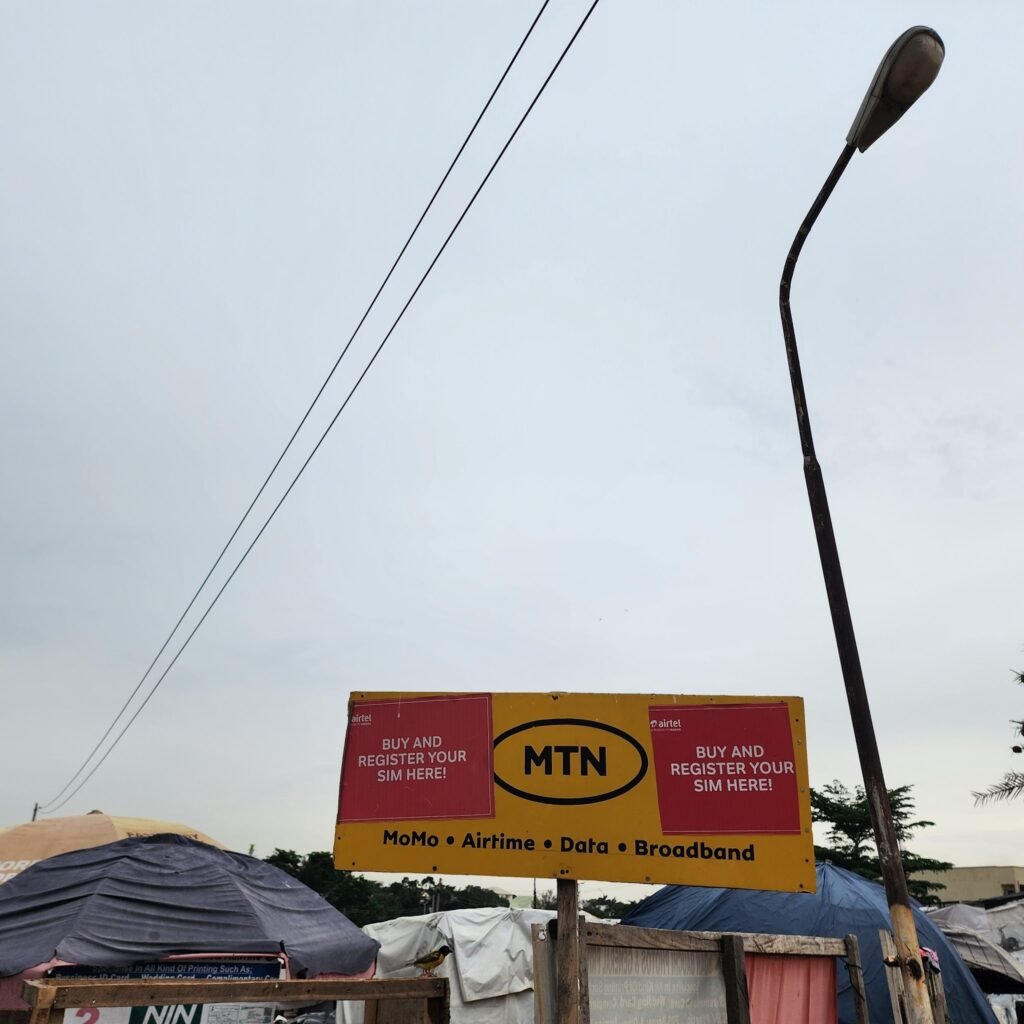
For Abdullahi Dauda, the consequence of this policy was life threatening. While travelling from Osun to Niger state, Abdullahi arrived at the transit park in Suleja, Niger state late in the evening to board a vehicle to Maje. But he realised he could not remember his uncle’s directions.
“I brought my phone out to borrow airtime as there were no funds on me anymore,” he recalled. “It was at that time I confirmed what I thought was false news about the suspension of airtime borrowing service to be true. Unfortunately, I had to sleep at the park that night as what could have been my last resolution has been taken away.”
The immediate fallout of the policy was the freezing of a ₦400 billion market in early April, alienating 40 million consumers like Abdullahi and creating massive revenue losses for both service providers and the underlying digital economy. MTN Nigeria’s fintech arm alone generated over ₦131 billion in the first nine months of 2025 through its XtraTime lending service.
Beyond domestic losses, this heavy-handed intervention sends a toxic signal to the global investment community. When a state agency can unilaterally cripple a fully functioning, privately built ₦400 billion market over a technical reclassification, it destroys investor confidence. Foreign and local innovators looking to deploy capital in Nigeria’s digital market will fear an arbitrary government directive that could take their initiative away.
What Kenya Did
Other jurisdictions handle the explosion of digital credit without breaking the underlying infrastructure. For instance, in Kenya, Mobile Network Operators (MNOs) command 16 percent of the adult borrowing population, even outperforming unregulated digital apps. When the Kenyan government intervened to curb predatory digital lending, it did not dismantle the core MNO infrastructure. Instead, the Central Bank of Kenya focused on actionable consumer protections against abusive, unregulated digital lenders.
For instance, a 2020 government directive removed negative listings by Credit Reference Bureaus (CRBs) for amounts under Ksh1,000, protecting vulnerable borrowers from permanent blacklisting over tiny debts. Kenya regulated the abuse of the system while allowing MNOs to continue providing seamless service.
Analysts say the FCCPC trying to treat a short-term ₦500 airtime loan the same way it treats a high-interest cash loan from a predatory app will only choke a thriving market.