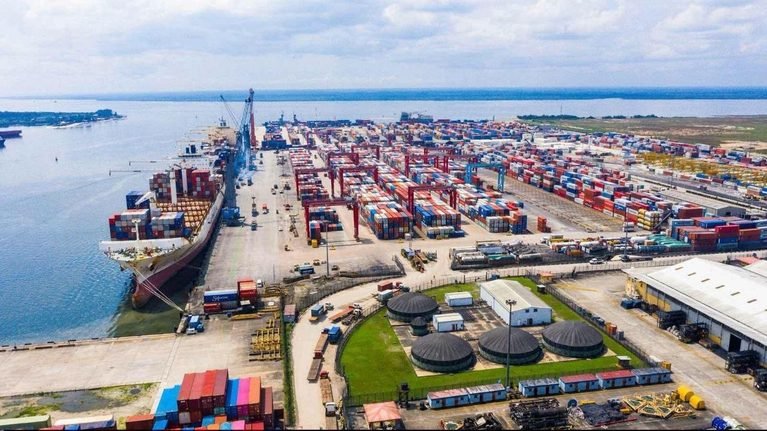

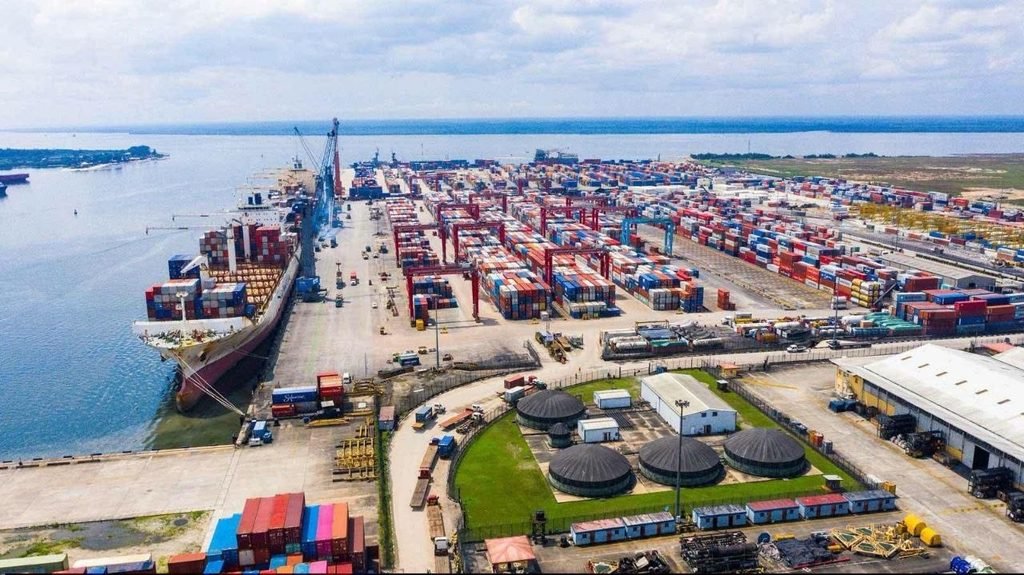
To expand Nigeria’s port infrastructure and reduce cargo concentration around Lagos, the Nigerian government has announced the modernisation of Onne, Rivers, Delta and Calabar ports. But these new developments alone will not make the country’s maritime trade more efficient. Without reforms to the administrative bureaucracy that slows cargo clearance and raises costs for businesses, the new ports risk reproducing the same problems that have plagued the Lagos ports.
President Bola Ahmed Tinubu also witnessed the signing of a $7 billion Memorandum of Understanding between the Ogun state government and DP World, one of the world’s leading ports and logistics operators, to construct the Gateway Deep Sea Port. The scale of the proposed infrastructure is significant. The Gateway Deep Sea Port, planned for Ogun Waterside, will feature a four-kilometre berth and an 18-metre draft, capable of handling Post-Panamax vessels. It will also connect to a 10,000-hectare Blue Marine Special Economic Zone.
Meanwhile, the federal approval for the South-South ports targets the structural rehabilitation and dredging of long-neglected channels, including the Escravos breakwaters in Delta state. Dr. Adegboyega Oyetola, Nigeria’s Minister of Marine and Blue Economy, explained that modernising existing ports while building new deep-sea ports aims to reduce the concentration of cargo traffic around Lagos and make the movement of goods more predictable and cost-effective.
But Nigeria’s port problems extend beyond physical infrastructure.
For decades, the operational framework of Nigerian ports has been dominated by administrative friction. Multiple government agencies, from the Nigeria Customs Service to the Standards Organisation of Nigeria (SON) and the National Agency for Food and Drug Administration and Control (NAFDAC), often conduct multiple manual inspections of a single consignment.
Emenike Nwokeoji, President of the Association of Nigerian Licensed Customs Agents (ANLCA), has repeatedly complained about the severity of these hurdles. He explained that the difficulty of clearing trucks out of terminals results in additional daily costs for businesses. According to him, this administrative bureaucracy is a major reason importers divert Nigerian-bound cargo to more efficient and automated ports in Lomé and Cotonou.
The problem is also rooted in how the government approaches its maritime borders. Ray Atelly, President of the Nigerian-British Chamber of Commerce (NBCC), described Nigerian ports as a “cash cow” that the government treats as a revenue-generation tool rather than an enabler of global trade. He warned that when agencies receive revenue targets rather than trade-facilitation mandates, every container becomes an opportunity to extract additional payments.
Atelly also warned that without an integrated clearing approach, Nigeria risks permanently ceding maritime activity to Francophone West African countries. But Atelly is not the only industry stakeholder with the same concerns. Dr. Muda Yusuf, Chief Executive Officer of the Centre for the Promotion of Private Enterprise (CPPE), similarly warned that treating major trade corridors such as ports as revenue centres can undermine business productivity and cause Nigeria to lose cargo to neighbouring countries, particularly because of high customs foreign-exchange rates.
When shipments remain at the port, costs continue to accumulate. To prevent the new Ogun deep-sea port and the upgraded South-South terminals from becoming parking lots for cargo, the government must prioritise digital integration alongside physical infrastructure. Automating the clearance process can reduce human discretion and limit the administrative bottlenecks that increase costs for businesses.
Abubakar Dantsoho, the Director-General of the Nigerian Ports Authority (NPA), has acknowledged the country’s port operational deficit. He said the NPA is collaborating with the International Maritime Organisation to develop a Port Community System and that the system must fully integrate with the National Single Window to improve clearing efficiency. Stakeholders such as Bolaji Sunmola, Chairman of the Nigerian Overseas Chamber of Commerce (NOCC), and Princess Audu, Director-General of the Presidential Enabling Business Environment Council (PEBEC), also advocated for a total digital transformation of port operations, arguing that capacity-building in software and automation is as critical as constructing deep-sea berths.
For the $7 billion Gateway Deep Sea Port and the rehabilitated South-South ports to genuinely unlock business prosperity, trade experts say the federal government must streamline agency overlaps, eliminate physical extortion at the ports and enforce a unified digital clearing process. Without these administrative reforms, Nigeria risks building more ports without fixing the barriers that make its existing ports costly and inefficient.
_________________
Abdullateef Sebiotimo is a Journalism for Liberty Fellow at the Liberalist Centre.