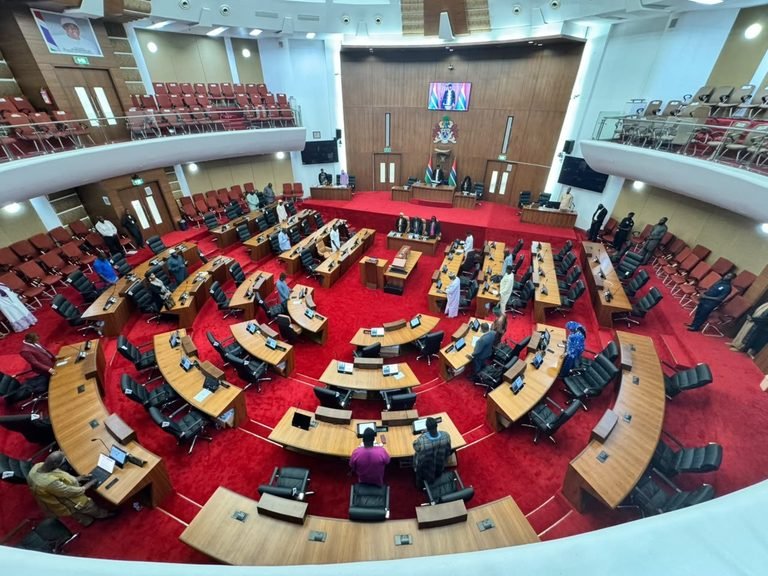


The Securities and Exchange Commission (SEC) recently announced a comprehensive draft regulatory framework for stakeholder scrutiny during a Regulation Forum at the 2026 Lagos Finance Summit this October. While the framework seeks to formalise the forex market, its proposed requirements could raise barriers to entry for small brokers and technology companies.
For years, millions of Nigerian retail traders have accessed global currency markets through unregistered international platforms, exposing themselves to severe financial risks. Dr. Emomotimi Agama, the Director General of the SEC, stated that any digital asset or forex trading platform operating in Nigeria without formal registration is illegal. He said the Commission is committed to promoting market participation while enforcing rules that protect Nigerians.
As the SEC moves to implement the regulations, industry stakeholders are weighing their potential impact. At the core of the SEC’s consumer protection strategy are the mandatory segregation of client funds and strict leverage caps.
Under the draft framework, brokers must warehouse all customer deposits in separate accounts domiciled strictly in licenced commercial banks. The rules also introduced negative-balance protection, which automatically closes a client’s position when their equity falls to 50 percent of the required margin, ensuring retail traders cannot lose more than their deposited funds.
Despite widespread support for these consumer safeguards, the financial threshold for obtaining a regulatory licence has triggered concern across the capital market.
The draft framework requires market-making forex brokers, often referred to as B-Book brokers, to maintain a minimum paid-up capital of ₦3 billion and a minimum liquid capital of ₦2.4 billion. Straight-Through-Processing and Electronic Communication Network brokers face a ₦2 billion paid-up capital threshold.
Musa Kabul, the Head of Marketing and Promotion for the Lagos Finance Summit, emphasised that while the consultation process will shape the final framework, the proposed capital requirements could have significant implications for existing operators and prospective entrants into Nigeria’s retail forex and CFD market.
The heaviest financial requirement targets developers of the digital platforms on which the market operates. The framework requires technology and platform providers to maintain a minimum capital of ₦5 billion.
Industry practitioners warn that this threshold could severely disrupt Nigeria’s indigenous financial technology (fintech) sector. Adedeji Olowe, a prominent Nigerian fintech founder and industry expert, has frequently analysed the chilling effect of exorbitant regulatory fees on domestic innovation. Adedeji noted that demanding billions of naira from software engineering companies to build the digital infrastructure of trading platforms could price local startups out of the market.
Without the ability to raise this capital, indigenous technology teams may abandon the sector, leaving trading infrastructure in the hands of highly capitalised foreign technology conglomerates.
The strategy could also trigger a wave of market consolidation, fundamentally altering the competitive landscape of Nigeria’s digital financial services. Financial experts describe this regulatory environment as a “survival of the fittest phase” for the financial sector. They argue that when the state imposes massive capital barriers, strong banks and legacy institutions expand and dominate the space, forcing weaker or newer entities to exit entirely.
In the retail forex market, economic observers predict that only traditional Nigerian commercial banks and giant offshore brokerages will meet the ₦2 billion to ₦5 billion entry requirements, potentially creating a highly concentrated market with limited options for retail traders.
To contextualise the severity of the SEC’s financial requirements, analysts are comparing Nigeria’s draft rules with regulatory frameworks in Africa’s most mature retail forex markets. Rufus Kamau, a Lead Market Analyst at FXPesa, frequently highlights the regulatory approach of Kenya’s Capital Markets Authority, which transformed Nairobi into a hub for regulated online trading.
The Kenyan regulator sets a minimum capital requirement of 50 million Kenyan shillings, roughly ₦630 million, for dealing brokers, and emphasises rigorous daily reporting and risk-based capital adequacy. Regulatory experts argue that Kenya’s lower capital threshold shows that continuous operational audits, not high capital requirements, is what achieve market integrity and consumer protection.
Beyond the financial costs, SEC also plans to introduce a strict ownership rule requiring any foreign forex broker that wants to operate in Nigeria to give at least 30 percent of its company to Nigerian citizens. The citizens must live in Nigeria and actively serve as directors on the company’s board. They must also not act as “frontmen” or operate through shell companies.
Dr. Muda Yusuf, Chief Executive Officer of the Centre for the Promotion of Private Enterprise (CPPE), explained the difficult balance the government is trying to strike between protecting local interests and attracting foreign investment. While the SEC’s goal is to create local jobs and ensure foreign companies comply with Nigerian laws, he warned that forcing international businesses to surrender a large share of their ownership could discourage them from entering the Nigerian market and push their investments to countries with friendlier rules.
_________________
Abdullateef Sebiotimo is a Journalism for Liberty Fellow at the Liberalist Centre.