
It was 7 p.m. in Kendeza village, located in the Binji local government area of Sokoto state and Abdullah Bawa had just finished dinner with his pregnant wife, Zainab, when she suddenly clutched her stomach and doubled. Abdullahi rushed her to the community’s sole health facility, only to find it deserted with no single staff around.
Faced with an empty clinic, Abdullahi hurried his wife to Sani Hospital, the nearest facility in the local government area. But the doctors there confirmed a severe complication and referred Zainab to Sokoto city. The journey from Kendeza to Sokoto city spans over 40 kilometers along a bumpy road. He recalled that the emergency trip cost him about ₦40,000 and took a grueling hour. It was the first time he would spend as much on transport for such a short trip, and it was also the first time he desperately wished a standard medical facility was within his reach.
“If we had a functional hospital nearby, we wouldn’t have to travel that far,” he told The Liberalist.
Abdullahi’s ordeal reflects the daily reality for residents across Sokoto state’s Binji, Tambuwal, and Sabon Birni local government areas, who routinely struggle to access quality healthcare. Because local medical facilities fail to function, routine health emergencies frequently turn into tragedies.
While the state government promised three Premier Hospitals to bridge these critical healthcare gaps, an investigation by The Liberalist revealed that the multibillion-naira projects remain completely abandoned years after officials awarded the contracts.
The Premier Hospitals
In July 2020, the Sokoto state government announced an ambitious plan to construct state-of-the-art hospitals across three local government areas (LGAs), claiming the facilities would provide advanced medical services, including emergency care, diagnostic testing, and surgical services to underserved communities. The target sites included Binji town in Binji LGA, Garin Malam in Sabon Birni LGA, and Tambuwal town in Tambuwal LGA.
“These hospitals were conceived to provide care for the most underserved communities,” Dr Muhammad Inname, the then Commissioner for Health, said. “They were meant to transform healthcare delivery across Sokoto.”
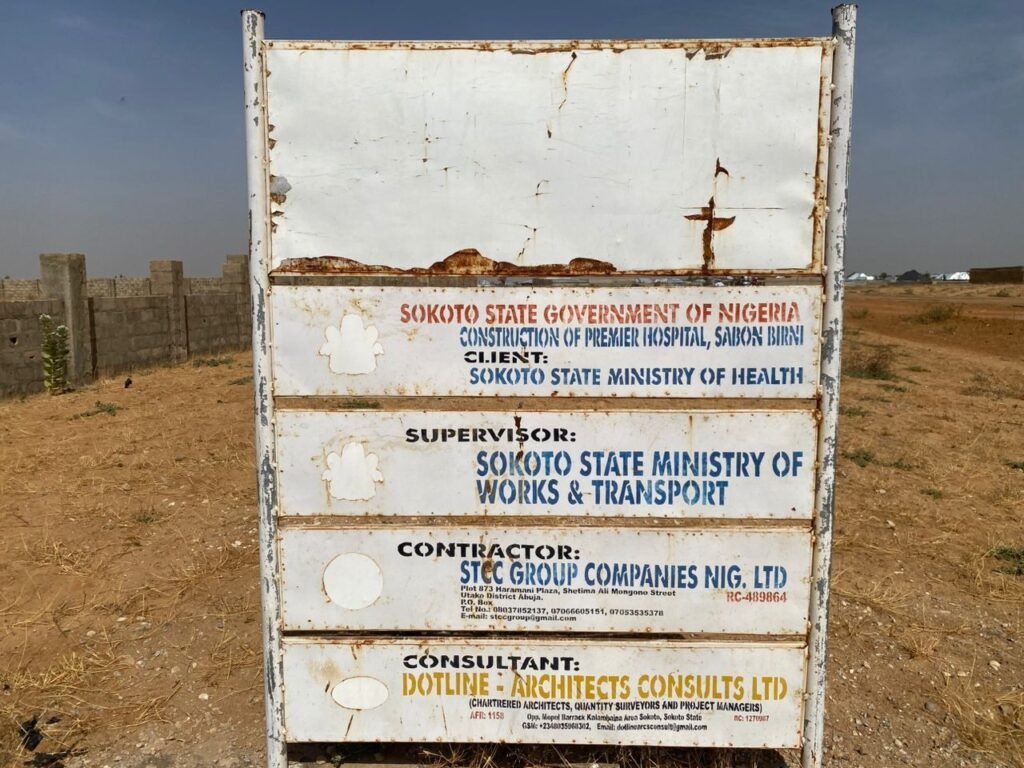
STCC Companies Nig Ltd was awarded the premier hospital in Sabon Birnin, while those Tambuwal and Binji were awarded to Sazak Acres Biloque Company (SABC) Ltd and Al-Jamil Company Nigeria Limited, respectively.
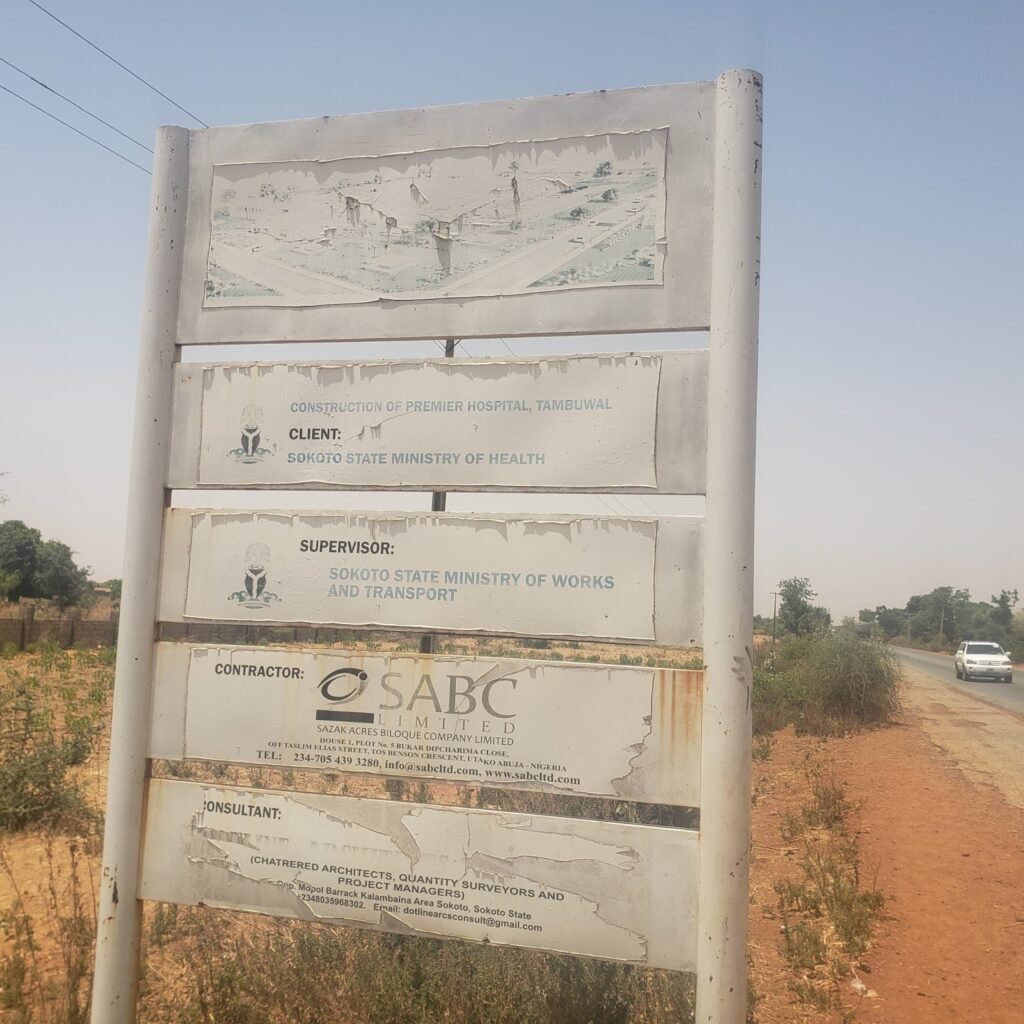
A review of the state’s budget performance reports reveals that the government spent over ₦700 million on each of these projects between 2020 and 2024. For the Tambuwal project, the government spent over ₦354 million in 2020, over ₦356 million in 2021, and over ₦410 million in 2022, bringing the total expenditure to more than ₦1.12 billion.
Records for the Sabon Birni project show that the government spent ₦354 million in 2020, ₦317 million in 2021, and ₦74 million in 2024, cumulative spending of ₦745 million. Similarly, the state government poured significant funding into the Binji project, expending over ₦354 million in 2020, ₦834 million in 2021, and ₦166 million in 2022 to fund the construction.
Where Did The Money Go?
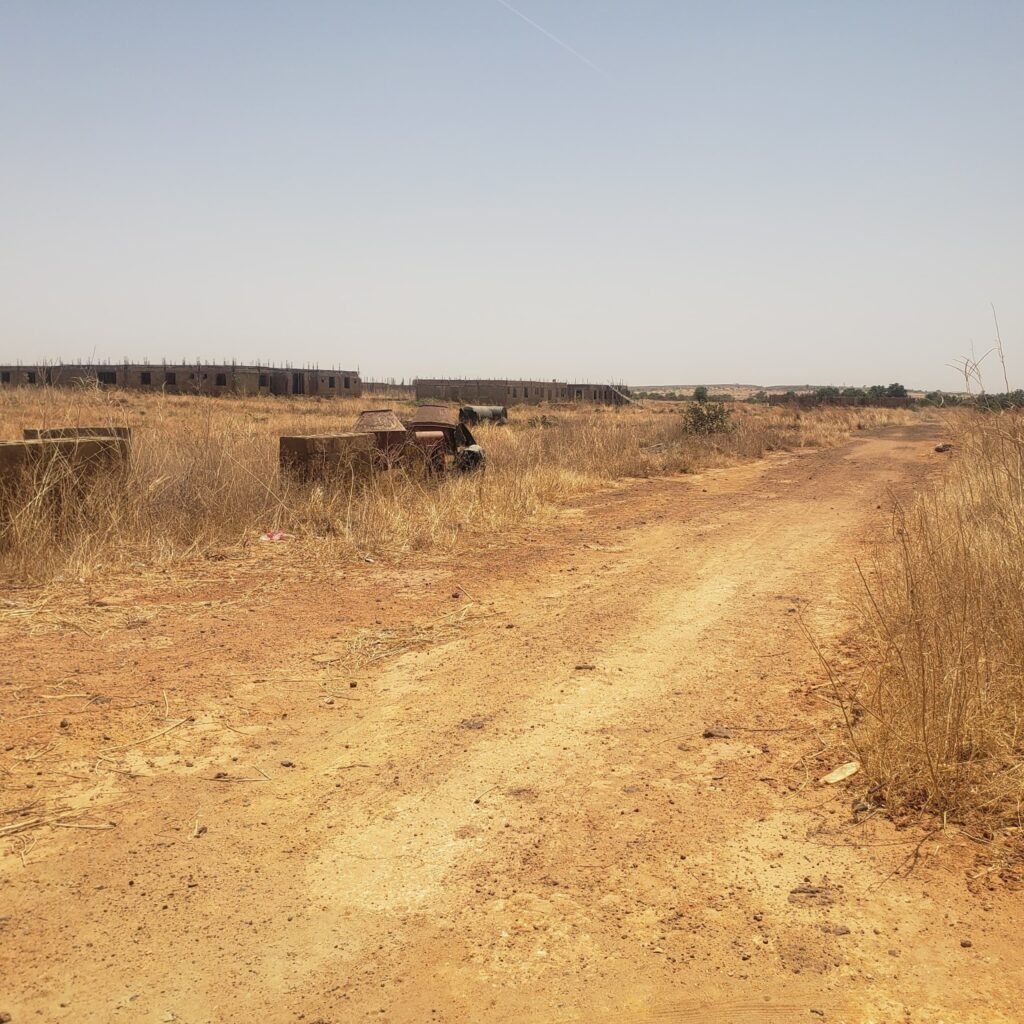
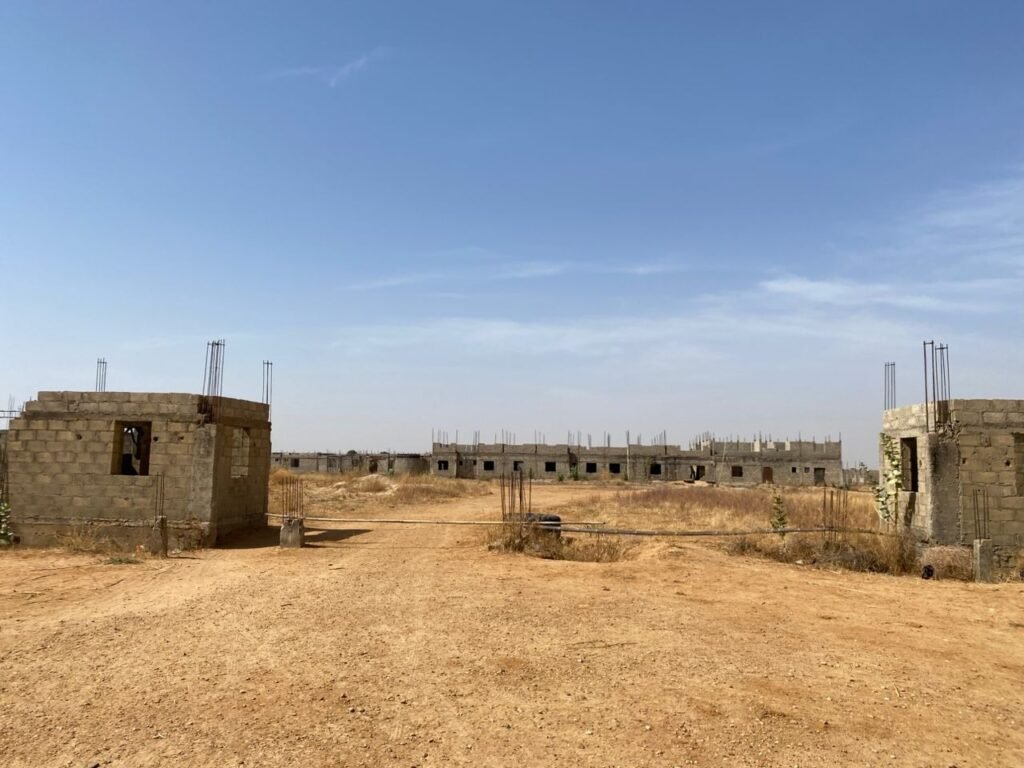
On 22 April, The Liberalist visited the project site in Binji. On closer inspection, this reporter saw what appeared to be an abandoned cement mixer on the site. Other materials, including iron rods and a makeshift generator, all in a rotten state, were also on site.
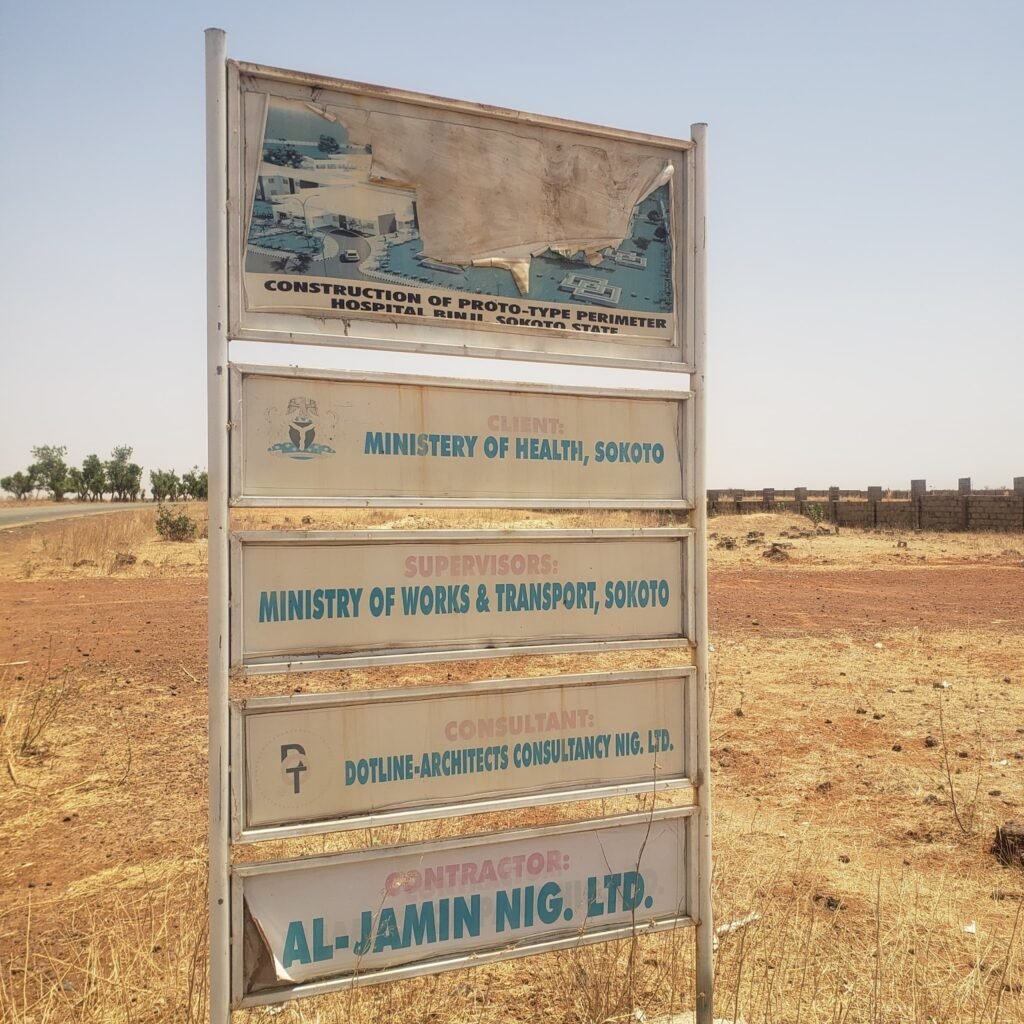
Sabo Umar, a resident of Binji, recounted how elated he was upon hearing about the construction of Premier Hospital in his local government area.
“Aside from the general hospital in Maikulki, only two hospitals serve this LGA, which is as big as Binji, and even those hospitals have limits to what they can treat. At times, people from faraway villages do not even seek health care because of how far the hospitals are,” Sabo noted. “With the completion of the hospital, I believe that will be a thing of the past because, looking at the structure, it’s a really big facility. But sadly, it was abandoned for years.”
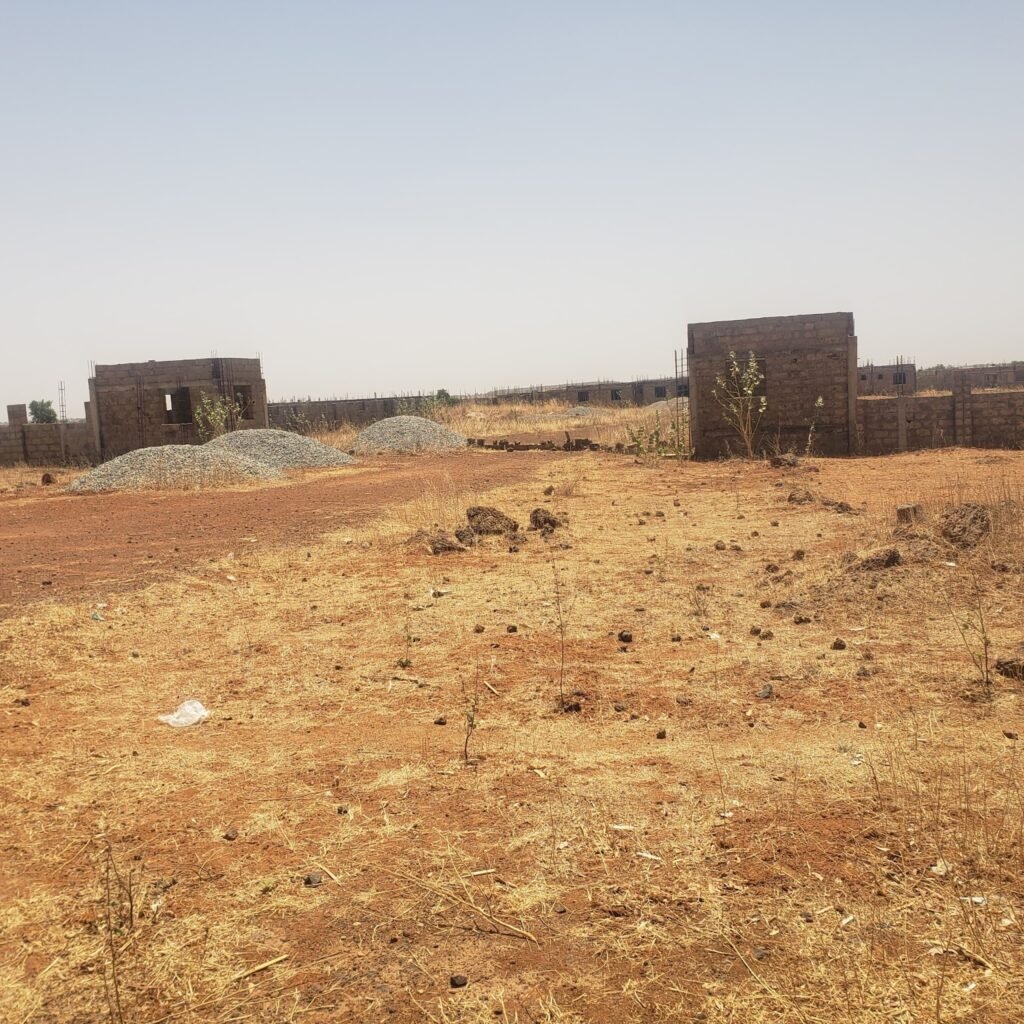
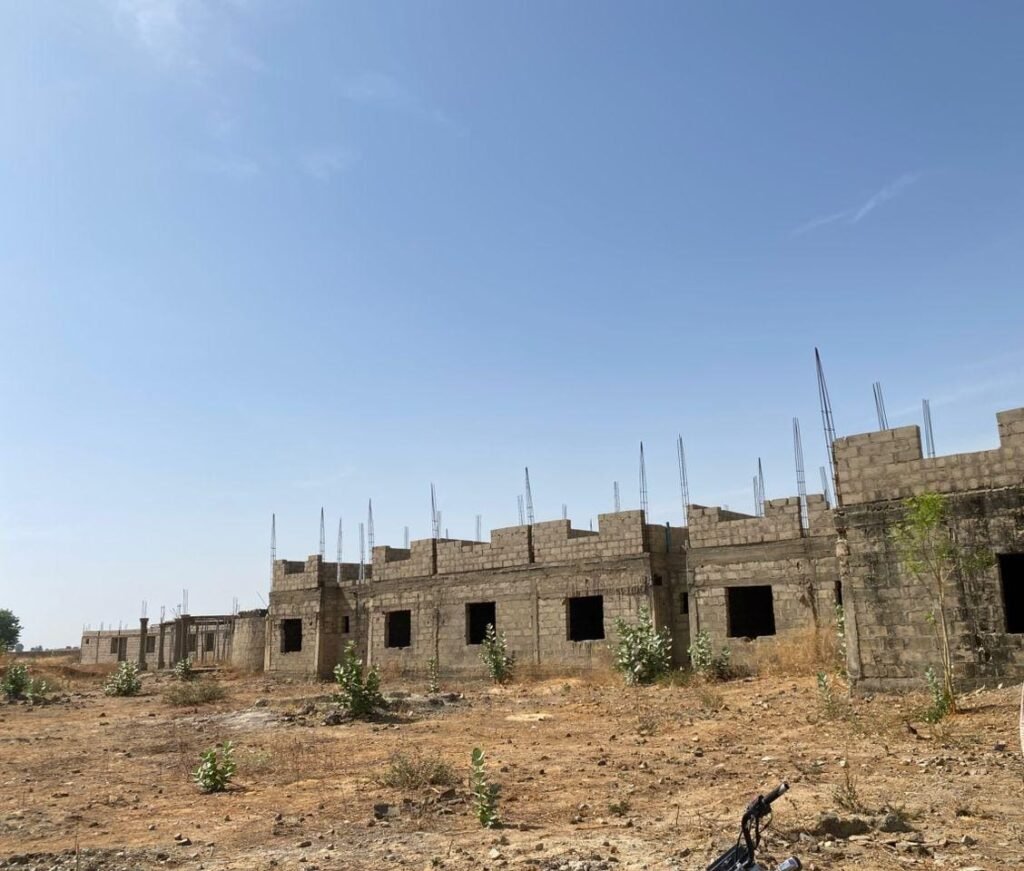
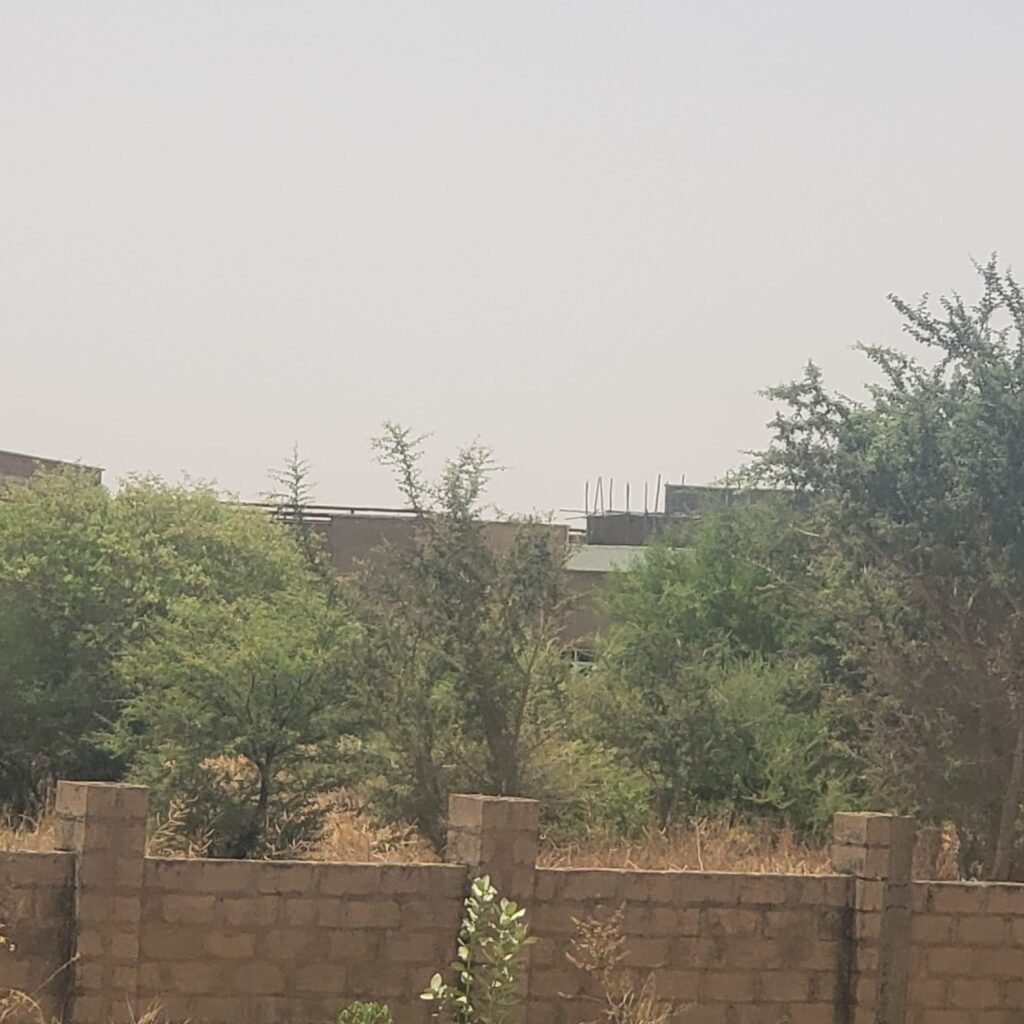
The situation of the facility is the same in Tambuwal. When The Liberalist visited the site one Friday afternoon in April, only a watchman was on site; the sites had been abandoned for years.
“We do not allow anyone to enter this site. Thieves carted away some of the materials on site,” The watchman told The Liberalist.
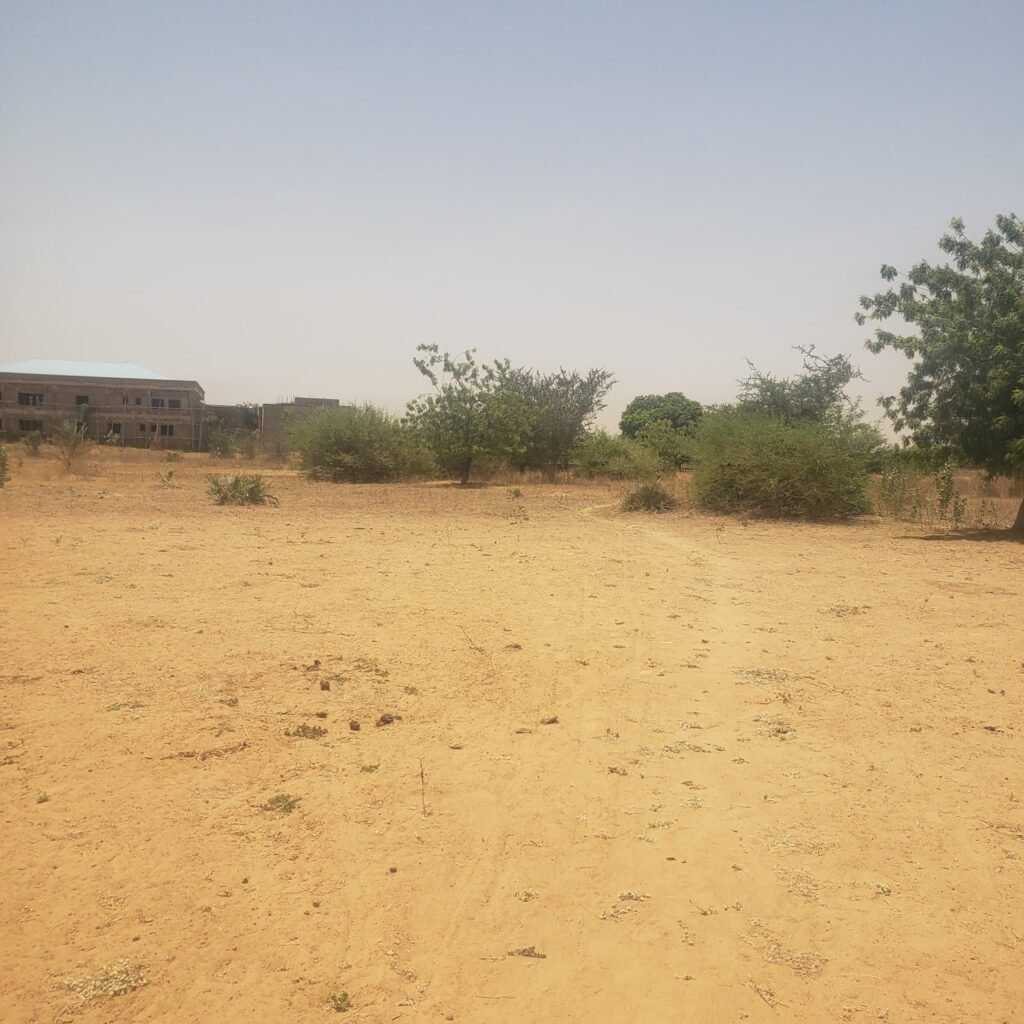
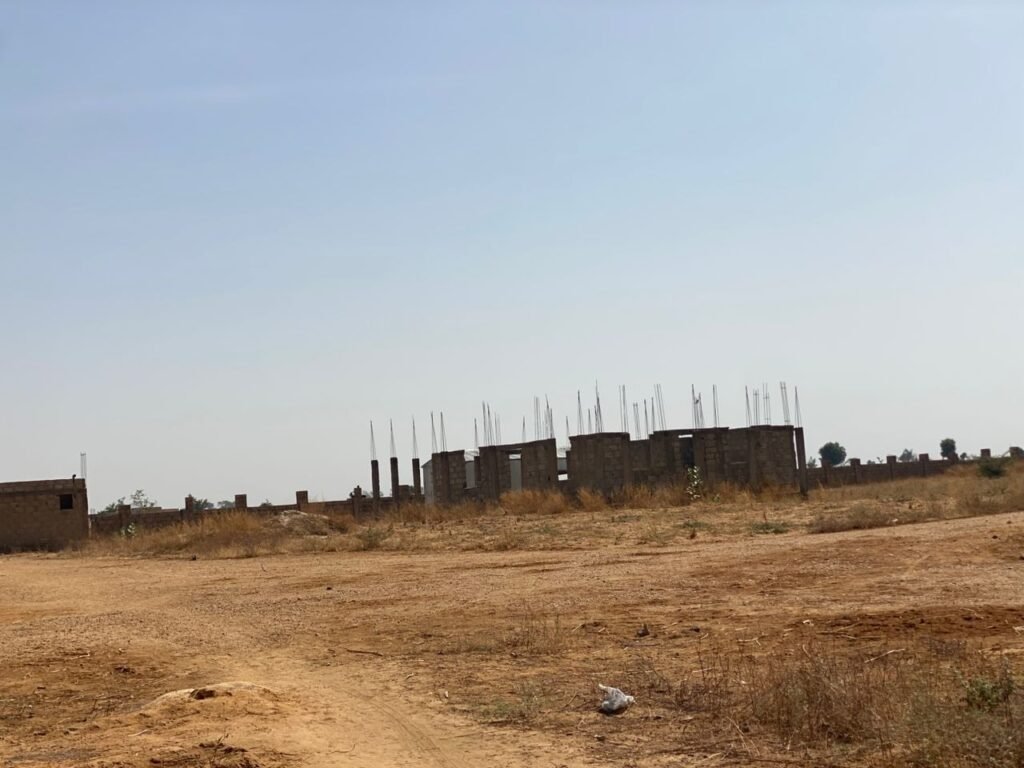
In Sabon Birnin, the situation is no different from that in Binji or Tambuwal. When The Liberalist visited the site at Garin Malam village, Sabon Birnin local government, in late April, the facility stood idle. The proof of abandonment is evident, with long grown grasses overtaking part of the building .
“You mean billions were awarded for this project, and they abandoned it like this?” Nura Sanusi, a resident of Gatawa village in Sabon Birnin, expressed his shock.
“The only hospital serving my village is the community health center, and the facility closes by 6 pm because of the security situation,” Nura explained.
“If you have any health emergency at night, you either go to the pharmacy or wait till the facility opens the next day,” he ended.
The incomplete condition of these facilities comes at a critical time for residents in the state. In April, Daily Trust published a report on how an illness suspected to be meningitis is killing people in the Sabon Birnin local government of Sokoto state. According to sources, there has been a steady influx of patients seeking medical attention, as fear grips the community over the “unknown illness”.
“People troop to the hospital every day in large numbers seeking treatment. We are overwhelmed and do not know what it is that has been killing our people almost on a daily basis,” one of the sources told Daily Trust.
They noted that many of the victims died before the illness was properly diagnosed, adding that residents were later advised to avoid sleeping in enclosed rooms due to the prevailing heat conditions.
Residents described symptoms including unconsciousness, severe neck pain, vomiting, diarrhoea, high fever, and, in some cases, foaming from the mouth, all consistent with meningitis.
“In some cases, a child would first complain of neck pain before becoming unconscious,” another source said.
Despite the interventions, locals expressed concern that the disease has not subsided, raising fears that it could be something other than meningitis.
“We were told it is meningitis, but the disease is not stopping. That is why people are beginning to suspect it could be something else entirely,” a resident said.
Although the Sokoto state commissioner for health promised to deploy personnel to investigate and provide adequate medical attention, residents said completing the facility would have enabled proper diagnosis and even adequate treatment of the illness.
Speaking with The Liberalist, Dr Muhammad Abdullahi, a medical practitioner, reiterated the importance of quality and accessible health facilities.
“Access to quality healthcare is critical for diagnosing and controlling illnesses that require urgent medical intervention. When access is poor and patients must travel considerable distances, it discourages people from visiting hospitals and seeking medical aid,” Dr Muhammad explained.
He further stated that the lack of adequate health infrastructure forces people to make choices that prevent them from using modern health facilities.
”Nigerians like compromises, especially when what they require is not readily available or too far to reach. When healthcare delivery is far, people start making weird choices, even at the expense of their lives.
Government Officials, Contractor Trade Blames
Abdullahi Umar, one of the directors of the STCC group of companies, told The Liberalist that political differences caused the abandonment of the projects.
“I would say the project was abandoned because of political indifference. Three others were awarded, like the one in Sabon Birni. In fact, the one in the metropolis had reached 80% completion before it was abandoned,” he said. “The past government of Aminu Waziri Tambuwal awarded the contract, which is why the current government of the day abandoned the project. They have not released a single kobo for the continuation of the project, despite its economic and political value in that domain,” Abdullahi stated.
He referred this reporter to the Sokoto state Ministry of Health for more information regarding funding of the project in Sabon Birnin.
When The Liberalist called the number provided in documents for Al-Jamin Company Nigeria Limited, the respondent said, “Please send me a text message. I can barely hear you.”
However, the contact never answered the text message asking for details of the contract, and they ignored subsequent calls to the number.
Equally, this reporter sent an email to SABC Ltd’s official email address seeking comment and details about the contract, but received no response. Several calls placed to the company line failed to connect. When contacted, Faruk Abubakar Wurno, the Sokoto state Commissioner for Health, explained that the previous administration awarded the contract, refused to fund it, and eventually abandoned it.
“We have renovated hospitals at Binji, Tambuwal, and Sabon Birni which are functioning well, and the people are making use of them,” the commissioner explained.
He added that the current government is gradually completing all abandoned projects.
“If a new government comes on board, the existing projects are more important than new ones. For the record, the past administration abandoned the projects. We are providing good, well-equipped, and functioning hospitals. You should ask the past administration why they awarded and abandoned the project because we do not know what happened.”
In a telephone conversation with The Liberalist, Abdulnasir Umar Abubakar, the spokesperson to the immediate past governor of Sokoto state, Aminu Tambuwal, countered that while the Tambuwal administration awarded the project, the current administration abandoned it upon taking power.
”During our time, the project was ongoing before the next administration came in and decided to abandon it,” Abubakar told The Liberalist.
He said that the government should be a continuity, making it immaterial whether it is Aminu’s or Ahmad’s time. “The Sokoto government awarded the project and the Sokoto government abandoned it during Ahmad’s time. The reason for the abandonment is not on our side, but on the government which abandoned the project.”
He ended by noting that the government stands above any individual, and since the government’s cover was used for mobilization and down payments, the project should have continued for the sake of the people.
“The government should leave political scores aside and prioritise the health and lives of its citizens by ensuring the delivery of adequate projects that promote the well-being of the people,” Dr Muhammad admonished.
__________
This report was produced with support from Civic Media Lab