
Across the Sahel, military governments are exiting or redefining their relationships with international institutions, raising critical questions about accountability and the fate of human rights in the region. Burkina Faso provides one of the clearest examples of this changing relationship.
Recently, the United Nations announced the permanent closure of its Human Rights Office in Burkina Faso, following months of unsuccessful efforts to resume operations after the government indefinitely suspended its activities.
The suspension occurred weeks after Volker Türk, the UN High Commissioner for Human Rights, urged the authorities to end the repression of civic space and reconsider plans to ban political parties. While defending its decision as a matter of sovereignty, the junta accused international organisations of exceeding their mandate and interfering in Burkina Faso’s internal affairs.
But Human Rights Watch (HRW) says the significance of the closure lies in what Burkina Faso is losing rather than what the government is gaining. Beyond monitoring and documenting abuses, the UN Human Rights Office served as one of the few remaining independent international channels through which victims could voice their grievances and bring violations to international attention. With that presence gone, concerns grow that verifying conflict-related abuses independently will become harder and less likely to attract international scrutiny.
The closure also coincides with growing allegations of abuses by Burkina Faso’s military authorities. Since taking power in 2022, the junta has suspended several human rights groups, dissolved political parties, and cracked down on independent media. HRW has documented hundreds of unlawful killings, summary executions, torture, and the burning of homes by the military and allied Volunteers for the Defence of the Homeland (VDPs) during counterinsurgency operations. According to the organisation, government forces and allied militias killed at least 1,837 civilians across the country’s 11 regions between January 2023 and August 2025.
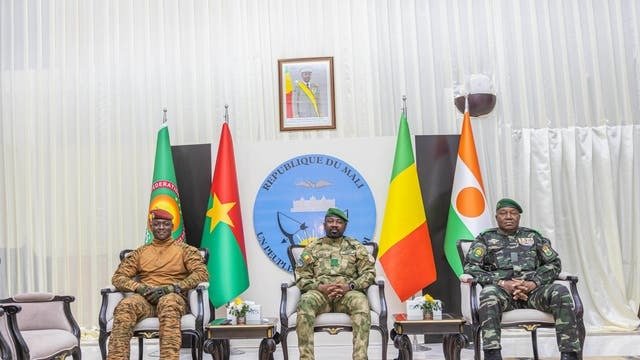
Across Burkina Faso, Mali, and Niger, the juntas have taken separate but closely related steps to reduce the influence of institutions responsible for monitoring state conduct, ranging from international human rights bodies and judicial mechanisms to independent civic spaces. While the juntas justify each decision as a defence of national sovereignty, together these actions suggest a broader effort to redefine how accountability is exercised in the region.
The closure of the UN Human Rights Office was not an isolated decision. Niger, Burkina Faso, and Mali formally notified the United Nations of their decisions to withdraw from the Rome Statute of the International Criminal Court (ICC), with the withdrawals due to take effect a year later. The three juntas argued that the court had become selective and politicised, unfairly targeting African states.
The decision carries particular significance for Mali, where the ICC has been investigating crimes linked to the country’s conflict since 2013 and has secured convictions in two cases.
Beyond distancing itself from international institutions, Mali’s military government has steadily tightened its grip on political and civic space since seizing power in 2021. The junta has suspended political party activities, detained opposition figures and pro-democracy activists, and restricted independent media, including the recent suspension of Allô Klédu, a popular radio show.
According to HRW, Allô Klédu had long served as one of the few remaining public forums where ordinary Malians, particularly those without access to social media, could openly discuss government policies and national developments. Rights groups argue that its suspension further narrows civic space and limits opportunities for public scrutiny of those in power. The organisation has also documented unlawful killings and the destruction of civilian property by Malian forces and allied Russian fighters during military operations.
Niger has also moved towards reducing its reliance on regional and international institutions since General Abdourahamane Tiani overthrew President Mohamed Bazoum in July 2023. Beyond ending military cooperation with several Western partners, the junta joined Burkina Faso and Mali in establishing the Alliance of Sahel States (AES), presenting it as a regional bloc built on mutual defence and sovereignty.
It also joined Burkina Faso and Mali in withdrawing from ECOWAS and notifying the United Nations of its decision to withdraw from the Rome Statute of the ICC, arguing that African states should have greater control over their security and judicial affairs without external interference. This withdrawal coincides with Niger’s military authorities tightening their grip on political and civic space.
Former President Mohamed Bazoum and his wife remain in arbitrary detention, while authorities also detain dozens of former government officials. In 2025, the Niger junta abolished multiparty politics, suspended the private television station Canal 3 TV, detained three Sahara FM journalists over their reporting, and dissolved four justice sector unions. These measures have deepened concerns over shrinking civic space as Niger distances itself from regional and international accountability mechanisms.
Rights groups warned that the withdrawals from both ECOWAS and the International Criminal Court reduce the avenues through which victims of grave human rights abuses can seek accountability and justice.