
The Nigerian government is expanding its airport concession program to attract private investment into the aviation sector. This makes the policy one of the government’s finest efforts to improve airport infrastructure and operations across the country to meet international standards.
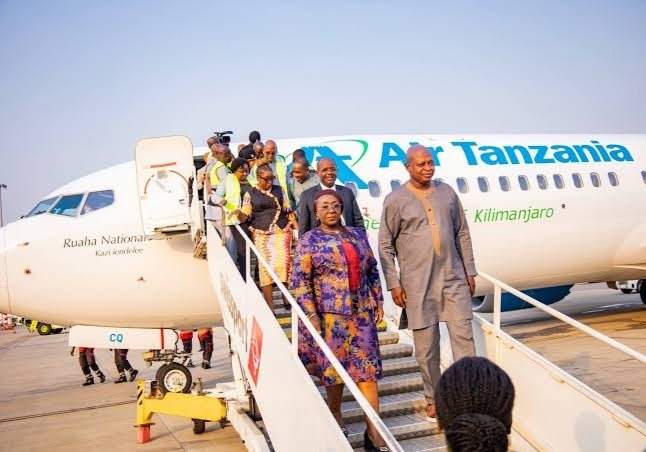
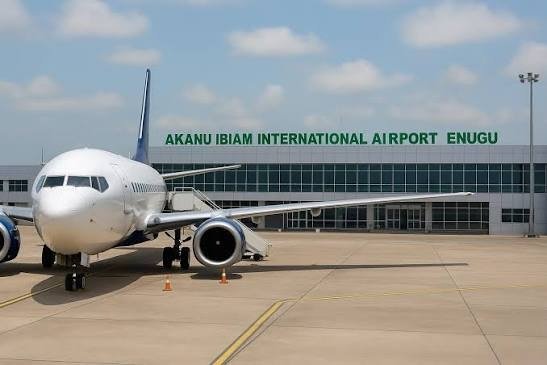
As part of this broader initiative, the government is concessioning the Akanu Ibiam International Airport in Enugu. Festus Keyamo, the Minister of Aviation and Aerospace Development, says the government has also developed concession proposals for other major hubs, including Murtala Muhammed International Airport in Lagos, Nnamdi Azikiwe International Airport in Abuja, Port Harcourt International Airport, and Mallam Aminu Kano International Airport.
Officials argue that private investment is essential to modernise infrastructure while the government retains ownership of the facilities. This renewed push for airport concessions reflects the government’s growing reliance on public-private partnerships to finance critical infrastructure. Rather than bearing the full cost of expanding and maintaining airports, the government is looking to private investors to provide long-term financing, technical expertise and commercial management, while retaining ownership of the assets and regulatory oversight of the sector.
The decision comes as Nigeria’s aviation sector continues to grapple with ageing infrastructure and funding constraints. The Federal Airports Authority of Nigeria (FAAN) manages 22 federally owned airports, but only three generate enough revenue to sustain their own operations. Others depend on annual government budget allocations for maintenance and rehabilitation, leaving critical upgrades vulnerable to funding shortfalls and competing public spending priorities. The reality has strengthened the case for PPPs as a viable mechanism to attract private capital and boost operational efficiency.
Nigeria formally embraced this economic shift in 1988 by enacting the Privatisation and Commercialisation Act as part of its Structural Adjustment Programme (SAP). The policy aimed to reduce the government’s direct involvement in commercial enterprises, improve efficiency, and attract private investment. The programme gathered significant momentum after 1999, when President Olusegun Obasanjo’s administration accelerated reforms through the National Council on Privatisation and the Bureau of Public Enterprises. These efforts led to the sale or concession of more than 140 public enterprises across sectors including telecommunications, banking, ports, hospitality, and power.
The telecommunications sector remains the country’s ultimate privatisation success story. Before Global System for Mobile Communications(GSM) operators arrived in 2001, Nigeria had fewer than 500,000 connected telephone lines for a population exceeding 120 million. Services from the government-owned Nigerian Telecommunications Limited (NITEL) were unreliable, expensive, and inaccessible to most citizens. The landscape shifted when the Nigerian Communications Commission (NCC) auctioned GSM licences for US$285 million each. MTN Nigeria and Econet Wireless (now Airtel Nigeria) emerged among the successful bidders in an exercise widely regarded as a landmark breakthrough for Nigeria’s telecommunications liberalisation.
Today, Nigeria boasts more than 170 million active telephone subscriptions. According to the National Bureau of Statistics (NBS) , the telecom sector contributes between 13 and 14 percent of the country’s Gross Domestic Product (GDP). Beyond improving daily communication, this private investment catalysed internet access, digital banking, fintech innovation, and millions of direct and indirect jobs. The telecom industry demonstrates how private investment can transform an essential public service.
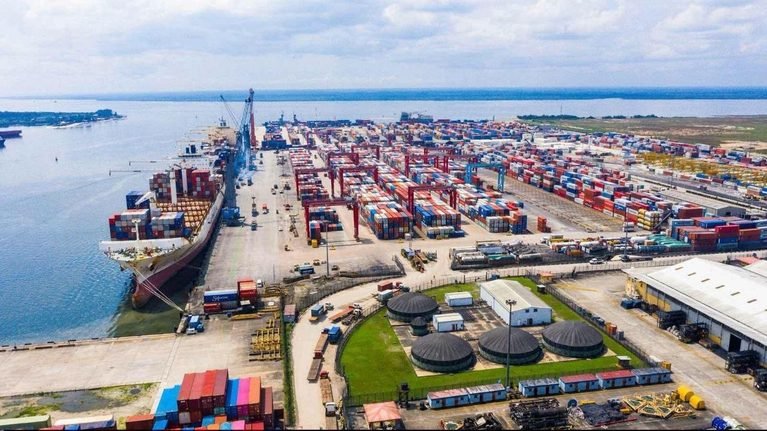
Another instance is the success of the 2006 concession of Nigerian seaports. Under this reform, the federal government adopted the landlord port model, retaining ownership of port infrastructure while transferring terminal operations to private concessionaires. The reform successfully attracted private investment for cargo-handling equipment, terminal expansion, and operational technology, which quickly boosted productivity and efficiency at several ports. While challenges like congestion, poor road access, and customs delays persist, the concession programme remains one of Nigeria’s most notable PPP achievements.
The privatisation also points to Murtala Muhammed Airport Terminal Two (MMA2) in Lagos as a pioneering aviation PPP. In 2003, after fire destroyed the old domestic terminal, the federal government granted Bi-Courtney Aviation Services a Build-Operate-Transfer concession to finance, design, construct, and operate a new one. Although the project became entangled in nearly two decades of legal disputes between the concessionaire and the government, MMA2 has remained fully operational. Industry stakeholders view the recent settlement of this dispute as a positive step toward restoring investor confidence in future airport concessions.
Nigeria’s aviation sector faces the hurdles that have plagued state-managed infrastructure for decades. Because several airports depend heavily on unpredictable annual budget allocations, long-term planning remains difficult, depriving them of the capacity to meet international standards.
“I want to assure workers that they are protected,” Keyamo says in response to airport workers agitating against the privatisation. “However, it will no longer be business as usual. This airport will now be privately managed with a strong focus on efficiency, accountability, and service delivery. Those who perform their duties diligently have nothing to fear,” the Minister said.