
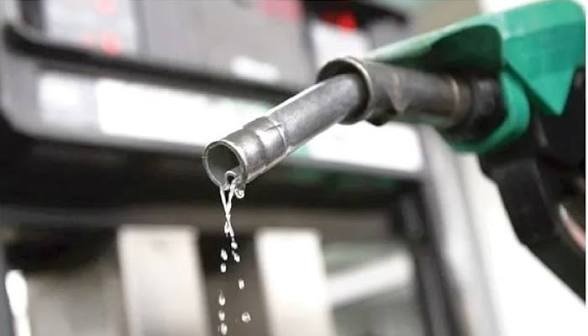
Atiku Abubakar, African Democratic Congress (ADC) presidential candidate announced that he would restore Nigeria’s petrol subsidy if elected president come 2027. While the former Vice President’s statement may be a political rhetoric, bringing back the subsidy would cause a renewed strain on government finances and divert huge public funds from managing critical sectors in the country.
Before President Bola Ahmed Tinubu removed the subsidy in 2023, the petrol subsidy already placed a heavy burden on government finances, as the country spent billions of naira every month to keep the pump price below market cost. The World Bank estimated in 2023 that removing the subsidy would save the government about ₦2 trillion that year, equivalent to 0.9 percent of Gross Domestic Product (GDP). Cumulative savings were expected to exceed ₦11 trillion by the end of 2025, freeing resources for other public priorities. According to Zacch Adedeji, Chairman of the Nigeria Revenue Service (NRS), the subsidy today would have been ₦53 trillion.
The logic behind the fuel subsidy is that cheaper prices at the pump would be visible to consumers, while the government pays the balance, using money that could otherwise go towards other critical public needs like health and education.
Prior to the subsidy removal, the gap between Nigeria’s subsidised petrol price and prices in neighbouring countries made smuggling profitable. Petrol was often moved across the borders and sold at higher prices, allowing traders to profit from a product partly paid for by the Nigerian government. Removing the subsidy narrowed that price gap and reduced the incentive to move subsidised petrol out of the country.
While Atiku and other subsidy advocates ride on the idea that subsidy programs help the poor, it is an inefficient way to support low-income households. The benefit is tied to how much petrol people consume, households and businesses that use more fuel receive a larger share of the subsidy. For instance, previous estimates found that the richest 20 percent of households received several times more benefit from petrol subsidies than the poorest 20 percent, making the policy poorly targeted at those who need support most.
Taiwo Oyedele, Nigeria’s Finance Minister, confirmed that fuel subsidies created distortions in the economy by keeping petrol prices below their true cost. He maintained that removing the subsidy was necessary to correct those distortions and allow the market to determine prices rather than relying on government intervention.
Removing the subsidy also increased the resources available to the three tiers of government. According to the Federation Accounts Allocation Committee (FAAC) Quarterly Review, total disbursements rose from an average of ₦10.14 trillion in 2023 to ₦15.26 trillion in 2024, with state allocations increasing from ₦3.58 trillion to ₦5.81 trillion and local government allocations rising from ₦2.57 trillion to ₦3.77 trillion. The increase gave states and local governments more revenue to meet their responsibilities.
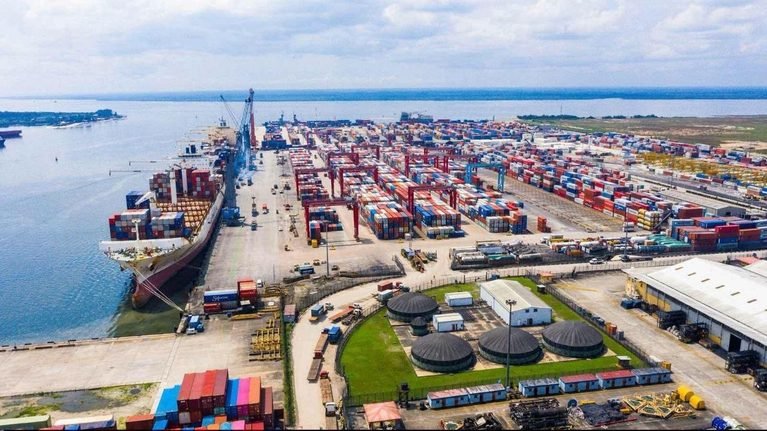
The removal has also coincided with investment in domestic refining. With the government no longer using the subsidy to keep petrol prices artificially low, local refiners have greater room to operate in a market where their investments can compete on supply and efficiency. The expansion of domestic refining since 2023 has already reduced Nigeria’s reliance on imported petrol. The country’s fuel market has also changed significantly since 2023, and Dangote refinery has become a major source of petrol for the domestic market, reducing the country’s dependence on imported fuel. In February 2026, the refinery supplied about 92 percent of Nigeria’s domestic petrol supply, while petrol imports fell sharply. The growth of domestic refining means Nigeria now has a different fuel market from the one that existed when the subsidy was removed in 2023.
Restoring the subsidy would also require more than a presidential announcement. Nigeria’s petroleum sector has undergone major legal and structural changes since 2023, including the transition to a deregulated downstream market. Analysts say any attempt to bring back government support would have to fit within that framework and determine how the subsidy would be funded, administered and monitored.
“If the President had not removed it [fuel subsidy], given what is happening in Iran, given what is happening globally and the total budget of Nigeria today is ₦68 trillion, imagine that this unsustainable subsidy is over 76 percent of the Nigerian budget,” noted Adedeji.
_________________
This article was produced as part of the Liberalist Centre’s Journalism for Liberty Fellowship, with funding from Liberty International.