
This is the second part of a presidential election series titled “The Marble and the Paradox of Gambian Democracy.” Read the first part here.
_________________
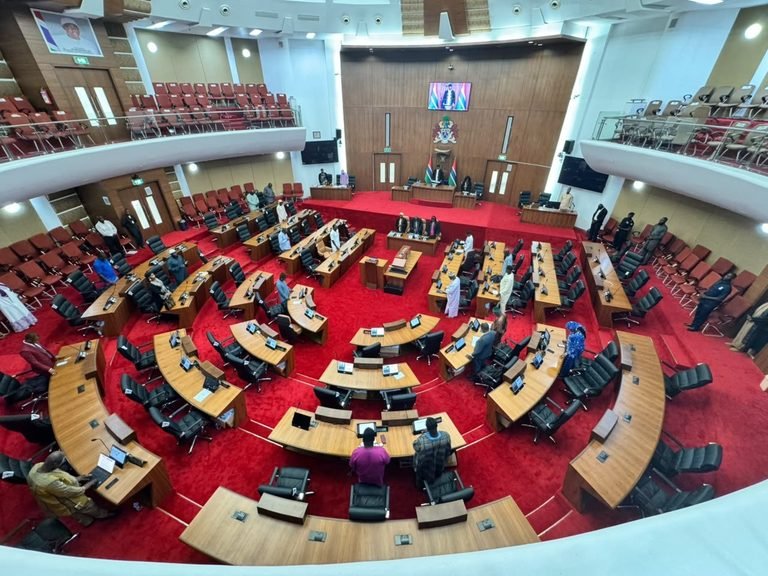
In the first part of this series, I argued that Gambia’s greatest challenge is not simply choosing better leaders but building stronger institutions. This time, I’m tempted to ask why do the same national problems keep returning, no matter who occupies the State House?
Every election promises a new beginning. Every administration arrives convinced it will succeed where its predecessor failed. New ministers are appointed. New policy documents are launched. New slogans dominate the airwaves. Citizens, understandably, allow themselves to hope again. Yet a few years later, the national conversation often sounds remarkably familiar.
The electricity remains unreliable. The cost of living continues to squeeze household incomes. Young people struggle to find meaningful employment. Public confidence in institutions weakens. Opposition parties accuse the government of incompetence, while governments argue they inherited difficult circumstances.
Then another election arrives; the cycle begins again. This recurring pattern is not unique to The Gambia as it has become a defining feature of many young democracies. It is what I call the punishment loop.
The punishment loop begins when elections become primarily a mechanism for punishing governments rather than evaluating competing plans for building stronger institutions.
When citizens are exhausted by hardship, voting against the incumbent becomes emotionally understandable. Rising prices, unreliable public services and limited economic opportunities naturally generate frustration. But frustration alone rarely builds better governance. It simply changes who inherits the same institutional problems.
Imagine a football club that finishes near the bottom of the league every season. Supporters become angry and demand that the coach be dismissed.
The coach leaves. A new coach arrives. The fans celebrate. Yet the club still has the same ageing stadium, the same weak youth academy, the same financial constraints and the same organisational culture. If nothing beneath the surface changes, why should supporters expect dramatically different results? Eventually, the new coach is blamed. Another coach is appointed. The cycle repeats itself. No serious football analyst would conclude that every coach was equally incapable. They would ask whether the club itself needs reform.
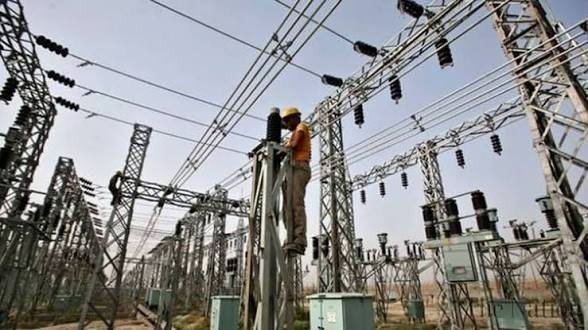
Politics deserves the same level of analysis. Take the issue of electricity. Whenever prolonged power outages occur, frustration is immediate and justified. Small businesses lose income. Tailors cannot complete customers’ orders. Restaurants throw away spoiled food. Students preparing for examinations are revised by torchlight or rechargeable lamps. Families sit outside in the evening simply because the heat inside their homes has become unbearable.
The first instinct is often to ask, “Who is responsible?” That is an important question. But perhaps an even more important question is, “Why does this problem keep returning?” If every few years the country confronts similar challenges in electricity generation, fuel costs, infrastructure maintenance, financing and distribution, perhaps we are looking at more than isolated failures. Perhaps we are looking at weaknesses within the institutions responsible for planning, investment and long-term management.
Changing the leadership of a public institution may sometimes be necessary. But changing leadership alone does not automatically redesign procurement systems, strengthen technical capacity, improve financial sustainability or modernise ageing infrastructure.
The same principle applies to youth unemployment. Each election cycle, ambitious promises are made about creating thousands of jobs. Yet jobs do not emerge because politicians announce impressive numbers at campaign rallies. They emerge because businesses invest. Businesses invest because they trust infrastructure, reliable electricity, transparent regulations, predictable taxation and efficient public administration.
In other words, employment is often the result of strong institutions, not merely strong speeches. This is where The Gambia’s political debate sometimes becomes trapped. We spend enormous energy discussing personalities. We spend far less time discussing incentives. Why are some public institutions consistently effective while others struggle? How are senior technical positions filled? Do public agencies have sufficient independence to make professional decisions? How is performance measured? How are failures corrected?
These questions rarely attract the excitement of campaign rallies. Yet they determine whether campaign promises become reality. Another feature of the punishment loop is that it encourages short-term politics. Governments know elections are never far away. Oppositions know their opportunity may depend more on public frustration than on presenting better institutional alternatives.
Citizens, understandably impatient for change, demand immediate results. Everyone begins focusing on the next election. Very few focus on the next generation. That creates powerful incentives to prioritise highly visible announcements over slower institutional reforms whose benefits may not become apparent for several years. Building a modern civil service is not politically glamorous. Reforming procurement systems rarely fills stadiums. Strengthening regulatory institutions seldom trends on social media. Yet these are precisely the reforms that determine whether countries develop sustainably. History demonstrates this repeatedly.
Nations that transformed themselves economically did not simply elect better politicians. They gradually built institutions capable of delivering consistent results regardless of who happened to be in power.
That is why mature democracies are often judged not by whether governments change, but by whether the quality of governance remains stable when they do. The real test of democracy is not peaceful transfers of power alone. It is whether institutions continue functioning effectively after those transfers occur.
This is where Gambians should become more demanding not only of governments but also of opposition parties. Every political party should be asked the same difficult questions. How will you strengthen the independence and professionalism of public institutions? How will you ensure key technical appointments are based on competence? How will you reduce political interference in agencies responsible for delivering essential public services? How will you measure success beyond campaign promises?
These are harder questions than asking who should win the next election. But they are also far more important. Because if elections continue producing different governments while the same structural weaknesses remain untouched, the punishment loop will simply continue.
New leaders. Old systems. Familiar disappointments. The uncomfortable truth is that no president, however honest, intelligent or determined, can single-handedly overcome institutions that consistently reward short-term politics over long-term state-building.
That is why the conversation must now evolve. The question before Gambians is no longer simply who should govern after December 2026. It is whether we are finally prepared to demand a system that works regardless of who wins. Only then will the sound of the marble signal more than a change of government. It will signal the beginning of a stronger republic.
_____________
Zindi Anthony Levi is a passionate foreign policy specialist based in the United Kingdom. With an MA in International Relations, he dedicates his expertise to shaping development policies across Africa and Europe.