
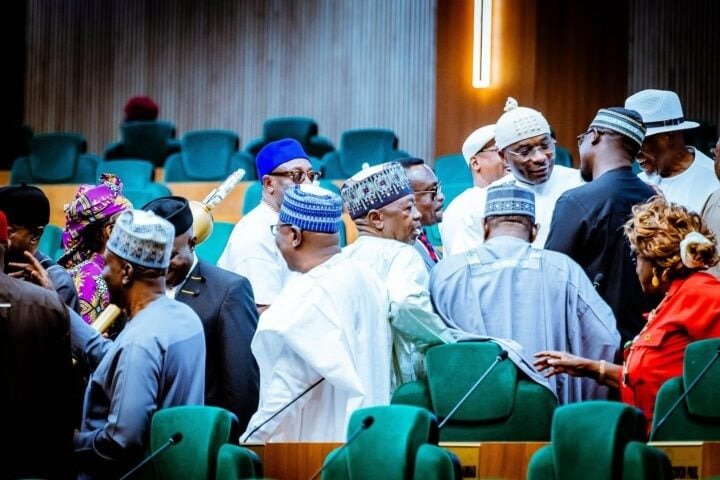
Last week, the Nigerian House of Representatives passed the first reading of a bill to amend the controversial Cybercrime Act. Among others, the new bill mandates that disputes arising from public interest publications, such as allegations of defamation or falsehood, must be resolved exclusively through civil remedies.
This move signals a step towards safeguarding media freedom and Nigeria’s broader civic space.
Enacted in 2015, the Nigerian Cybercrime Act provides a legal framework to combat online crimes, including cyberstalking, online fraud, and terrorism-related digital activities. However, the law has recently become a weapon against journalists and activists, especially section 24, which criminalises “offensive” or “false” online messages. Authorities have repeatedly used this section to harass journalists and restrict freedom of expression, raising concerns about the law’s true intent.
For instance, in 2024, security operatives arrested and charged Daniel Ojukwu, a journalist with the Foundation for Investigative Journalism (FIJ), after he exposed a ₦147 million fraud involving a top government official. Authorities also used the same law to harass journalist Agba Jalingo following an exposé on government corruption.
Human rights activists equally faced harassment under the law. Law enforcement agents arrested and arraigned activist Scott Iguma for alleged cyberstalking after he posted videos criticising a real estate company.
Over the years, civil society organisations have long condemned the Act and called for its amendment. In 2022, the Socio-Economic Rights and Accountability Project (SERAP) filed a complaint at the ECOWAS Court of Justice, prompting the regional court to declare section 24 arbitrary, vague, and repressive. The court ordered the Nigerian government to amend the law to conform with international human rights obligations.
Sections 24 and 27 of the Act criminalise the transmission of digital messages that are “grossly offensive” or “knowingly false” to cause annoyance, as well as aiding, abetting, or conspiring to commit these cybercrimes. Analysts argue that these broad, vague provisions allow authorities to stifle investigative reporting and online activism. Under the current framework, authorities can arrest and jail a journalist for a story that displeases officials or powerful individuals.
The new bill targets amendments to sections 24, 27, and 38 to decriminalise defamation under the Act, completely removing the power of the authorities to arrest or jail journalists over publications. The amendment also stipulates that competent courts, rather than law enforcement agencies or private complainants, must determine whether a communication constitutes false information or causes harm.
The new bill also provides an exemption to protect journalists who publish confidential government information while investigating matters of public interest.
Under the current framework, section 38 empowers law enforcement agencies to compel service providers to intercept communications and release retained digital data. The amendment now requires agencies to obtain a court order before accessing the data of journalists and whistleblowers.
In recent times, the use of law to frustrate independent media is becoming a common trend in Africa. For instance, a report revealed a new landscape in Kenya where legislations are increasingly weaponised to silence dissent and suppress public interest reporting. The report shows 24 percent of survey respondents identifying abuse of court processes as a central mechanism for targeting journalists, adding that the use of vague and overly broad legislations constituted 29 percent of the weaponised instruments.
Reporters Without Borders (RSF) recently flagged Nigeria as one of West Africa’s most dangerous and difficult countries for journalists. In its 2025 World Press Freedom Index, Nigeria’s media freedom score dropped from 51 percent in 2024 to 46 percent in 2025, signalling rising state hostility towards the media.
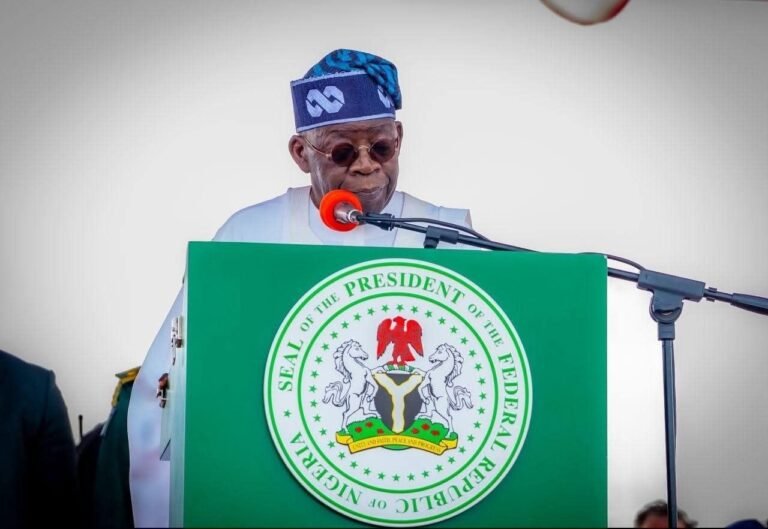
For years, Nigeria’s commitment to press freedom has hit roadblocks. In 2024, President Bola Ahmed Tinubu pledged to the Newspaper Proprietors’ Association of Nigeria that he would protect press freedom and respect constructive criticism. Analysts say the new bill would protect Nigeria’s civic space and safeguard the country’s deteriorating media freedom.