
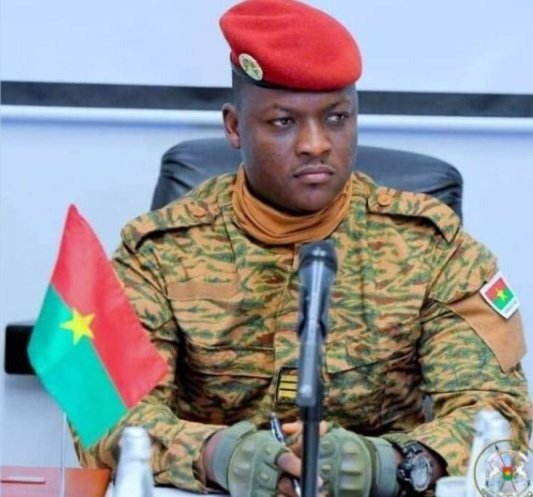
A few months after dissolving all political parties, the Burkina Faso’s military junta has disbanded over 100 civil society and non-governmental organisations in the country. Human rights groups warn that this move signals a broader pattern of effort to silent dissent and restrict the civic space in the nation.
Civil society organisations play an indispensable role in protecting human rights and upholding the rule of law. The decision to scrap such important bodies “reinforces a climate of fear that is crippling independent civic activity,” according to Binta Sidibé Gascon, President of Observatoire KISAL, a human rights monitoring association.
Since the Burkinabe military took over power in September 2022, the government has made repressive moves targeted at suppressing non-governmental organisations, human rights groups and independent media. Authorities have banned or suspended many Burkinabè local and international media outlets, including the BBC and France 24.
The government has also been flagged for flagrant violations of human rights, including killing of civilians. For instance, between January 2023 and August 2025, the junta killed at least 1,837 civilians across 11 regions, according to Human Rights Watch (HRW). The organisation said the military and the Volunteers for the Defence of the Homeland (VDP) committed grave abuses during dozens of operations, including unlawful killings, summary executions, torture, ill-treatment, the looting of livestock, and the burning of homes.
“The mass dissolution of civil society groups is the Burkina Faso junta’s latest effort to silence dissent and avoid scrutiny of its grim human rights record,” Binta Sidibé says.
While the government did not publicly list the dissolved groups, the junta announced scrapping 118 civil society and non-governmental organisations, many of whom were human rights-focused. Authorities said the affected organisations failed to comply with legal requirements under existing regulations. However, they have not provided detailed public evidence to justify the mass closures.
This lack of transparency has raised concerns that the decision may not be purely administrative, but aimed at silencing critical voices and limiting scrutiny of government actions.
HRW explained that while some of the groups targeted by the dissolution measure were inactive, others, including Action by Christians Against Torture (Action des Chrétiens contre la Torture, ACAT), Burkinabè Coalition for Women’s Rights (Coalition Burkinabè pour les droits des femmes, CBDF), were operational and appeared to meet the legal requirements under the July 2025 law, which grants organisations one year to comply with the requirements, and the deadline has not yet expired.
The July 2025 Burkinabè law requires organisations to obtain prior government authorisation to operate, access funding, or renew registration, while granting authorities broad powers to suspend or dissolve organisations on grounds such as public order or state security. It also imposes strict controls on foreign funding and mandates detailed financial reporting, with penalties including sanctions, account freezes, or closure for non-compliance.
“The military government’s action, if based on alleged noncompliance with the 2025 law, appears legally questionable since the required time frame has not yet ended,” says Ilaria Allegrozzi, senior researcher at HRW. “The scale of the shutdown is one of the most significant blows to civil society groups since the military took power.”
In another administrative barrier, the military junta stated foreign organisations must now secure a “statistical visa” before conducting surveys or research.
“A strong and independent civil society acts as a safeguard against abuses of power and amplifies the voices of marginalised communities,” says Drissa Traoré, the general secretary of the International Federation for Human Rights (FIDH). “The Burkinabè authorities should enable civil society groups to work freely and uphold the fundamental rights and liberties of everyone in Burkina Faso.”