
Muizat Abubakar, a medical student at Usmanu Danfodiyo University, Sokoto, has not set foot in her home state Kogi since 2023. All these years, she has missed every moment with her parents and other family members. Muizat yearns to travel home but fears gambling her life against the rampant kidnapping and violent attacks along her travel route in Zamfara state.
Air travel offered a safe alternative, but soaring fares quickly placed it out of reach. In 2022, a flight home cost her around ₦50,000. Today, that exact route exceeds ₦100,000. Because two of her siblings now study alongside her in Sokoto, a single round trip for all three to visit their parents during the holidays demands more than ₦600,000.
Muizat weighs the extortionate cost of air travel against essential needs like tuition fees, daily feeding, and the money she must still ask her parents to spare. Had the flight ticket price not risen so high, she said she would have been able to afford it.
Her situation is just one among many stemming directly from a state apparatus that treats the aviation sector as an endless cash cow. The result makes air travel an exorbitant luxury even as the roads have become a death trap.
Muhammad Mujahid, a fellow of The Bridge Youth Leading Change Programme, has his own version of this story. He spent eight months in intensive virtual learning, eagerly anticipating the Northwest Youth Summit, where he hoped to network with leading regional changemakers. His ambitions suffered heavy frustration when organisers announced that their budget could no longer cover the hyper-inflated flight tickets for attending fellows. They offered him an alternative to travel by road, but only on the strict condition that he assume full personal responsibility for any security incidents along the way. Given the rampant banditry on the Zamfara highway, this was not an option, but a death gamble. The round-trip fare between Sokoto and Kaduna costs around ₦250,000 and Mujahid could not afford it.
“I would have sponsored myself to the summit as it was worth it, but the fare was more than I could afford,” he told The Liberalist.
The Hidden Cost
When passengers buy a flight ticket in Nigeria, they assume they are paying the airline for fuel, crew salaries, and aircraft maintenance. But in reality, they are paying a massive toll to the government. Industry data reveals that authorities embed over 54 different taxes, charges, and fees into the cost of Nigerian air travel, accounting for up to 35 percent of the total ticket price.
Before an aircraft leaves the tarmac, the Federal Airports Authority of Nigeria (FAAN) extracts a Passenger Service Charge (PSC), the Nigeria Civil Aviation Authority (NCAA) takes a mandatory five percent Ticket Sales Charge (TSC), and the Nigerian Airspace Management Agency (NAMA) collects its navigational levies. In effect, the government has turned domestic airlines into unofficial tax collectors, forcing them to pass these exorbitant charge burdens directly onto everyday citizens.
Though some of these 54 layers of taxation existed four years ago, recent hyperinflation in the country has only made their compounding financial impact become obvious. This was why passengers like Muizat paid around ₦50,000 for the same ticket that now costs over ₦100,000. Core levies like the NCAA’s 5 percent TSC and the 7.5 percent Value Added Tax (VAT) are percentage-based, meaning the government’s revenue multiplies every time inflation bites.
For instance, when aviation fuel surged to roughly ₦2,650 per litre in 2026, airlines pushed base fares to ₦200,000 simply to survive. Consequently, the state’s five percent cut jumped fourfold, rising from ₦2,500 on an old ₦50,000 ticket to a staggering over ₦10,000 today.
A 2024 study by the African Airlines Association (AFRAA) confirmed that Nigeria’s tax burden is excessive by African standards. West Africa remains the most expensive region on the continent for air travel, with passengers paying an average of $109.50 in non-fare taxes and charges on international departures. Nigeria stands near the absolute top of this list, slapping travellers with average departure fees of $180, trailing only Gabon ($297.70) and Sierra Leone ($294). Conversely, regional aviation hubs in East and Southern Africa, such as South Africa, levy an average of around $34 in departure taxes, closely mirroring the $30 average seen across Europe.
These levies punish both passengers and carriers alike. Dr Alex Nwuba, President of the Aircraft Owners and Pilots Association, pointed out that while government-backed airport operators boast double-digit revenue growth, overlapping levies and punishing interest rates force private airlines to pay up to 37 percent in financing costs.
“One must look at addressing this issue, not from the airline point, but really the regulator and the government side, that there are too many charges,” argued Nwuba, warning that until the state curbs its own fiscal appetite, this inflated cost structure will continue to penalise passengers.
Operators, Regulator Clash
Recently, the NCAA attempted to downplay the fiscal burden on airlines. The agency claimed that domestic airlines are only subjected to four statutory fees under its direct purview, primarily the five percent Ticket Sales Charge (TSC) and Cargo Sales Charge (CSC).
The NCAA said airline operators were creating the impression that they were being heavily taxed. It explained that the five percent Ticket Sales Charge, for instance, was calculated on a neutral unit of construction, which comprises only the base fare and fuel surcharge.
“When we look at charges, we know that these charges are towards cost recovery of infrastructure,” Esther Ajijola, General Manager of Allied Services & Economic Oversight at the NCAA, said. “When you look at taxes, you are talking about the national development of a nation. And there you look at what leads to the airport. You are looking at the road, you are looking at the water, you are looking at the energy and that’s where you have your tax.”
“But for a government to put revenue generation ahead of safety, ahead of security and customer satisfaction, we are all customers of the aviation industry, I don’t think any government will want to do that,” she added.
However, the Airline Operators of Nigeria (AON) dismissed the NCAA’s position as a regulatory sleight of hand.
Roland Iyayi, a Trustee Member of the AON, said the proliferation of aviation agencies and their separate charges had increased the financial burden on airlines.
“We have the NCAA today. We have the Federal Airports Authority today. We have Nigerian Airports, Nigerian Airspace Management Agency. We have NiMET. All of these agencies, circa 1980, 85, 89, were under the FCAA. That’s the Federal Civil Aviation Authority,” Iyayi lamented.
“The Federal Civil Aviation Authority introduced the five percent Ticket Sales Charge. At the time we had the FCAA, there was only one domestic carrier in the country. And that was Nigeria Airways. For the record, Nigeria Airways did not pay the five percent Ticket Sales Charge, TSC, on the domestic market. Let’s be clear on that.”
He said each agency evolved from the then FCAA. Initially, the Nigerian Airports Authority (NAA) was responsible for overseeing airports across the country and introduced the passenger service charge, adding that aviation should operate on a cost-recovery basis. He also criticised the push to increase revenue generation by aviation agencies, arguing that such a target could encourage excessive charges.
Iyayi stated the country has a minister who, when he came into office, indicated that part of his metrics will be increased revenue generation for the agencies, “there we have a problem because already what you’re saying is that I’m going to tax all these agencies or all these stakeholders irrespective just because I want to meet a metric.
“That itself is one of the problems of not understanding what the industry is calling for. Where we are today, the continued sustenance of all these taxes, fees and charges, and yes, there are 54 lines of taxes, fees and charges. What I am saying is the continued application of all these taxes, fees and charges is detrimental to the growth of Nigerian aviation,” he added.
The various fees leave domestic carriers barely surviving despite the high cost of flight tickets, says Allen Onyema, Vice President of the AON and Chairman of Air Peace. He claimed that no domestic airline in Nigeria generates $1 million in annual profit.
“We pay about 54 taxes. It is only in Nigeria that you pay a tax to the government and still pay another tax to the agency of government,” Onyema stated, explaining the suffocating operating environment that operators are forced to navigate.
In an interview with The Liberalist, Bako Abubakar, the Station Manager of Rano Air at Sultan Abubakar III Airport in Sokoto, confirmed that surging ticket prices have visibly suppressed passenger turnout.
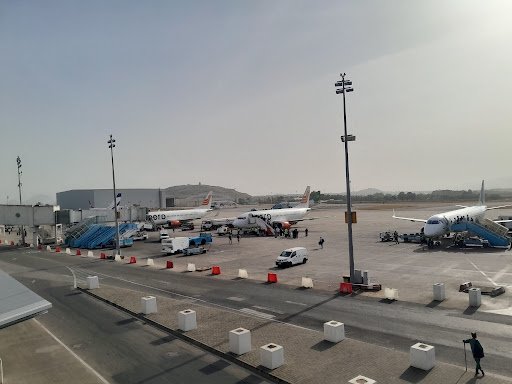
Abubakar explained that while rising Jet-A1 fuel prices and broader inflation push base fares higher, carriers also face a litany of routine airport charges that escape public attention. Beyond statutory taxes, operators absorb escalating overheads to maintain terminal offices and run basic ground operations.
“Tax and inflation are major drivers of ticket flights. We pay different amounts of fees to keep our offices up in the airport and to keep our services running. These, apart from taxes, are responsibilities that do not make the news,” Abubakar said.
He pointed out that handling services that were once routine have now become costly administrative line items. At the Sokoto airport, wheelchair assistance for disabled or elderly passengers, previously provided at no charge, now costs ₦40,000, while scheduled flights arriving after sunset incur steep night-landing surcharges from airport authorities.
“These are part of the expenses that get passed on to the passengers. If there will be a reduction in price, the larger work will be done by the government in reducing inflation, taxes, and even subsidising some airline expenses,” Abubakar added, arguing that any lasting relief will require political will rather than airline compromises.
The ECOWAS Agreement
Recognising that heavy taxation suppresses travel demand and fractures regional trade, the Economic Community of West African States (ECOWAS) recently mandated member states to abolish arbitrary air transport taxes and enforce a strict 25 percent reduction in passenger and security charges by January 2026.
The regional body projects that this framework will reduce ticket prices by up to 40 percent and stimulate a 20 to 30 percent surge in tourism. However, rather than championing this reform to democratise air travel, Nigerian bureaucrats continue to drag their feet, reluctant to sacrifice the short-term windfalls generated from passenger levies.
In contrast, neighbours like Côte d’Ivoire have swiftly aligned their domestic regulations with the ECOWAS directive. In April 2026, authorities in Abidjan adopted three sweeping decrees that slashed passenger charges and aviation security charges, by 25 percent.
Prior to this intervention, government taxes constituted about 60 percent of total ticket prices in Côte d’Ivoire. The tax cut immediately enhanced the pricing competitiveness of the national carrier, Air Côte d’Ivoire, strategically positioning the country to dislodge rival hubs across West Africa.
The Liberalist contacted the Federal Ministry of Aviation and Aerospace Development by email for comments on the proliferation of statutory levies and the delayed implementation of the ECOWAS directive. As of the time of filing this report, the ministry had not responded to the enquiry.
Olumide Ohunayo, an industry analyst and Director of Research at Zenith Travels, said forcing citizens to wait for political convenience while the aviation sector suffocates represents a disastrous economic miscalculation. He warned that failing to implement the tax cuts will trigger relentless fare hikes and decimate passenger volumes.
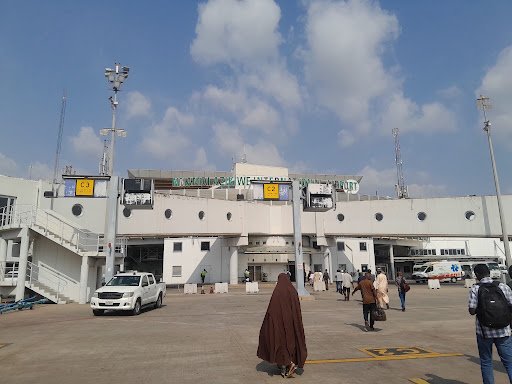
While state agencies might secure temporary gains from these punitive levies, Olumide said the long-term outlook remains dire.
“In the long run, there will be reduced revenues to all parties because goods, passengers, and revenue generated by all concerned have reduced, including the aviation ecosystem and frequency stagnation,” he said. More importantly, the Nigerians being priced out of air travel continue to bear the brunt of suspending their travels and missing out on opportunities.
One such is Abdulazeez Haliyah, an aspiring international student who faced this harsh reality when she lost a life-changing opportunity to study at the Zurich University of Applied Sciences (ZHAW) in Switzerland. A family friend employed at the institution had offered to fully fund her tuition, on the sole condition that her family cover her visa and flight logistics.
However, with outbound international airfares averaging between ₦3.2 million and ₦4 million, the dream slipped out of reach.
“My father’s friend wanted to sponsor my university education because he works there,” Haliyah told The Liberalist. “All that was required was for us to cover the visa and flight costs, but my father simply could not bear the financial strain.”
According to a new report by the African Airlines Association, air passengers flying out of Nigeria are paying one of the highest amounts in taxes and charges across Africa, with an average cost of $180 per international departure, nearly three times the continental average of $68.
The report says on average, a passenger flying internationally from Africa pays $68 in taxes and charges, twice the global average and significantly higher than in Europe or the Middle East. However, in countries like Nigeria, passengers are even paying more than double that figure due to a combination of government-imposed taxes, airport fees, and service charges.
“Data doesn’t lie. Nigeria is one of the most expensive countries in Africa to do aviation business,” Dr. Kingsley Nwokoma, the President of the Association of Foreign Airlines’ Representatives in Nigeria said. “It’s more expensive to fly from Nigeria to Togo or Yaoundé than it is to fly into Europe in some cases.”
_________________
This story was produced as part of the Liberalist Centre’s Journalism for Liberty Fellowship, with funding from Liberty International.