

By Hafsat Salihu and Hauwa Ndafogi Tauhid
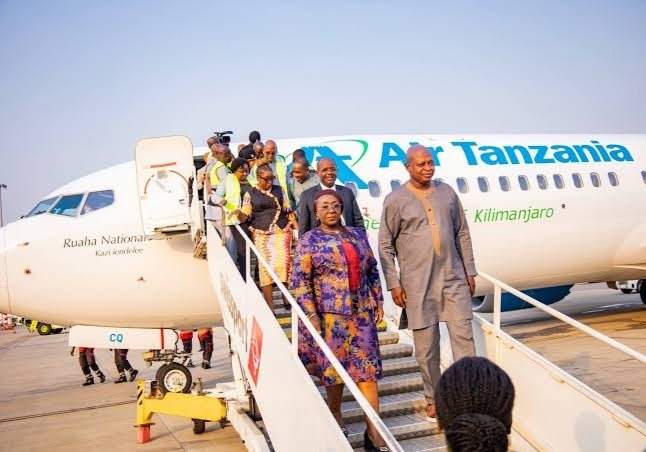
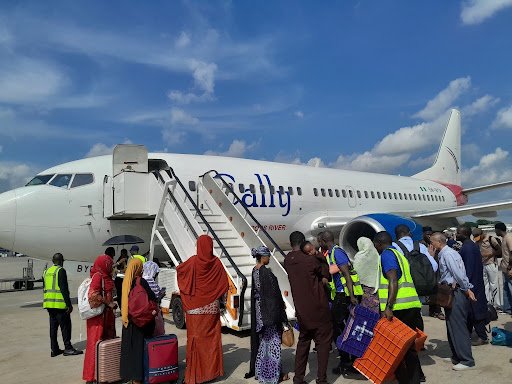
The Togolese government recently announced the commencement of a 30-day visa-free entry policy for all African nationals, a new initiative that closely aligns with a recent move by Nigeria to grant 30-day visa-free access to Rwandan citizens. Analysts say these efforts would facilitate travel and boost tourism across borders in Africa.
Under this arrangement, Rwandan citizens can enter Nigeria without a visa for tourism, business, or official visits, and stay in the country for up to 30 days. Visitors who intend to remain in Nigeria beyond this 30-day period must apply for the appropriate visa through a Nigerian embassy or the country’s e-visa platform. Under the Togolese arrangement, African citizens can enter Togo without a visa for trade and tourism for up to 30 days. To qualify, travellers must complete an online travel declaration at least 24 hours before arrival and present the receipt at the border.
For years, visa restrictions and bureaucratic hurdles have hindered the movement of people and goods across the continent. Previously, most African nationals entering Togo had to obtain a visa in advance, a tedious process involving embassy visits, high fees, and lengthy processing times. Even citizens of the Economic Community of West African States (ECOWAS) countries, whose protocol guarantees free movement, faced inconsistent enforcement and administrative bottlenecks at Togolese borders.
Abdul Samad Rabiu, Africa’s second-richest man and Chairman of BUA Group, recently warned that visa restrictions and other travel administrative bottlenecks risk depriving the continent of the economic potential of the African Continental Free Trade Area (AfCFTA). He noted that Africa will struggle to realise the benefits of one of the world’s most ambitious trade integration efforts unless governments dismantle visa restrictions, border bottlenecks, and administrative barriers that hinder cross-border commerce.
Beyond formal visa requirements, border security has also complicated cross-border movement. In September 2025, the Togolese government implemented a major security reinforcement in the Grand Lomé district along its western frontier with Ghana. This operation closed all unauthorised crossing points, leaving only eight officially recognised pedestrian immigration posts between Ségbé and Aflao to combat irregular immigration, drug trafficking, human trafficking, and smuggling. Togo emphasised that its new visa exemption does not override these critical national security measures or laws governing illegal stays.
The Fate of AfCFTA
Analysts state that both the Nigeria-Rwanda arrangement and Togo’s new initiative support the goals of the AfCFTA, which aims to improve trade between African countries. They argue that governments find trade agreements harder to implement when business owners, investors, and professionals face travel restrictions across borders.
Over the years, a notable number of African nations have made significant progress in facilitating travel across the continent, according to the Africa Visa Openness Index (AVOI). Of the 54 countries indexed in 2024, visa policies improved significantly in 17, adding to the 15 recorded in the previous year. This shift signals that African countries are becoming more accommodating to their neighbours.
Last year, Kenya became the fifth country to grant visa-free entry to all African nationals. With its recent announcement, Togo officially joins the likes of Rwanda, Seychelles, Benin, and The Gambia, signaling a broader continental shift toward free movement.
Nigeria, in particular, made notable strides by introducing electronic visa applications, a move that proves the country’s commitment to streamlining its visa process. Consequently, the nation climbed from 25th to 6th place on the 2024 AVOI evaluation. However, the country’s high visa-on-arrival fee has an overarching negative effect. In 2023, Nigeria doubled its visa-on-arrival biometric fee to $170, up from $90. This steep increase continues to deter investors and tourists, undermining the government’s economic recovery efforts.
Under the new arrangement with Rwanda, immigration officers at airports, land borders, and seaports will process eligible Rwandan travellers. With this policy, the government intends to boost tourism and spur economic development.
Studies show that relaxed visa policies, such as low costs or the total removal of visa requirements, stimulate economic growth by attracting foreign exchange. A notable example is the contrast between the visa policies of Mauritius and Seychelles and their subsequent effects on tourism.
Before 2013, Mauritius mandated that visitors obtain visas before arrival, whereas Seychelles adopted a more open approach, requiring no entry visas. This policy difference led to a significant disparity in tourist growth between the two nations. In the five years preceding 2013, Seychelles experienced a remarkable 7 percent annual growth in tourist arrivals, while Mauritius barely gained traction, with its tourist growth remaining largely stagnant at 4 percent. In an effort to boost its tourism sector, the Mauritian government quickly implemented a visa liberalisation policy, easing travel restrictions for citizens of 30 African nations and 75 countries worldwide.
Nigeria’s tourism sector has long underperformed, contributing a mere 2 percent to the country’s Gross Domestic Product (GDP). In contrast, Seychelles’ visa-free policy for all Africans sustains a thriving tourism industry that accounts for a significant 20 percent of its GDP.
Local industry leaders in Togo have warmly received their own policy changes to fix similar stagnation. Kossi Sambigou Nanika, President of the Federation of Tourism and Hospitality Businesses Togo (FETHET), expressed strong support, noting that the federation will work to ensure people understand the importance of heritage, tourism, and investing in the country’s emerging tourism infrastructure.
Analysts view these policy changes across Nigeria and Togo as a clear demonstration of regional commitment to reforms that attract foreign direct investment and improve the domestic business environment. Easing these travel barriers will improve tourism flows, stimulate intra-African trade, and advance the overarching goals of the AfCFTA to create a more integrated and prosperous African market.