
As part of its contribution to the Nigerian government’s efforts to boost revenue, the International Monetary Fund (IMF) has recommended extending more taxes to fuel products and telecommunications services. This suggestion shows that the IMF is prioritising government revenue over citizens’ well being. Analysis indicates that imposing additional taxes on these vital services would exacerbate the country’s ongoing cost-of-living crisis.
For years, fuel and telecommunications have remained unavoidable expenses in Nigeria’s economic life, directly driving transportation, food distribution, communication, and digital access. Despite Nigeria’s recent tax regime overhaul, the IMF stated in its 2026 Article IV Consultation report that the country needs additional tax measures over the medium term.
“Further tax policy changes will likely be needed—such as increasing the VAT rate, extending VAT to fuel products, rationalising tax expenditures in particular VAT exemptions on extractive industries and some customs duties, and introducing telecom excises—to complement administrative gains,” the organisation noted.
The IMF’s recommendation stems from Nigeria’s persistent struggle to generate sufficient revenue. Despite holding the title of Africa’s largest economy by population, Nigeria maintains one of the world’s lowest tax-to-GDP ratios. Although the federal government raised Value Added Tax (VAT) from 5 percent to 7.5 percent in 2020 to fund public spending and reduce fiscal vulnerabilities, revenue collection remains low.
While the fiscal logic behind additional taxation is clear, introducing or increasing levies on essential services like fuel and telecommunications would counterproductively harm ordinary citizens.
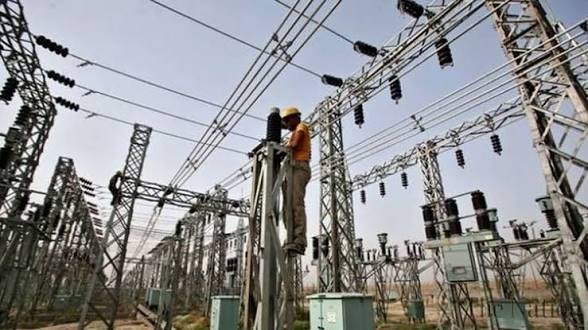
Fuel, for instance, occupies a unique position within Nigeria’s economy. Unlike typical taxable goods, fuel functions as a core production input across multiple sectors. It dictates the cost of transportation and agricultural supply chains that rely on it to move produce to markets, not to talk about millions of businesses that use fuel-powered generators to compensate for an unreliable national electricity grid.
The impacts of fuel price increase is not limited to filling stations; they ripple through supply chains and ultimately inflate the prices consumers pay for food, transport, and essential commodities.
A new fuel tax, particularly at this time when the country is still struggling with the impacts of the petroleum subsidy removal, will be economically burdensome and further intensify pressures on household income. According to the National Bureau of Statistics (NBS), after the removal of subsidy, the average retail price of petrol jumped from ₦648 per litre in November 2023 to over ₦1,214 per litre in November 2024, an 87 percent surge in just one year. During this same period, transportation and food costs drove headline inflation to over 25 percent, demonstrating how fuel price shocks extend far beyond the energy sector to reshape the broader economy.
The telecommunications sector presents a parallel challenge. Over the past decade, internet access has woven itself into everyday economic activity. Some of the lifeline of the citizens’ social life like online banking, digital payments, e-commerce, remote work, education, rely on telecom connectivity. According to the Nigerian Communications Commission, the country boasts over 170 million active telephone lines, reflecting the sector’s critical role in economic activity and digital inclusion.
The proposed telecom excise duty is not new. In 2022, the federal government proposed a 5 percent excise duty on telecommunications services but suspended its implementation following widespread public opposition. Industry stakeholders argued that operators were already grappling with soaring energy costs, foreign exchange pressures, infrastructure deficits, and multiple existing taxes, including VAT and company income tax.
Taxing telecommunications carries heavy implications because digital connectivity directly determines access to economic opportunities. Students depend on internet services for research, businesses rely on digital platforms to reach customers, and financial technology services require affordable connectivity to function. Increasing these production costs may stifle productivity and digital inclusion in ways that government revenue projections fail to capture.
Even the IMF acknowledged the risks of its proposal.
“The timing of reforms must consider the poverty and food insecurity situation and ensure that the cash transfer system is in place and funded,” the IMF stated.