
This is the second of a two-part series on how solar innovations are addressing Nigeria’s electricity and agricultural challenges through rural microgrids and solar-powered irrigation. You can read the first part here.
_______________
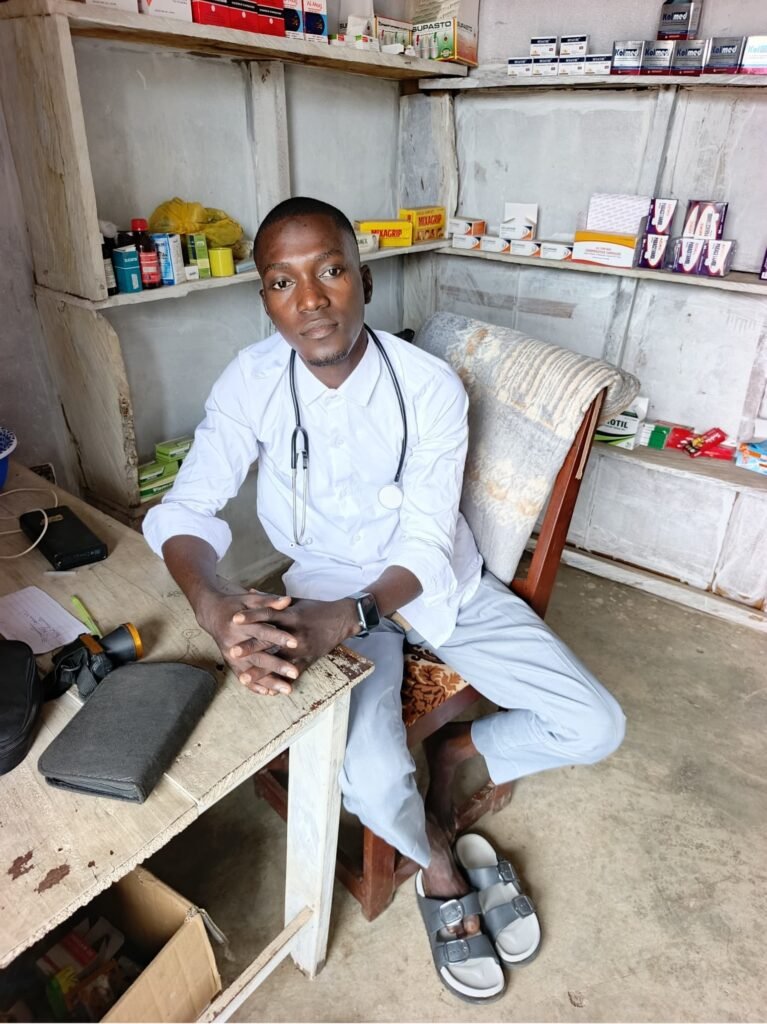
For years, Attahiru Bala, a healthcare worker in rural Bwen, Nigeria, followed a strict daily routine to ensure his headlamps and floor lamps remained fully charged so he would be prepared for nighttime emergencies. In this small village in the Baruten region of northern Nigeria, there was no electricity until three years ago, when a company began installing a solar-powered microgrid. A year before electricity came to Bwen, Bala experienced a harrowing night. “I had an emergency to deliver a baby at night, but I forgot I hadn’t charged my lamps,” he recounts.
He had to hold his phone in his mouth for light while struggling to manage the delivery. During the process, the phone fell and shattered because no one was available to hold a light for him. “If we had a stable light, I wouldn’t have to use my phone during childbirth,” Bala says. Nigeria faces one of the highest maternal mortality rates in the world, with estimates ranging from 993 to 1,047 deaths per 100,000 live births.
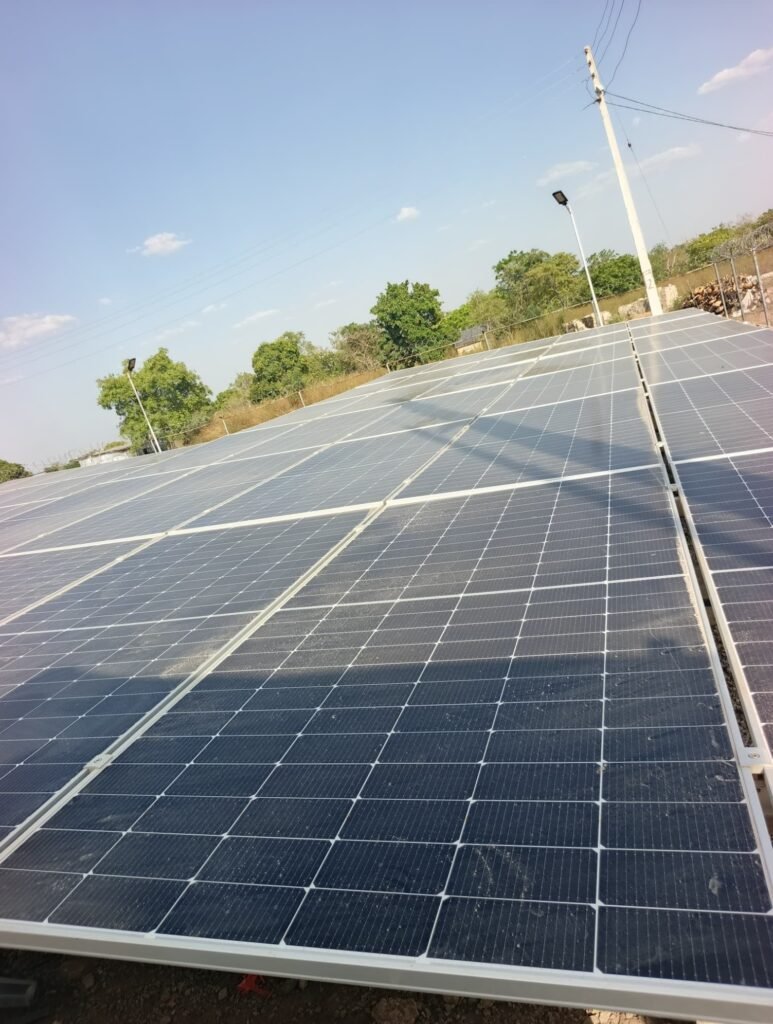
“But the situation has improved,” he says happily. Since the installation of a solar panel array, a battery system, and a local distribution network, neither Bala nor other healthcare professionals have had to worry about treating their patients at night. “We now have a reliable electricity supply,” he affirms.
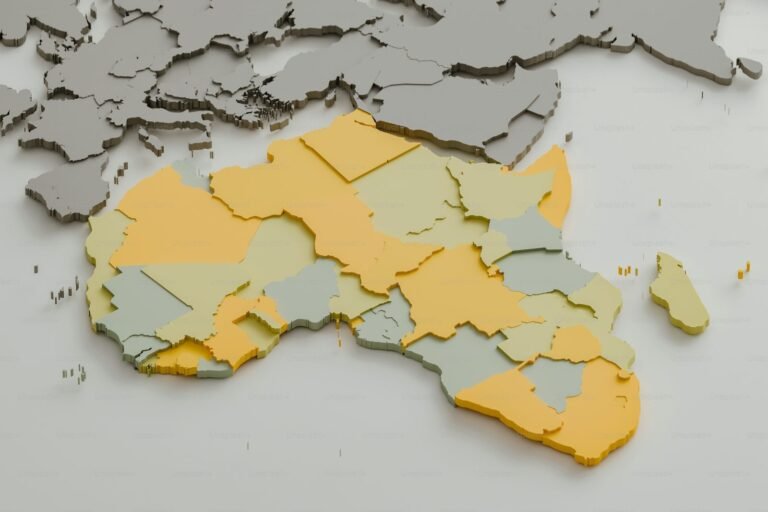
The installation of solar microgrids is not a phenomenon exclusive to rural Nigeria; it is happening across Africa. Moreover, it comes at a critical time due to rising fuel prices and historic cuts in development aid, when access to electricity remains one of Africa’s major development challenges. According to the International Energy Agency, nearly 600 million Africans lack access to electricity, while many of those who do suffer from unreliable service. This figure represents almost half the continent’s population and constitutes the largest proportion of people without electricity in the world.
In 2025, Africa installed approximately 4.5 gigawatts (GW) of new photovoltaic capacity, up from 2.9 GW in 2024. This 54 percent increase, according to the Global Solar Council, confirms the acceleration of the solar transition amidst growing electricity demand. South Africa is leading this trend, followed by other key players in the sector such as Nigeria, Egypt, Algeria, Morocco, and Kenya.
The rapid expansion is also due to China exporting microgrid components at increasingly lower prices. The cost of panels fell by more than 70 percent between 2022 and mid-2025, according to a report by Ember , an organisation dedicated to energy transition issues. “At these prices, just $20 worth of modules would be enough for an average person in sub-Saharan Africa to double their electricity consumption,” the study says.
Nigeria leads the world in electricity access deficit, with 86.8 million people—nearly 40 percent of the population—living without power. While access to the national grid reaches 55 percent, it plummets to a mere 24 percent in rural areas. In the Baruten Local Government Area, thousands have endured decades of darkness due to abandoned infrastructure or the complete absence of grid connections. There are villages where residents haven’t seen a single power pole in decades.
Solar energy has driven small but significant improvements in areas such as access to healthcare. According to Sustainable Energy for All, an international organisation working with the United Nation, 40 percent of operating primary healthcare centres in Nigeria lack access to electricity, and only 28 percent of health centres in sub-Saharan Africa have a reliable power supply. This contributes to high maternal and infant mortality rates, leads to unsafe childbirth in the dark, and prevents the operation of life-saving equipment such as incubators and ventilators. Microgrids offer a solution to these challenges.
Bashiru Adamu, owner of a small pharmacy in Bwen, is another beneficiary. The micro-network has made it easier for him to store medicines and vaccines and extend his opening hours from 7:00 p.m. to 11:00 p.m.
“Before it was installed, we had to close early, which affected both our business and the healthcare workers who visit us. We used to receive calls at night in emergency cases,” he recalls.
The microgrid has also allowed residents of Bwen and other rural communities to circumvent the rising cost of fuel for powering their electricity generators. The blockade of the Strait of Hormuz , closed by Iran since March in retaliation for the Israeli-US offensive, has driven the price of a liter of gasoline from 774 to 1,300 naira (from 50 to 80 cents). In the villages, the lack of gas stations forces residents to resort to the black market, where prices have reached 1,800 naira (just over one euro).
Omono Okonkwo , an energy communications consultant, believes that the national electricity grid’s failure to reach rural Nigeria is the result of decades of misplaced priorities, institutional neglect, and a system that was never designed with rural Nigerians in mind. “[Solar power] is a cleaner and more reliable solution than anything the national grid has historically offered these communities,” Okonkwo says. “Essentially, the microgrid model works because it treats Nigerians in these areas as paying customers with real energy needs, not as a social welfare issue to be managed.
The system, Okonkwo says, “can be up and running in a matter of weeks.” “The cost is tailored to what the community actually needs, not to the ambitions of a national infrastructure plan that may never be fully funded.”
A Boost to the Economy
Under the blazing afternoon sun in Gwane, another village in the Baruten region, Yunusa Ope’s small shop comes alive as night approaches. When the call to prayer sounds during Ramadan, villagers gather in groups outside his shop, wiping the sweat from their brows after a long day of fasting. Inside, Ope bends over a white refrigerator. He takes out frozen pouches of water and begins separating them from the rows of soft drinks. The cold seeps into his fingers, numbing his hands as he works quickly to keep up with the growing crowd. Ope moves swiftly, passing drinks across the counter as the line thickens.
For many in the village, a cold drink and a sachet of water at iftar—the evening meal that breaks the fast—are a small luxury after hours in the heat, and Ope now has enough stock to meet the demand. Three years ago, such a scene would have been unimaginable. Back then, without a reliable electricity supply, their drinks were usually lukewarm, and making ice was nearly impossible.
Today, thanks to a microgrid also installed in 2023, his refrigerator works constantly throughout the day, turning his stall, which previously struggled, into one of the busiest places in the village.
Before solar power, Ope’s business struggled to survive. “[In 2023] I used to spend more than 5,000 naira (about three euros) on fuel for my generator, which only lasted about three hours,” he explains. His situation worsened after President Bola Tinubu eliminated fuel subsidies in 2023, causing prices to skyrocket. The shopkeeper had to choose between closing his business entirely or spending all his capital on fuel that barely yielded any profit.
Ope’s dilemma reflected a national crisis. More than 80 percent of Nigeria’s small and medium-sized enterprises close within five years, according to a study by the Lagos Chamber of Commerce. One of the causes is the lack of a reliable electricity supply in the country. Nigeria loses approximately 40 trillion naira (about 25 billion euros) each year due to poor service, making unreliability one of the biggest economic constraints, according to a recent report by the Independent System Operator of Nigeria, an organisation that monitors the real-time operation of the national electricity grid.
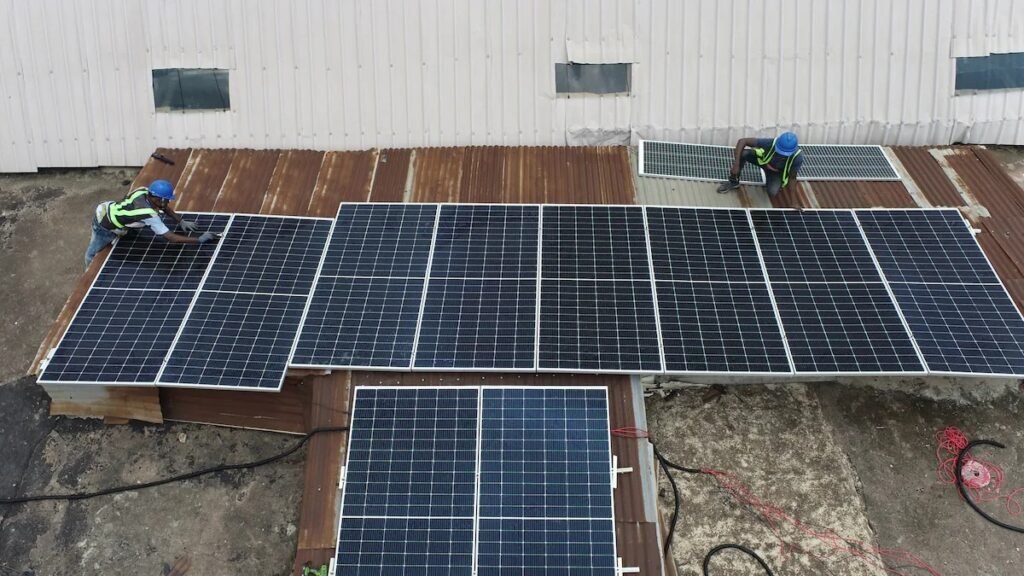
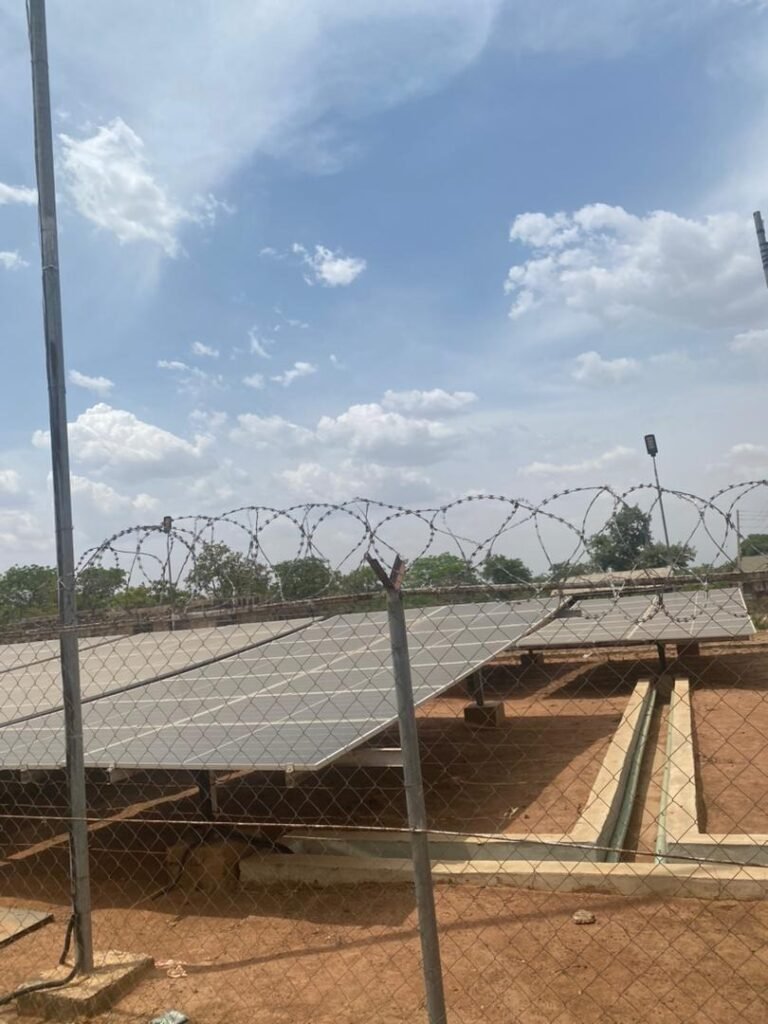
Solar microgrids are changing that situation. Havenhill Synergy Limited, a clean-technology utility, installed one to provide a reliable electricity supply to more than 200 homes in Gwane. Since late 2023, the company has deployed these systems throughout Baruten. Other key players also working to electrify inland areas include PowerGen and Hardrock, the latter having deployed a microgrid in Kosubosu last year, serving more than 400 homes and businesses in the community.
As part of the adoption of solar power systems, the Rural Electrification Agency (REA), the government agency tasked with expanding access in underserved areas, also aims to supply the service to 300,000 households and 30,000 businesses through the Nigeria Electrification Project (NEP).
The impact on Ope’s business was immediate. “I recharge my meter for just 2,000 naira (€1.25), which lasts me almost three days, and my business now runs smoothly,” he says. “My daily income has increased to over 100,000 naira (€62.42) a day, compared to the mere 15,000 naira (€9.36) I earned when using a generator,” he explains.
Prepaid meters now allow residents to enjoy a stable electricity supply, while small businesses use the energy to run refrigeration systems and machinery.
The Challenge of Progress
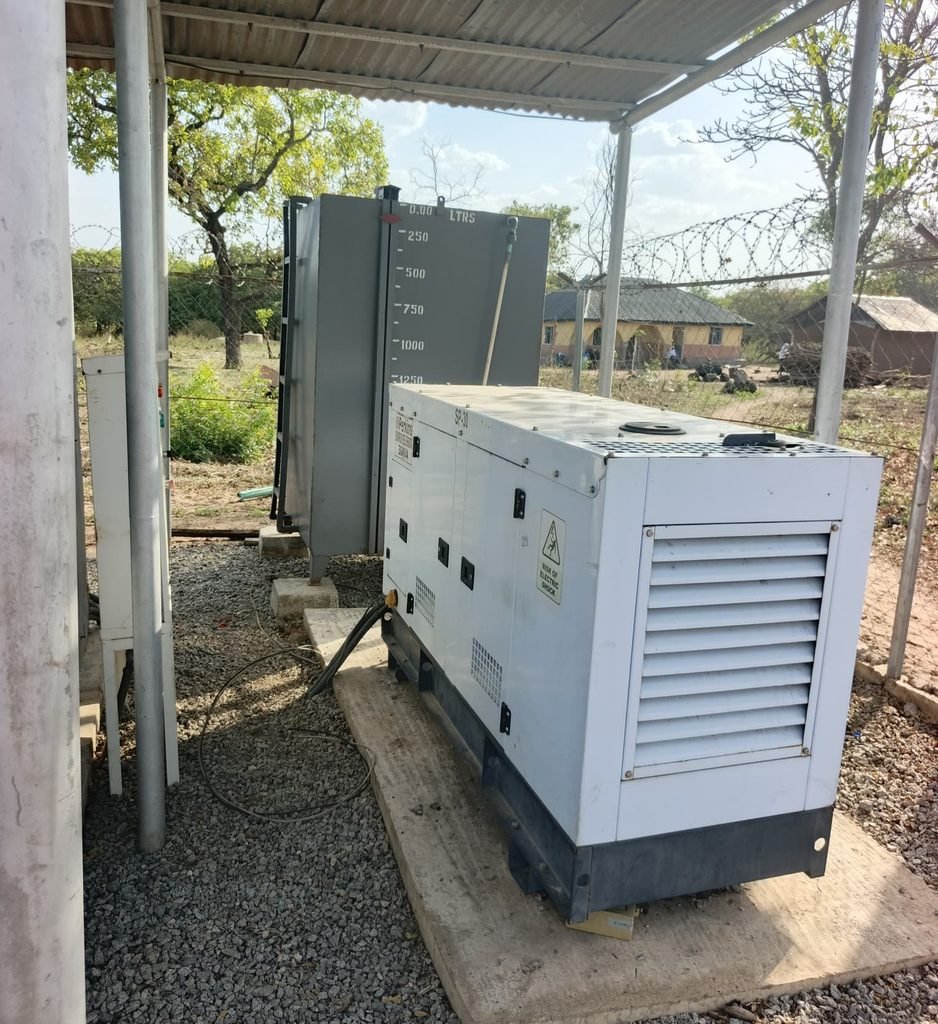
While residents applaud the microgrid initiative, they also express concern about the current capacity of the panels and batteries. Suleiman Abdulkareem, a resident of Bukuro, said that the duration of the available energy has decreased. He noted that the capacity is insufficient to provide constant light to the more than 200 homes in the community.
“More and more people are getting used to solar energy, and I don’t think the capacity of the panels is enough for us. We are urging suppliers to install more panels and batteries to meet everyone’s needs,” says Abdulkareem. Havenhill Synergy did not respond to this newspaper’s questions about these demands.
Okonkwo asserts that addressing these issues requires legislative change in Nigeria “that treats microgrids as the permanent infrastructure they are” and provides them “with the regulatory clarity, investment protections, and long-term planning they deserve.” she adds, “The communities currently receiving solar power are not in a temporary situation. They are living in the energy future that the rest of Nigeria is still trying to move toward.”